

Content
- 1 Why One Line Can Cover Several Fiber Categories
- 2 Fiber Compatibility Reference
- 3 What Actually Limits Cross-Fiber Processing
- 4 Core Opening and Blending Machines for Mixed Fiber Lines
- 5 How a Mixed-Fiber Line Is Typically Configured
- 6 Practical Guidance for Switching Between Fiber Batches
- 7 Where This Flexibility Matters Most
- 8 Frequently Asked Questions
Yes. A single fiber opening and blending line can process cotton, polyester, polypropylene (PP), recycled fibers, wool and blends of these materials, as long as the machine is configured with the correct spike density, roller speed and feeding rhythm for each fiber category. The equipment itself does not need to change between fiber types; only the operating parameters do.
This is one of the most common questions raised by buyers evaluating a Nonwoven Machinery Factory or comparing quotes from different Nonwoven Fabric Machinery Manufacturers. The short answer above covers the practical reality, but the details of how this flexibility is achieved, and where the real limits sit, matter just as much for anyone planning a mixed-fiber production line.
Why One Line Can Cover Several Fiber Categories
Fiber opening and blending equipment works mechanically, not chemically. A bale opener machine plucks tufts from compressed bales using rotating spiked lattices, while a fine opener machine separates those tufts into individual fibers through combing action. Because these are physical processes, the same frame, motor and lattice structure can handle cotton, polyester staple, PP staple or shredded recycled fiber, provided the fiber length and moisture content stay within the design range.
What changes between fiber types is not the machine body but three adjustable variables: opening roller speed, spike pattern engagement, and feed rate. A properly designed fiber opening and blending equipment line built by an experienced Nonwoven Equipment Supplier allows these variables to be tuned per batch, which is why the same production hall can switch from a cotton run in the morning to a polyester or recycled fiber run in the afternoon.
Fiber Compatibility Reference
The table below summarizes how common fiber types behave inside a standard pre opener machine and fine opener machine, and what adjustment is typically required.
| Fiber Type | Opening Behavior | Typical Adjustment Needed | Common End Use |
| Cotton | Moderate resistance, some seed/leaf trash | Lower spike speed, added trash extraction | Wipes, medical padding |
| Polyester (PET) | Opens easily, low static without treatment | Standard settings, humidity control helps | Wadding, insulation, filters |
| Polypropylene (PP) | Light, prone to fly and static buildup | Slower feed rate, anti-static bar recommended | Geotextiles, hygiene layers |
| Recycled / Reclaimed Fiber | Uneven tuft size, possible hard contaminants | Metal detection, extra pre-opening pass | Felt, automotive underlay |
| Wool / Jute | Stiffer fiber, higher entanglement | Increased spike density, reduced throughput | Insulation felt, acoustic panels |
What Actually Limits Cross-Fiber Processing
The main constraints are not about whether a machine can physically touch a given fiber, but about consistency and safety. Three factors decide how smoothly a switch between fiber types happens:
- Fiber length uniformity — very short recycled fiber fragments can pass through spike gaps differently than long virgin staple, so opening intensity needs recalibration.
- Moisture and static behavior — PP and PET tend to generate static, which affects how evenly fiber disperses inside a nonwoven big chamber blender machine.
- Contamination risk — recycled fibers may carry metal fragments or hard debris, making a metal detector and magnetic separator a practical addition rather than an optional extra.
None of these factors require a different machine category. They require correct sequencing of a pre opener machine, a fine opener machine, and a blending stage, which is exactly how a fiber blending machine line is normally arranged in a customized nonwoven machine solution.
Core Opening and Blending Machines for Mixed Fiber Lines
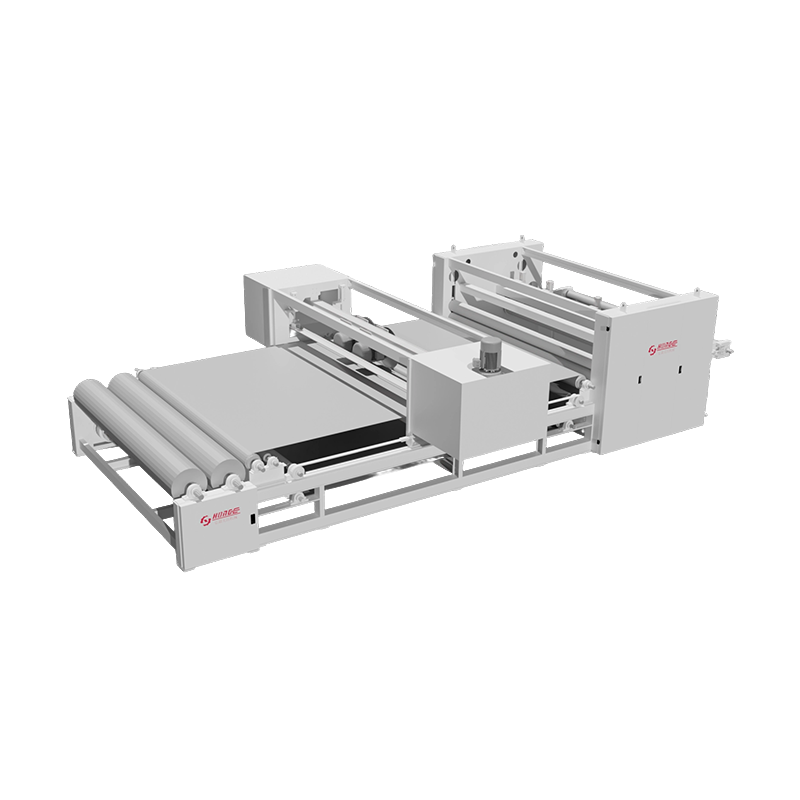
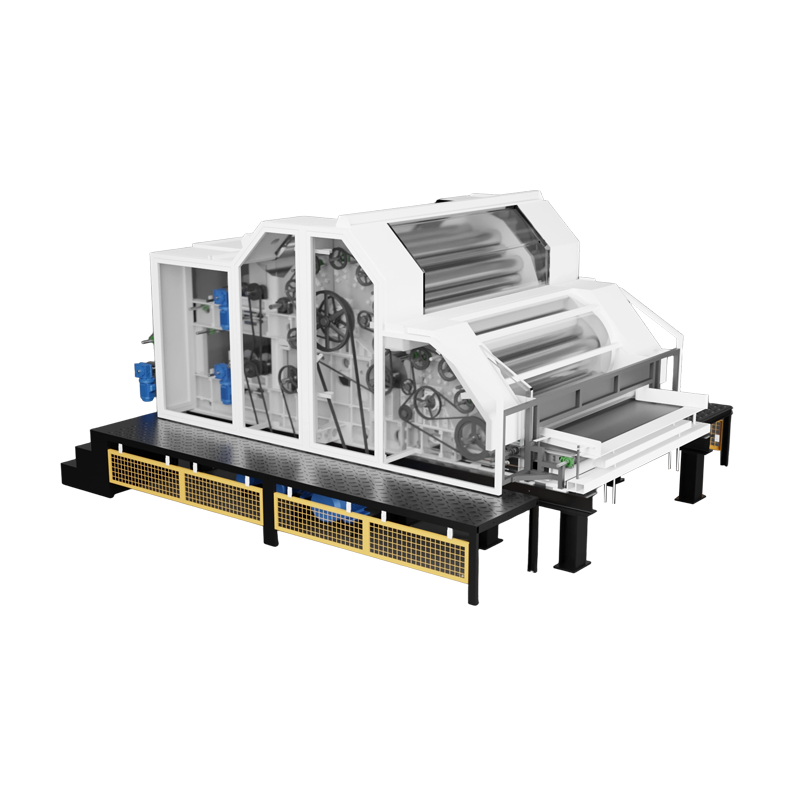
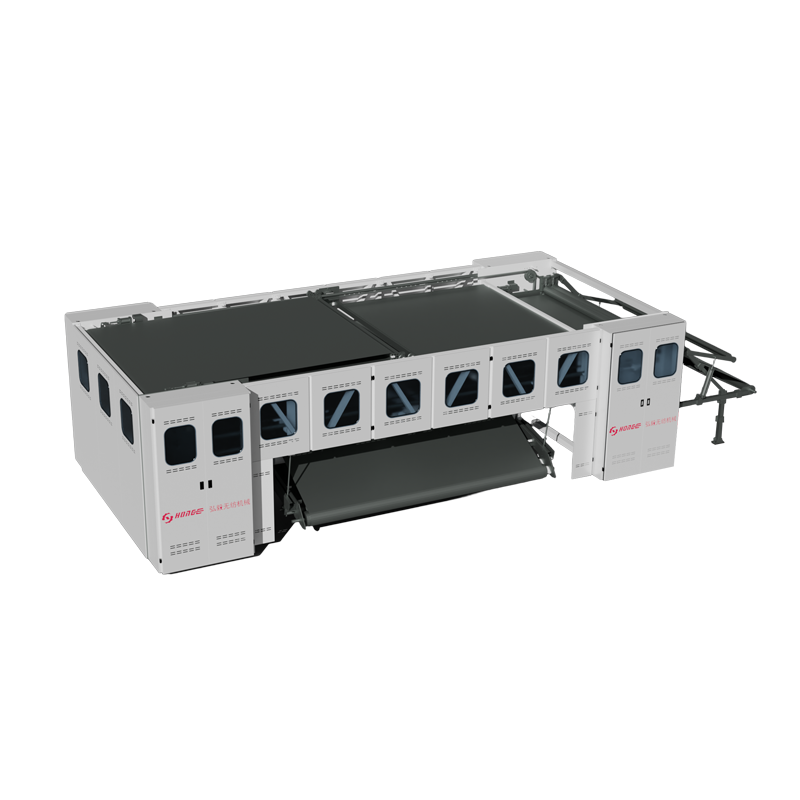
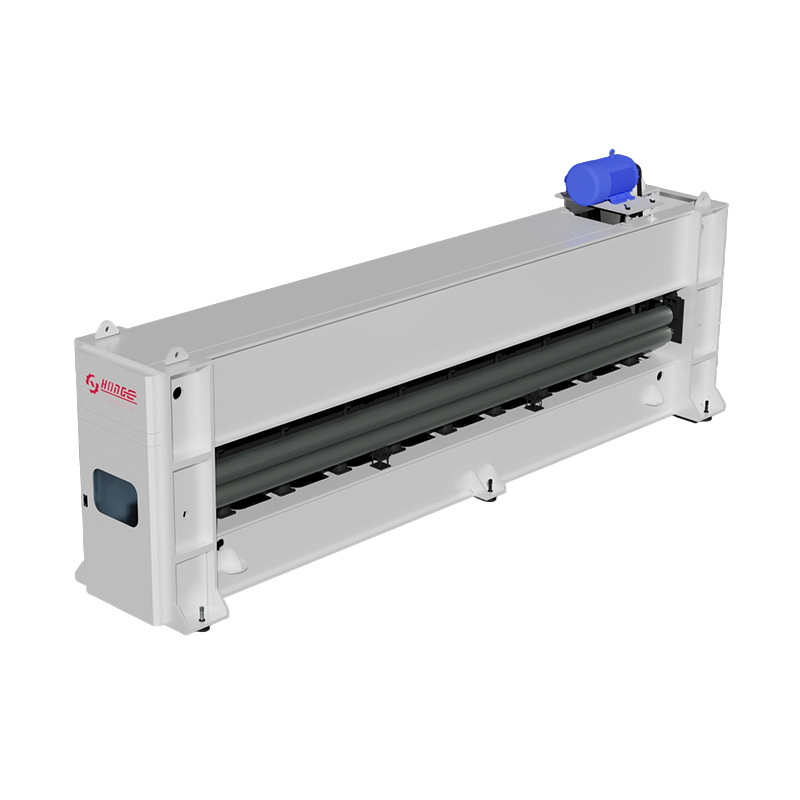
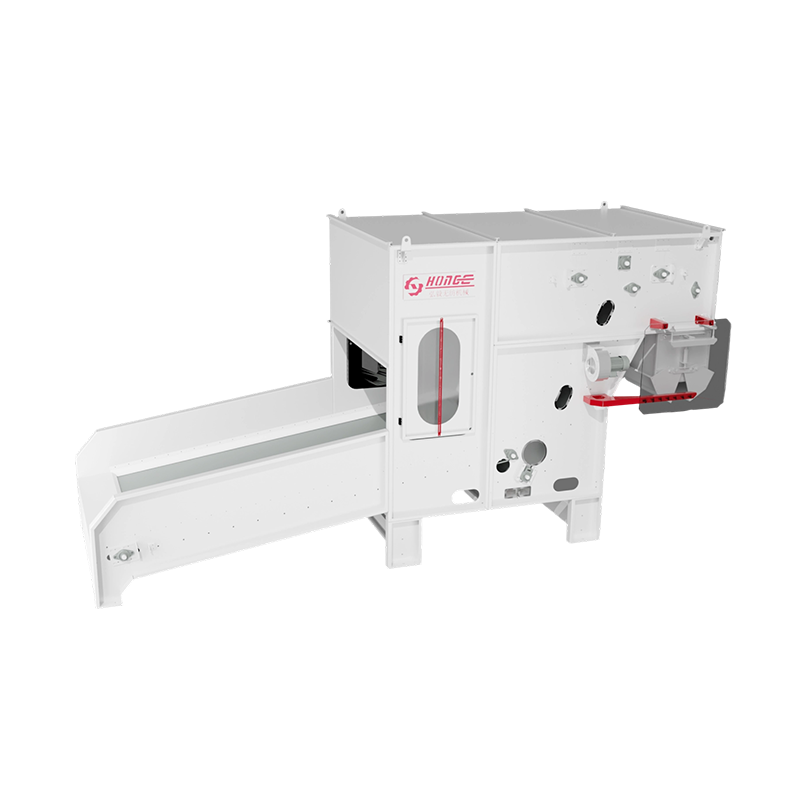
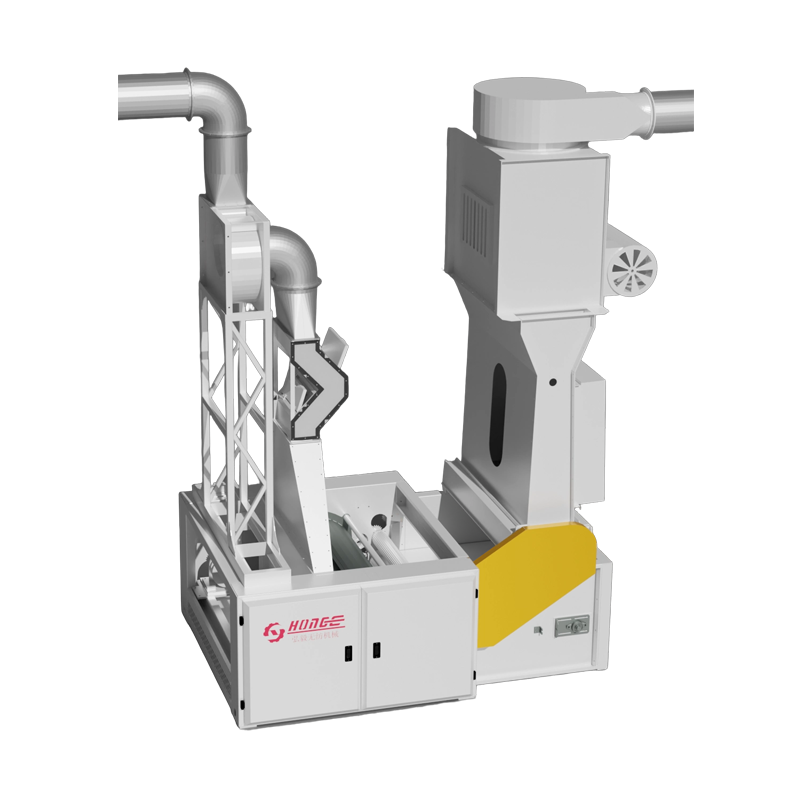
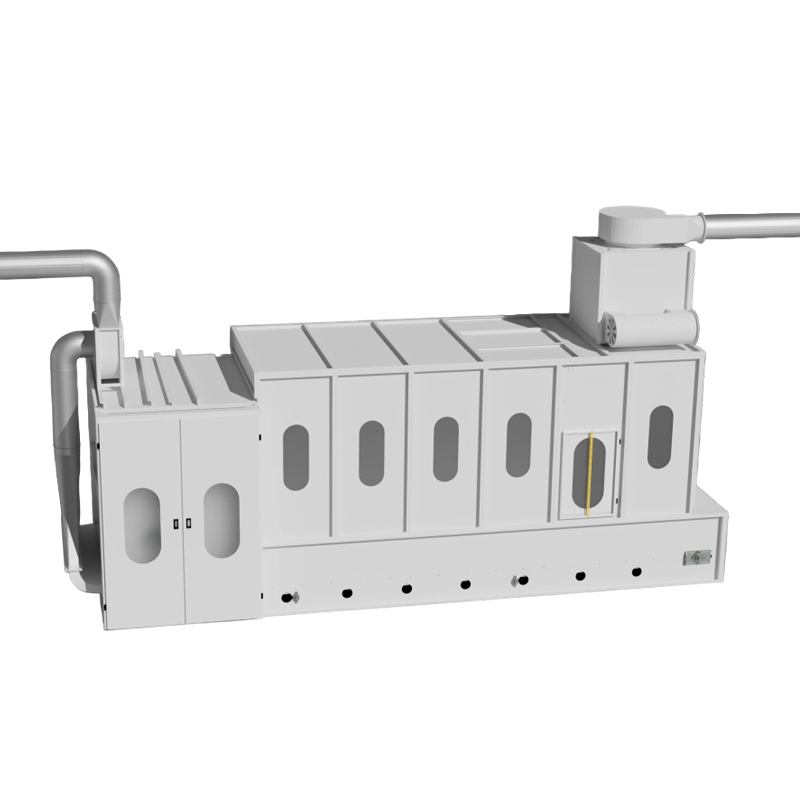
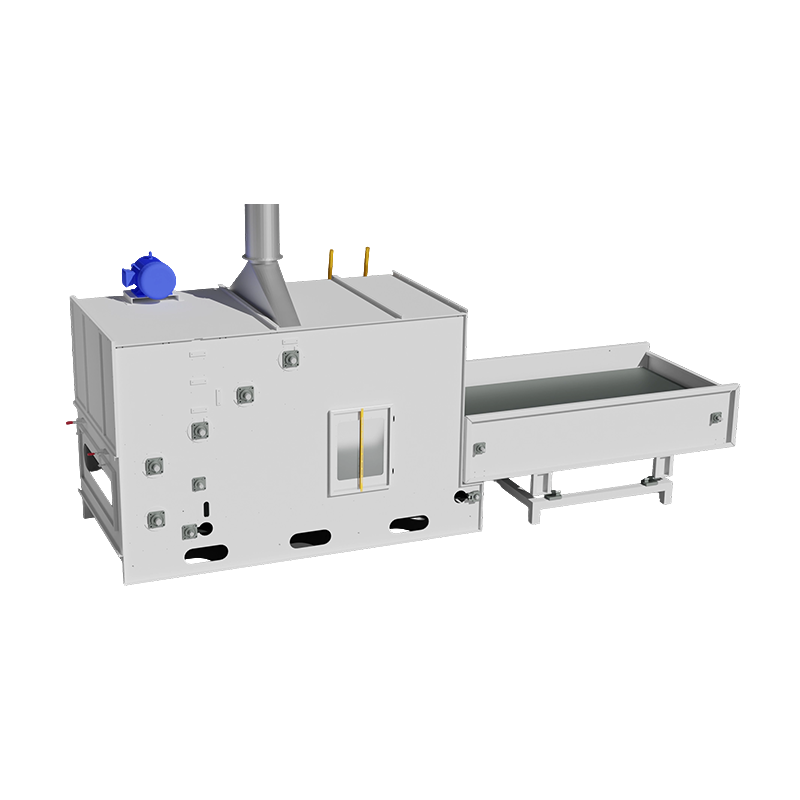
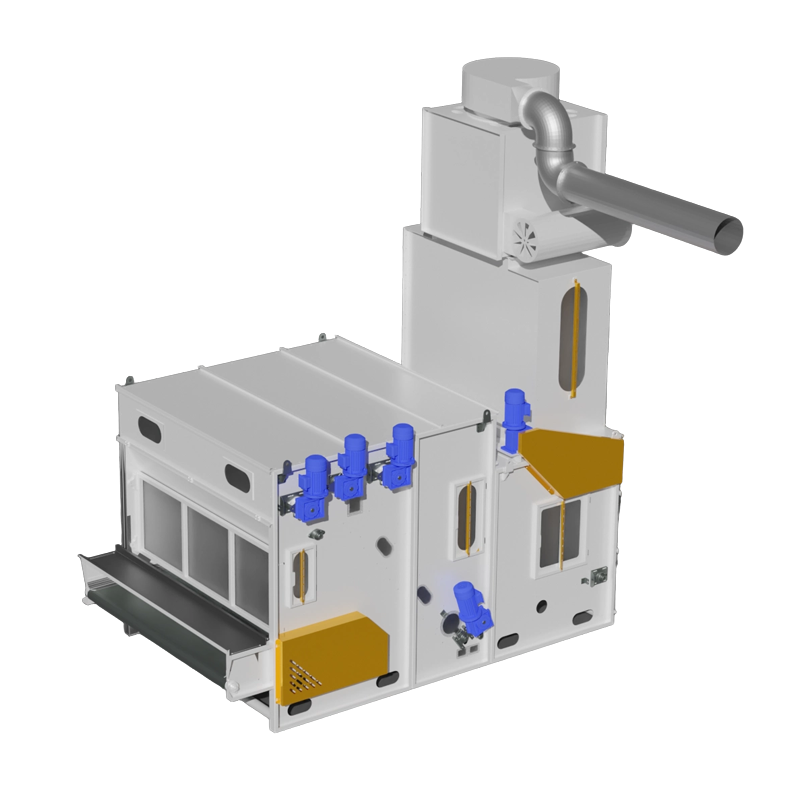
These are the machines most commonly combined to build a multi-fiber processing line, from coarse bale opening through precision blending and downstream feeding.
How a Mixed-Fiber Line Is Typically Configured
In practice, plants running multiple fiber types set up their opening and blending stage in a fixed sequence, then adjust parameters between batches rather than reconfiguring equipment. A typical arrangement looks like this:
- Bale opener machine breaks down compressed bales into transportable tufts, regardless of fiber origin.
- Pre opener machine performs coarse separation and initial trash or contaminant removal.
- Fine opener machine refines the tufts toward single-fiber state, with roller speed adjusted per fiber stiffness.
- Nonwoven big chamber blender machine layers and cross-strips the opened fiber to achieve an even blend ratio when two or more fiber types are combined.
- Nonwoven vibrating feeder or nonwoven pneumatic feeder delivers the blended fiber toward the nonwoven carding machine at a controlled, uniform rate.
Because each stage is modular, a customized nonwoven machine solution can add extra opening passes for recycled fiber, or an anti-static treatment stage for PP, without redesigning the whole line.
Practical Guidance for Switching Between Fiber Batches
| Situation | Recommended Action |
| Switching cotton to polyester | Clear residual lint from spike rollers to avoid cross-contamination and color mixing |
| Introducing recycled fiber batches | Run through metal detection first; reduce feed speed for the initial pass |
| Processing PP after PET | Check static levels; ground the equipment and inspect anti-static bars |
| Blending two fiber types in one run | Pre-weigh ratios before feeding the blending bin to keep output consistent |
These adjustments take minutes, not hours, on a well-built line. This is a key reason buyers request CE certified nonwoven machinery: consistent electrical and mechanical safety standards make rapid, repeated fiber-type changeovers far less risky for operators.
Where This Flexibility Matters Most
Multi-fiber capability is particularly valuable for producers running a nonwoven production line that serves several end markets from the same facility, such as switching between automotive padding, hygiene-layer substrates, and airlaid waste felt production line output. A plant that can pivot from virgin polyester to recycled fiber within the same shift avoids idle equipment time and reduces the need for separate dedicated lines.
For companies sourcing equipment from a Nonwoven Machine Manufacturer, this is also a cost consideration: a single well-configured opening and blending system that handles cotton, polyester, PP and recycled fiber removes the need to purchase and maintain separate lines for each material category.
Frequently Asked Questions
Does blending two different fiber types reduce fabric quality?
Not if the blend ratio is controlled at the feeding stage. A large chamber blender using the horizontal-lay, vertical-strip method is specifically designed to keep fiber ratios even across the output.
Can recycled fiber run on the same line as virgin fiber without cleaning between batches?
A brief clearing of the opening chamber is recommended to prevent contamination from residual debris, but no equipment changeover is needed.
Is extra equipment needed for polypropylene specifically?
Usually only an anti-static bar or ionizing unit, since PP fiber accumulates static more readily than cotton or wool during high-speed opening.