

Content
Put a lightweight spunbond sheet from a shopping bag next to a thick needle punched geotextile and you are looking at two entirely different families of nonwoven fabric, although neither contains a single woven thread. The core difference can be stated in one sentence: spunbond fabric is made of continuous filaments extruded from melted polymer and bonded by heat, while needle punched fabric is made of short staple fibers carded into a web and mechanically tangled by barbed needles. Everything practical follows from that single difference: the achievable weight range, strength profile, porosity, raw material options, investment level and, ultimately, the end products each fabric can serve. This guide walks through both processes, compares the properties side by side, and closes with a purchasing checklist you can apply before committing to either technology.
Two Processes, Two Logics: Filaments vs Staple Fibers
The spunbond process: polymer to fabric in one line
Spunbond production starts with polymer pellets, most commonly polypropylene (PP) or polyester (PET). The pellets are melted and extruded through a spinneret with hundreds of tiny holes, forming continuous filaments. These filaments are stretched by high-speed air to orient the polymer chains - the step that gives spunbond its good tensile strength for its weight - and are then deposited randomly onto a moving belt. The web is bonded immediately, usually by hot calender rollers that weld filament crossings into small bond points, which is why a spunbond surface shows a regular pattern of dots. Because spinning, web forming and bonding happen on one integrated line at high speed, spunbond is very efficient for light fabrics, typically from about 10 to 200 gsm.
The needle punched process: carding, cross lapping and barbed needles
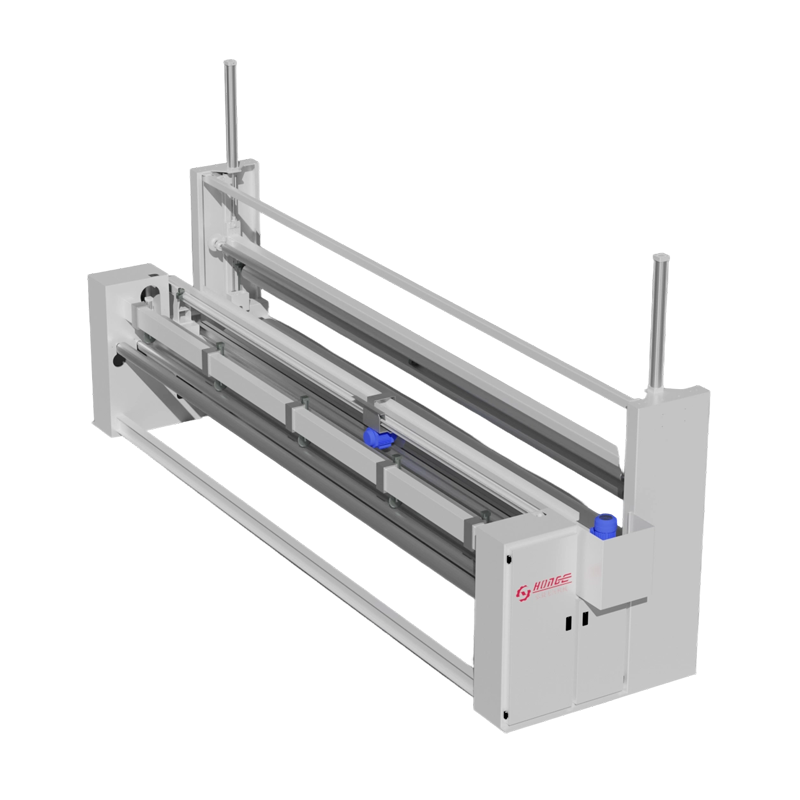
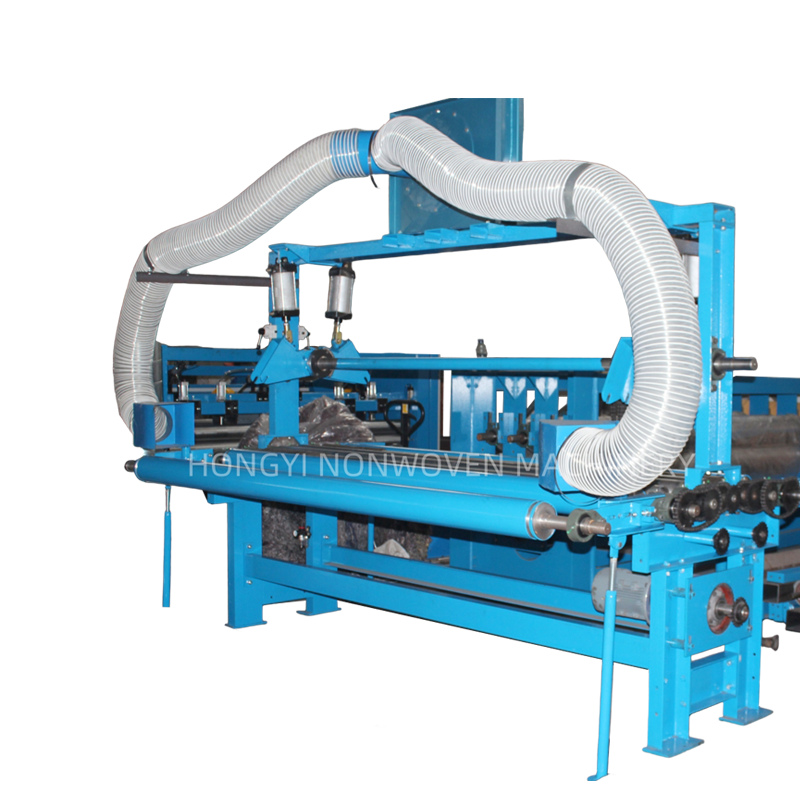
Needle punched fabric takes the opposite route: it starts from bales of staple fibers - short cut fibers such as polyester and polypropylene, plus natural or recycled fibers like wool and jute. The bales are first opened and mixed in a fiber blending machine, because an even fiber mix is what keeps final web properties consistent. The blend is carded into a light web, which is then cross lapped - folded layer upon layer - to build up weight and loft before bonding.
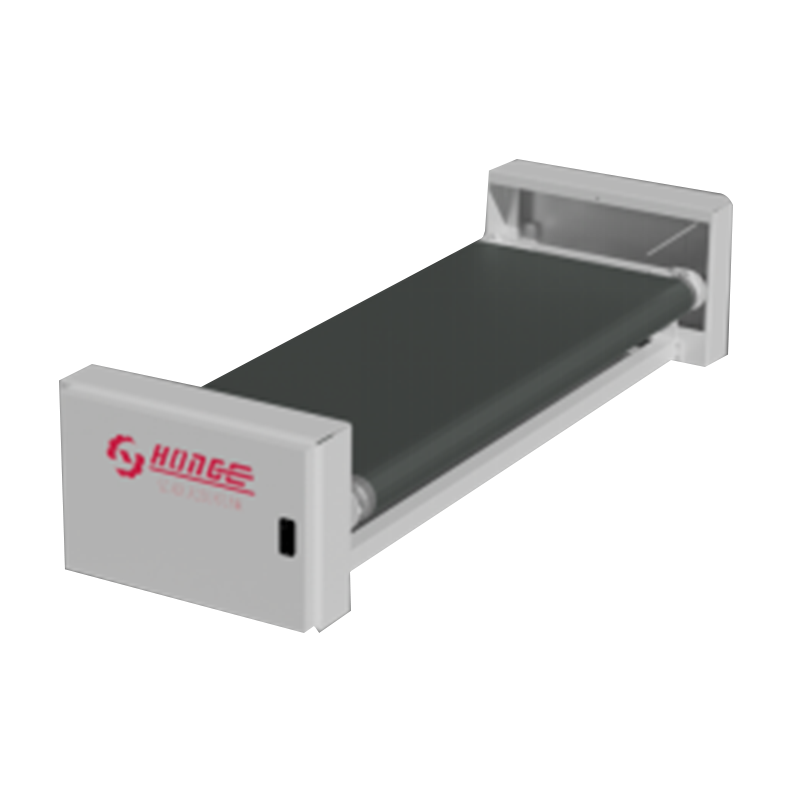
 HYPW Cross Lapper for Uniform Fiber Batt BuildingBefore needle punching, carded webs must be folded into layers to reach the required weight and loft. This cross lapper folds webs evenly with servo control and anti-static curtains, delivering uniform, smooth batts ready for bonding.View Product →
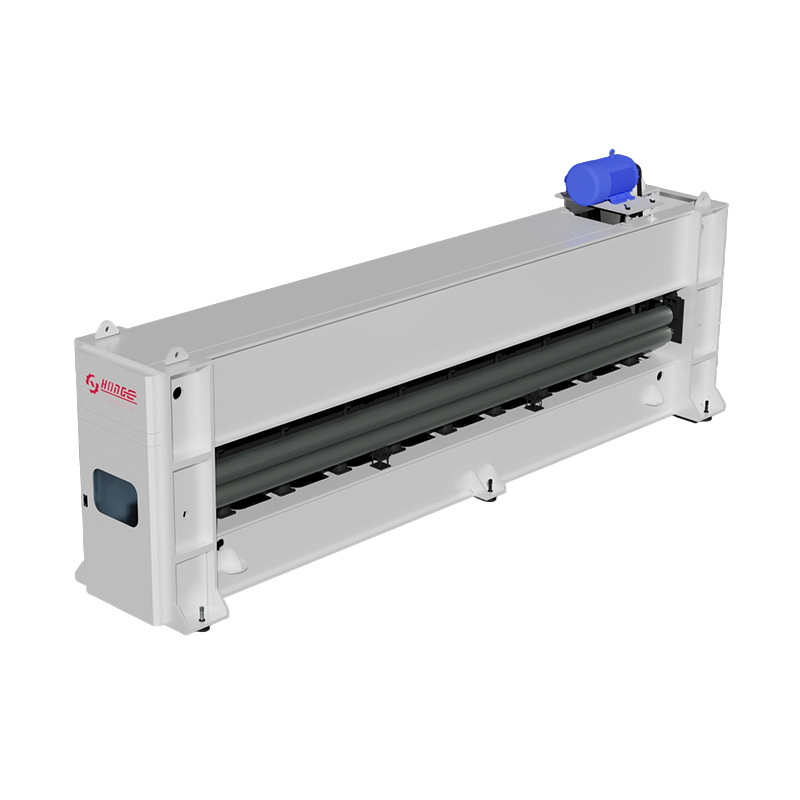
The bonding step is what gives the fabric its name. A needle loom drives thousands of barbed needles in and out of the web; the barbs catch fibers and pull them through the layers, mechanically interlocking the structure without glue or heat. Thickness, density and strength can be tuned through needle density, penetration depth and fiber blend.
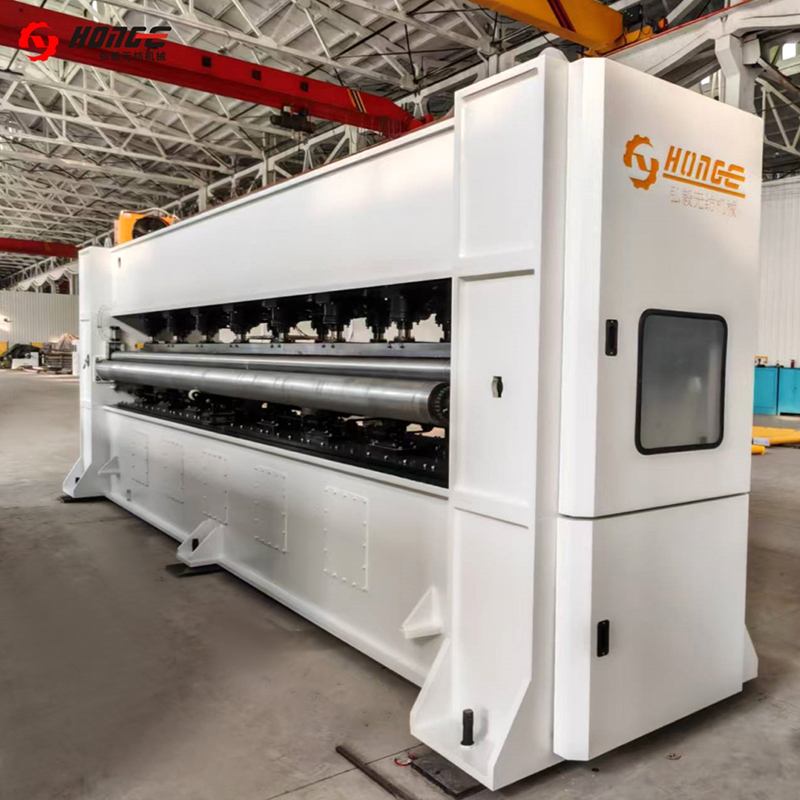 HYZC Needle Punching Machine for Fabric BondingThis is the machine that mechanically interlocks the layered web with barbed needles, no glue or heat needed. With working widths up to 8500mm and tunable needle density and stroke, it controls thickness, density and strength.View Product →
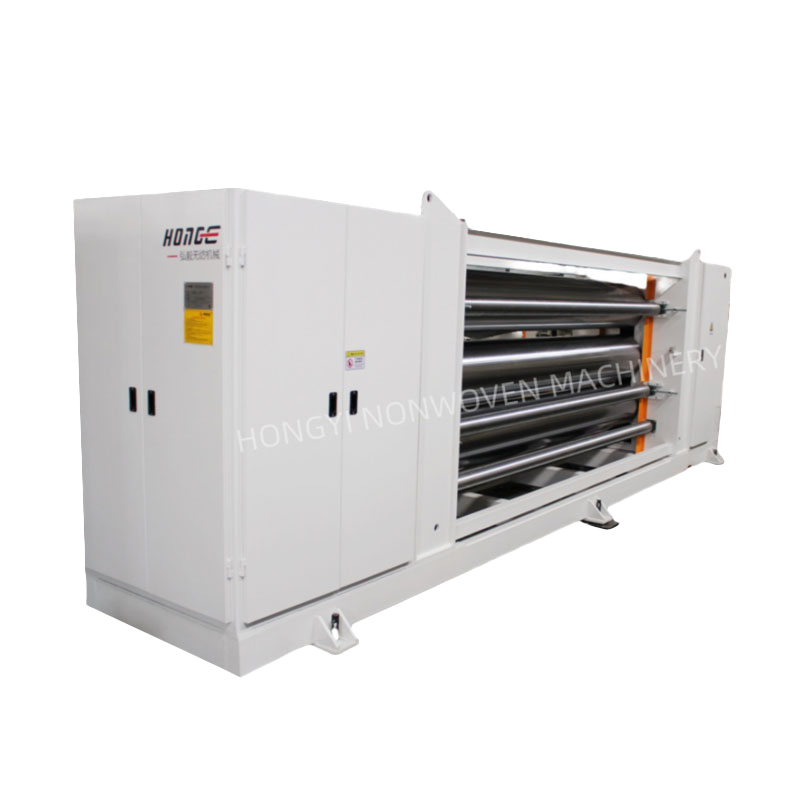
After needling, many producers add heat setting, ironing or calendering to stabilize dimensions and smooth the surface, then wind and slit the fabric to width.
Property Comparison at a Glance
Because one fabric is bonded by melting filaments and the other by tangling staple fibers, their commercial profiles barely overlap. The table below summarizes the differences buyers most often need to compare.
| Property | Spunbond nonwoven | Needle punched nonwoven |
|---|---|---|
| Fiber form | Continuous filaments | Short staple fibers |
| Bonding method | Thermal: hot calender rollers weld filament crossings | Mechanical: barbed needles interlock fibers |
| Typical basis weight | About 10-200 gsm | About 80-1500+ gsm |
| Thickness and loft | Thin, flat, dense | Thick, lofty, compressible |
| Surface look | Smooth, with regular bond points | Fuzzy, felt-like |
| Porosity | Low to moderate | High |
| Raw materials | Spinnable polymers only (PP, PET) | PET, PP, blends, natural and recycled fibers |
| Line speed | Very high | Moderate |
| Typical end uses | Hygiene, medical, bags, agriculture covers | Geotextiles, automotive, carpets, filtration, wadding |
The weight ranges explain most of the divide. A spunbond line is optimized for thin, uniform sheet goods; pushing it to heavy weights becomes uneconomical because output in square meters collapses. A needle punched line, in contrast, scales to heavy fabric easily - you simply add web layers with the cross lapper and increase needle penetration - which is why it dominates every application above roughly 200 gsm.
Where Each Fabric Wins
Spunbond territory: light, fast, high-volume
Spunbond is the default choice wherever fabric is consumed by the square meter in huge volumes and at low weight: hygiene products such as diaper back sheets, medical gowns and packaging, reusable shopping bags, crop covers, and backing or lining layers for furniture and flooring. Its continuous filaments deliver dependable tensile strength even at 15-30 gsm, and the fast, fully integrated line keeps unit cost low. What spunbond does not do well is bulk: it cannot economically produce thick, lofty, compressible structures.
Needle punched territory: thick, porous, fiber-flexible
Needle punched fabrics win wherever thickness, permeability and raw material flexibility matter more than speed. Typical examples include geotextiles for road, railway and drainage works, automotive interior parts such as trunk liners, under-carpet pads and insulation panels, needle felt carpets, dust filter media, wadding and padding, and bases for synthetic leather. A further advantage is that the process accepts fibers a spinneret cannot handle - coarse, natural, recycled or blended fibers - which lowers material cost and supports recycled-content targets. The chart below gives an illustrative view of how needle punched output is typically distributed across end uses.
- Geotextiles & civil: 30%
- Automotive interiors: 25%
- Carpet & flooring: 20%
- Filtration: 15%
- Bedding & furniture: 10%
Cost, Speed and Procurement Risks
From an equipment buyer's perspective, the two technologies sit at opposite ends of the investment scale. A spunbond line is a single, complex, high-capacity system: high capital cost, high energy use for extrusion, and payoff only at large volumes of light fabric. Its product window is narrow - you can shift basis weight within a band, but you cannot turn a spunbond line into a thick felt producer.
A needle punched line is modular and easier to grow in steps: opening and blending, carding, cross lapping, needling, then finishing equipment such as ovens and ironing machines as your products mature. Entry cost is lower, line speed is moderate, and the main recurring costs are needles, which wear and occasionally break, and fiber preparation quality. Uneven feeding shows up directly as uneven web weight, so components like a nonwoven vibrating feeder are not optional extras but a quality guarantee.
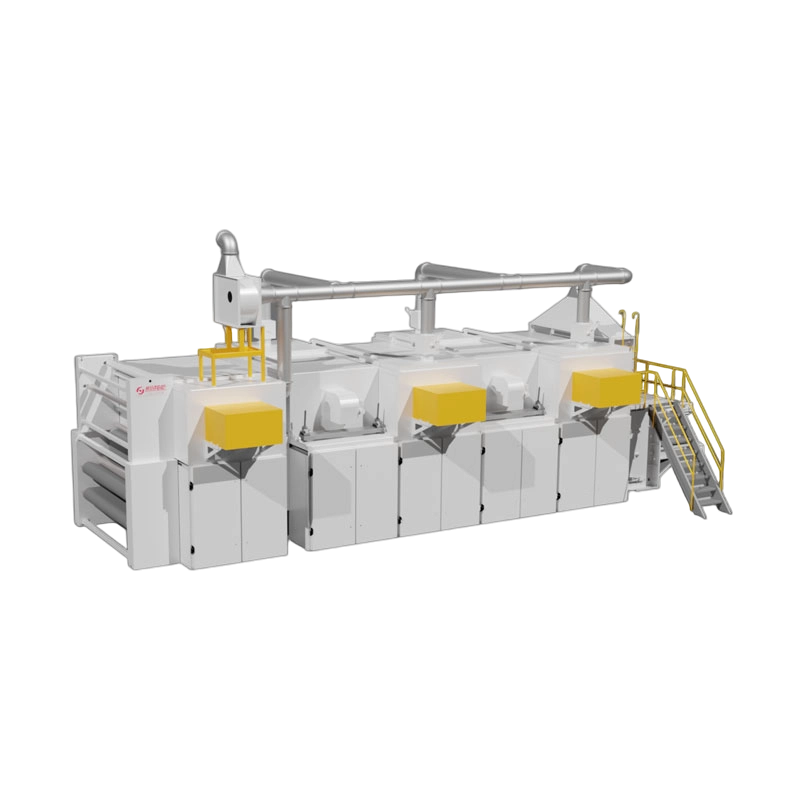
The rule of thumb is simple. If your target product is a disposable or light durable fabric below roughly 100 gsm, spunbond is the efficient route. If it is a durable, thick or lofty product above roughly 150 gsm - or you want to run recycled and natural fibers - needle punching is the practical choice. For factories building staple-fiber capacity around geotextiles, automotive felts or needle felt carpets, a complete needle punching felt production line ties the whole chain together from bale opener to winder.
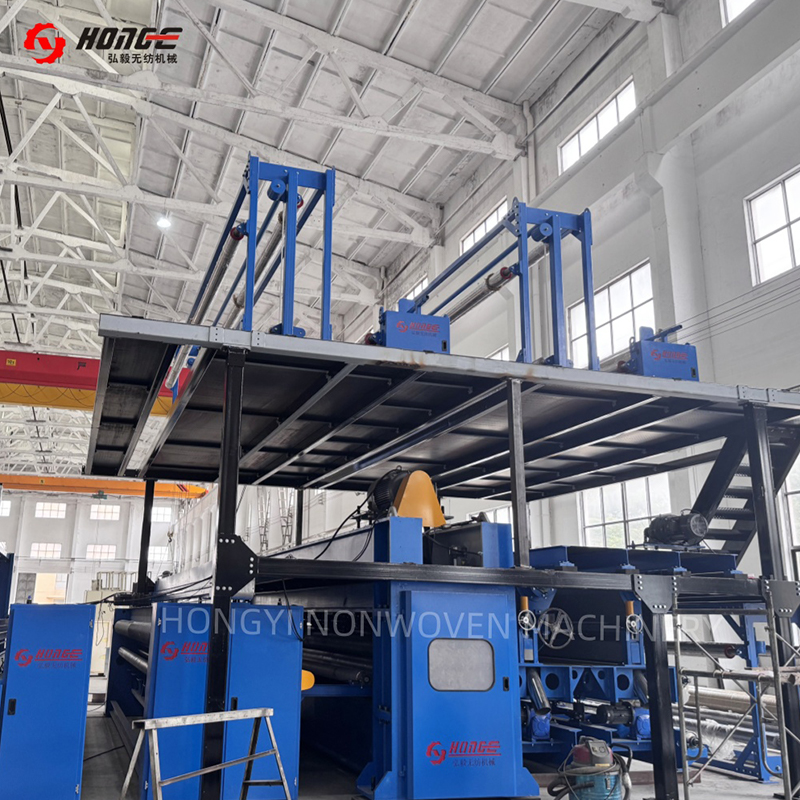 HYL Needle Punching Felt Production LineFor producers targeting heavy durable fabrics like geotextiles and automotive felts, this complete line runs from fiber preparation through needle punching to finished felt, with widths to 9000mm and weights from 100 to 1200 gsm.View Product →
A Six-Point Checklist Before You Decide
- Target basis weight: under 100 gsm points to spunbond; over 150 gsm points to needle punching; in between, evaluate both.
- Product life: single-use favors spunbond speed; long-life, load-bearing products favor mechanical bonding.
- Fiber supply: if you plan to use recycled, coarse or natural fibers, needle punching is effectively the only option of the two.
- Thickness and permeability: filters, geotextiles and padding need the loft only needle punching provides.
- Volume and budget: high-volume light fabric justifies spunbond capex; modular needle punched lines fit phased investment.
- Flexibility: needle punching lets you change fiber blend, weight and density on one line - valuable if your product mix is still evolving.
Frequently Asked Questions
Is spunbond stronger than needle punched nonwoven?
Not automatically. Per gram of material at light weights, spunbond's continuous filaments give excellent tensile strength, which is why 20 gsm spunbond works as packaging. At heavy weights, needle punched fabrics offer higher bulk, tear resistance and elongation, since interlocked staple fibers stretch and reorient under load instead of relying on fixed weld points.
Can a needle punched line run recycled fiber?
Yes, and this is one of its strongest economic arguments. Recycled PET or PP staple, production offcuts re-opened on an edge-trim opener, and coarse natural fibers all needle well, provided opening, blending and feeding keep the mix uniform.
Why is needle punched fabric thicker at the same weight?
Needling leaves fibers standing off the plane of the fabric, creating a three-dimensional, porous structure. Calender bonding in spunbond flattens the web, so the same grams per square meter produce a much thinner, denser sheet.
Do the two processes ever end up in the same product?
Sometimes. Mid-weight durable goods can be made either way, and some products combine them - for example, a needle punched core for loft with a bonded surface layer for smoothness. But for most specifications, the weight and loft targets clearly point to one process.
In short, spunbond and needle punched nonwovens are not competitors so much as complements divided by weight and structure: choose spunbond for light, uniform, high-volume sheets, and needle punching for thick, porous, fiber-flexible felts. If your roadmap leans toward the second family, the equipment chain - opening, blending, carding, cross lapping, needling and finishing - is modular, so you can build it one step at a time as your market grows.