

Content
Carding wins when you need thin, strong, highly uniform webs from long staple fiber; airlay wins when you need thick, bulky, directionally balanced webs from short, recycled, or blended fiber. Most buying decisions between the two processes really come down to three numbers: staple length, web weight, and how much difference between machine direction (MD) and cross direction (CD) strength your product can tolerate.
Two examples make this concrete. A converter producing 40 g/m² wipe substrates needs near-perfect weight uniformity and high tensile strength along the roll, which is why carding dominates that market. A mattress producer bonding 800 g/m² padding from reclaimed fiber needs bulk and equal support from every direction, which is why airlay dominates that one. Between these poles sit geotextiles, interlinings, insulation, wadding, felts, and automotive acoustics. The sections below explain how each process forms a web, where each one scores, and what to verify before you place an equipment order.
How the Carding Process Forms a Web
Carding is a mechanical, dry-laid process that starts from bales of staple fiber. A bale opener loosens the material, a blender mixes the components, and a feeder presents an even batt to the card. Inside the card, a large cylinder covered in fine wire clothing works against flats and worker-stripper rollers to separate tufts into individual fibers and remove many neps and impurities. The fibers leave the card largely parallel to the machine direction and are condensed into a continuous web.
Three consequences matter to buyers. First, alignment creates strength anisotropy: an un-crosslapped carded web commonly shows an MD/CD tensile ratio between 3:1 and 5:1, so it resists being pulled lengthwise far better than widthwise. Second, mechanical control gives outstanding uniformity at low grammages, which is why carding owns wipes, medical textiles, and interlinings below roughly 80 g/m². Third, carding has a fiber-length appetite: it prefers fibers of roughly 25 to 65 mm, very short or brittle stock turns into neps and web breaks, and a single card web rarely exceeds about 100 to 150 g/m², so heavy products must be built by stacking layers.
Feeding discipline decides the result. The card can only be as even as the batt it receives, so the opener, blender, and feeder upstream are not accessories; they are part of the web-forming accuracy itself.
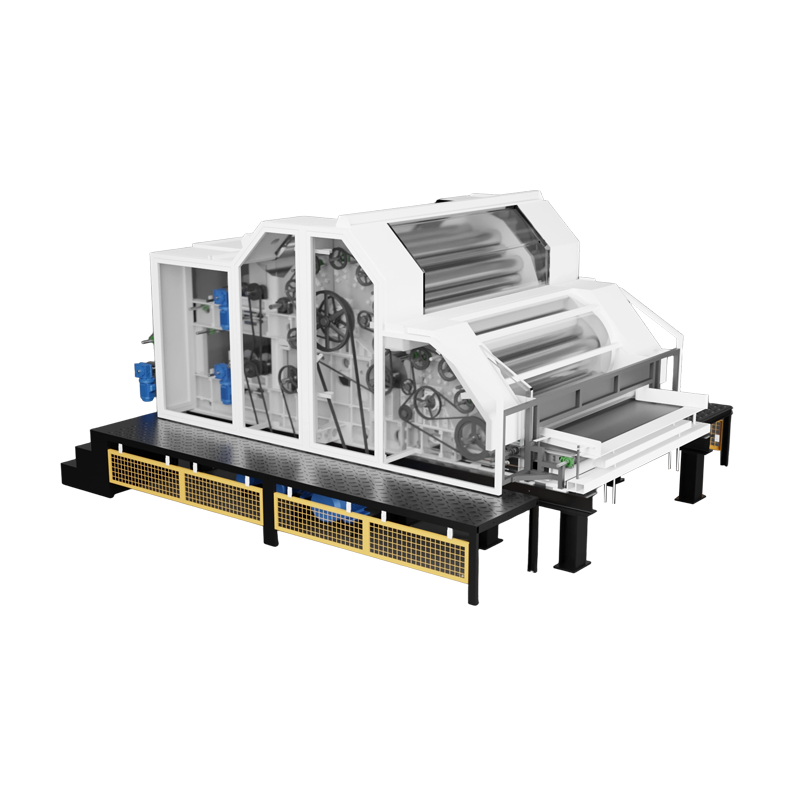
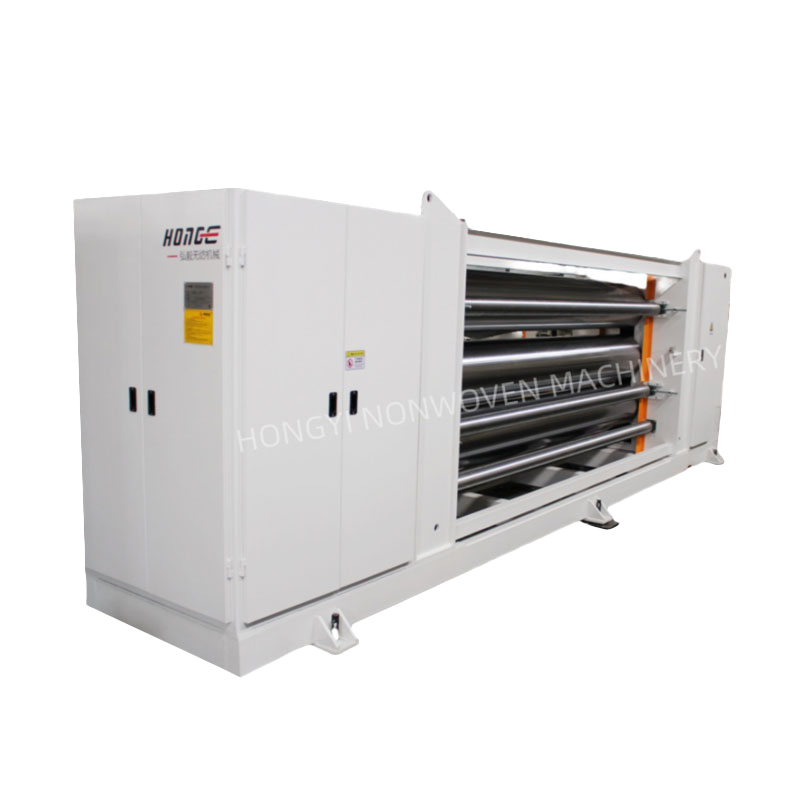
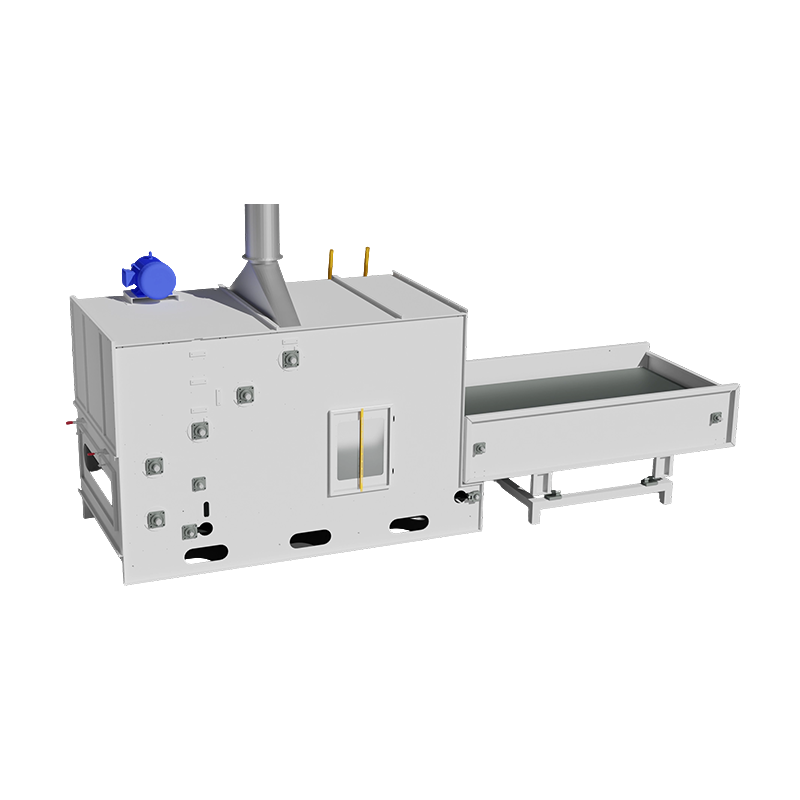
 HYSL Carding Machine for Parallel and Random WebsSince web evenness depends on the batt fed in, this carding machine matters here: it fully cards opened and blended fiber, with single or double cylinders, variable-speed drives, and optional randomizer rollers for parallel or random webs.View Product →
How the Airlay Process Forms a Web
Airlay replaces mechanical alignment with air. An opening roller breaks the fiber into small tufts, an air stream suspends them, and a perforated condenser drum collects them as a randomly oriented, three-dimensional web. Because deposition depends on airflow rather than wire clothing, fiber orientation is close to random and the web is bulky and lofty.
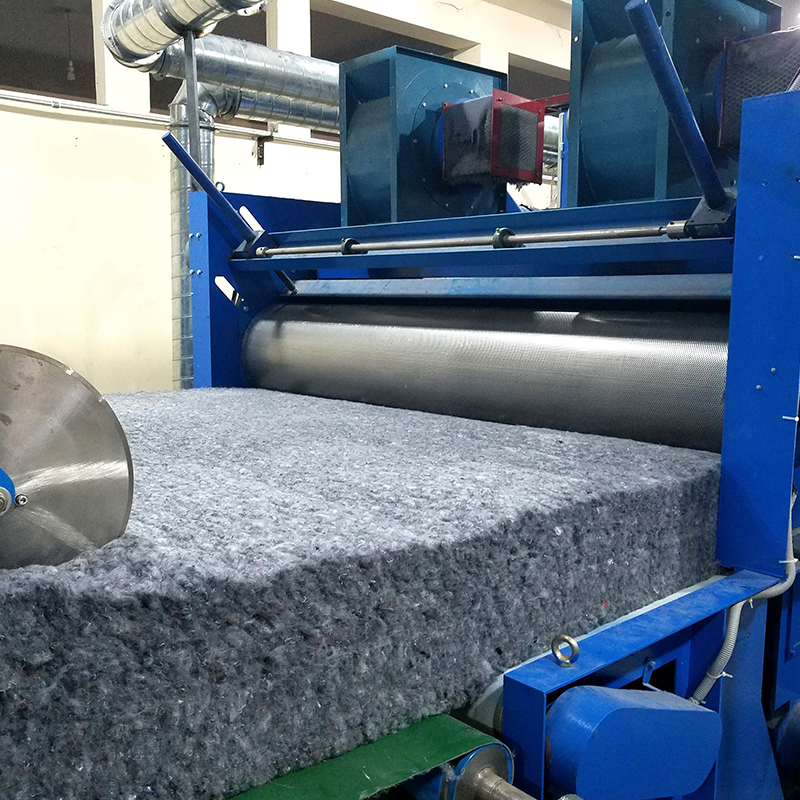
The advantages appear in four places. Fiber tolerance: airlay accepts fibers from only a few millimeters upward and copes with brittle or rigid stock such as reclaimed wool, jute, hemp, and spinning waste that would nep badly in a card. Weight range: one airlay web can run from roughly 50 up to 1,500 or 2,000 g/m², so thick padding is formed directly instead of laminated. Directional balance: with strength almost equal in every direction, airlay padding supports load uniformly, exactly what mattress pads, acoustic felts, and thermal insulation need. Blending flexibility: different fibers can be metered and mixed before forming, which makes airlay the natural core of waste-felt and recycling lines. Upstream consistency still matters, so it is worth reading how a fiber blending machine keeps the mix stable before sizing the rest of the line.
The weaknesses are the mirror image: weight uniformity is harder to hold at very low grammages, line speeds are lower than carding, transport fans consume extra energy, and the loose web has almost no strength until it is bonded by thermobonding, chemical bonding, or needle punching.
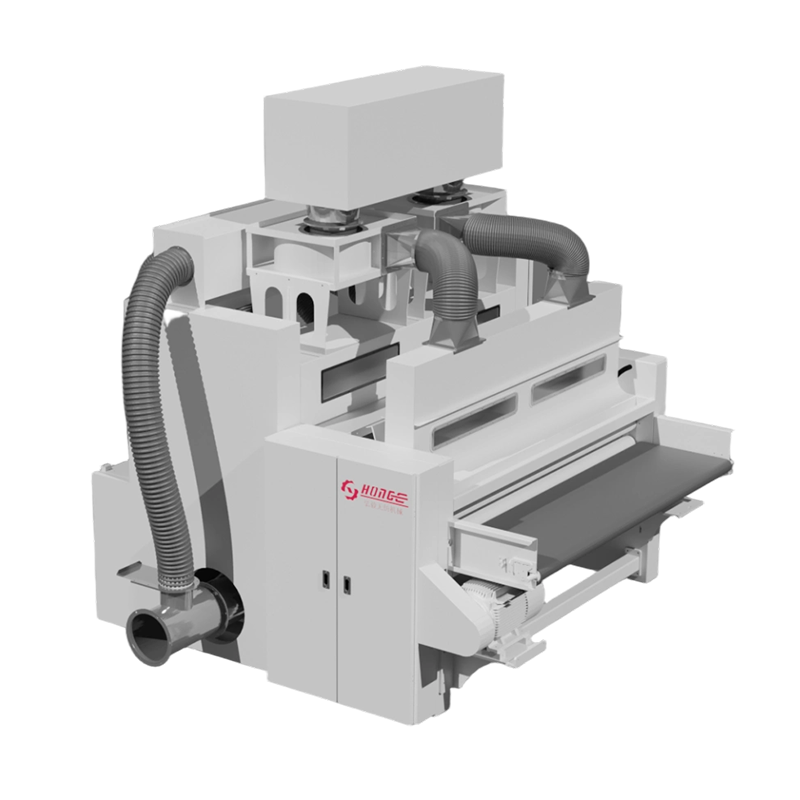
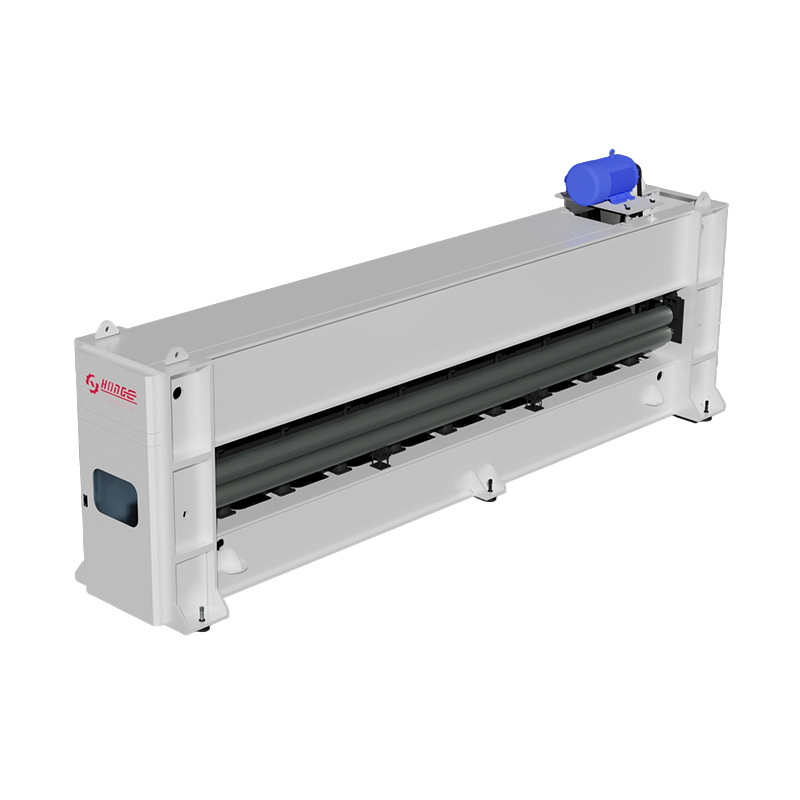
 HYQL Airlay Machine for Aerodynamic Web FormationFollowing the discussion of airlay trade-offs, this machine forms batts aerodynamically from polyester, low-melt fiber, wool, and more, replacing carding and cross-lapping for thermobonded wadding lines at lower speeds and low grammages.View Product →
Carding vs Airlay: Side-by-Side Comparison
The table below condenses the differences that matter most in an equipment quote.
| Factor | Carding | Airlay |
|---|---|---|
| Web formation | Mechanical; fibers aligned mainly in MD | Aerodynamic; fibers deposited randomly in 3D |
| Typical staple length | About 25 to 65 mm | From a few mm upward, tolerant of short fiber |
| Recycled or waste fiber | Limited; short brittle stock causes neps and breaks | A core strength of the process |
| Web weight per pass | About 15 to 150 g/m² | About 50 to 2,000 g/m² |
| Uniformity at low weight | Excellent | Moderate; weaker below about 50 g/m² |
| Bulk and loft | Moderate | High |
| MD/CD tensile ratio | Commonly 3:1 to 5:1 | Close to 1:1 |
| Typical bonding | Thermal calendering, through-air oven, needle punching | Thermobonding with low-melt fiber, spray bonding, needle punching |
| Typical products | Wipes, medical textiles, interlinings, geotextiles | Mattress padding, insulation, wadding, waste felts, automotive acoustics |
What the Web Structure Means in the Final Product
The clearest way to visualize the difference is the split of tensile strength between MD and CD. A carded web concentrates strength along the roll, which suits wipes that are dispensed and pulled lengthwise. An airlaid web splits strength almost evenly, which suits padding that is compressed and loaded from any side.
Two practical notes follow from this. If you need balanced strength from a carding line, a cross lapper folds several carded webs at 90 degrees, which is standard on needle-punched geotextile and felt lines. If you bond an airlaid web in an oven with low-melt fiber, the bonding points form through the thickness of the web, which is why thermobonded wadding recovers its loft well after compression.
How to Decide, and What to Check Before You Buy
Work through five questions in order:
- Fiber reality: list every fiber you will run, including the worst waste mix. Staple below about 25 mm or a high recycled share points strongly to airlay.
- Target weight: below roughly 80 g/m², carding is usually the only way to hold uniformity; above roughly 200 g/m² per web, airlay avoids cross lapping altogether.
- Direction of load: wipes and roll goods favor MD strength; padding and insulation favor isotropy.
- Bonding route: calender and thermal-bond lines pair with cards; oven thermobonding and needle punching pair naturally with airlay.
- Growth plan: if a second product is possible later, check whether the opening, blending, and feeding section can serve both a card and an airlay unit.
A hybrid option also exists: composite lines place a carding machine and an airlay unit on the same line, in either order, so a strong carded layer carries a bulky airlaid layer. This is an established, patented approach for products that need both surface strength and core loft.
Before signing, treat trials as non-negotiable. Ask the supplier to run your actual blend, including the recycled ratio, and to report web weight CV, MD/CD tensile values, and oven energy per kilogram of finished fabric. For airlay projects, ask how air volume and fan settings are tuned per fiber, because that tuning decides whether one machine can switch products cleanly. For carding projects, ask how quickly card clothing can be changed and how the feeder-to-card interface prevents weight bands. Hongyi supplies both standalone machines and complete lines and publishes its full nonwoven equipment range, a useful benchmark when you compare line scopes between suppliers.
If your target product is wadding or padding, the line is usually quoted as one system: opening and blending, airlay forming, oven thermobonding, then winding and cutting.
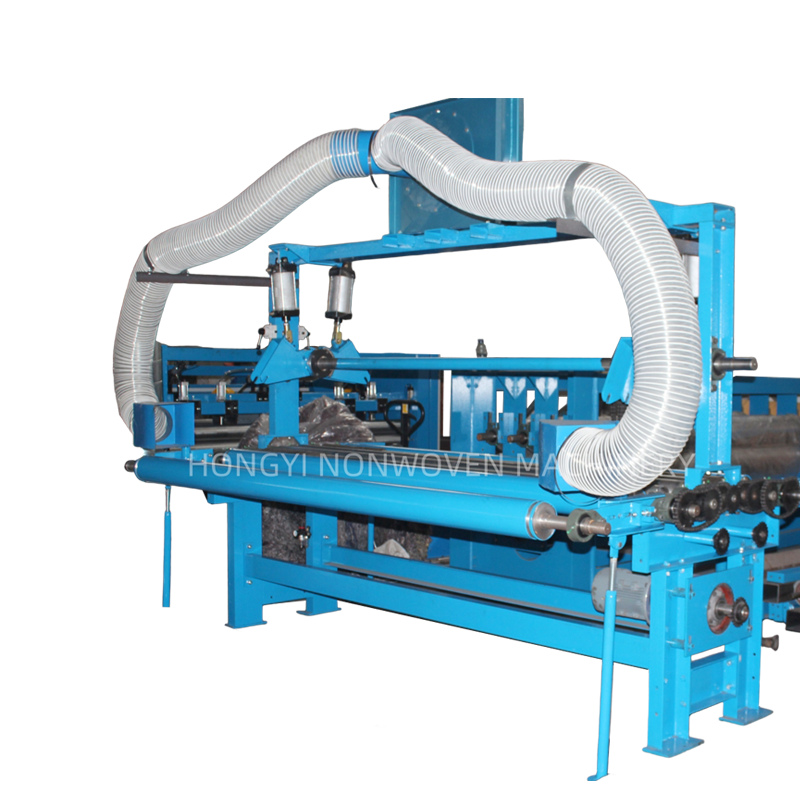
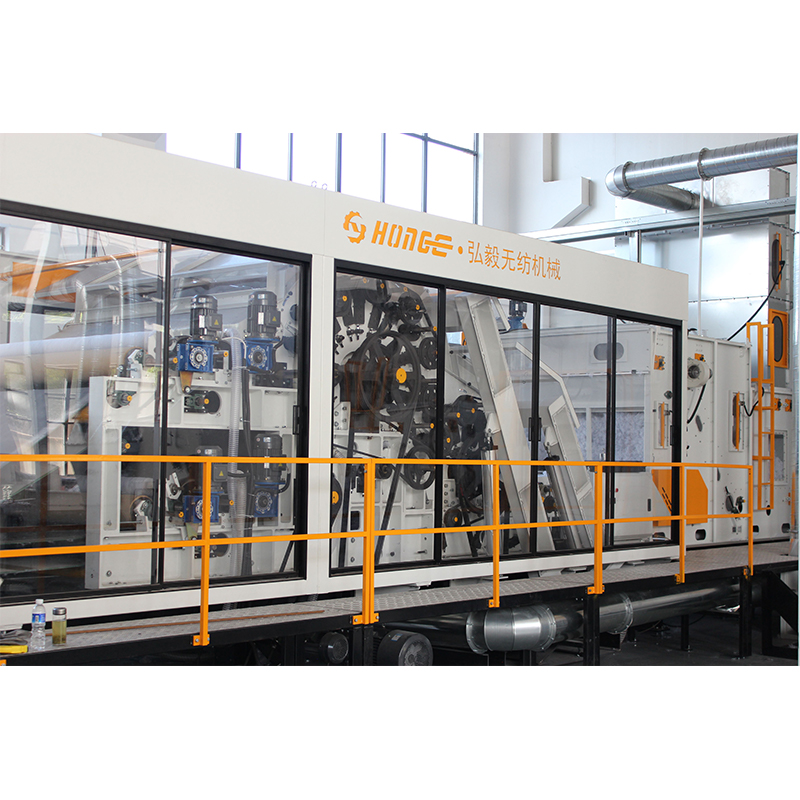
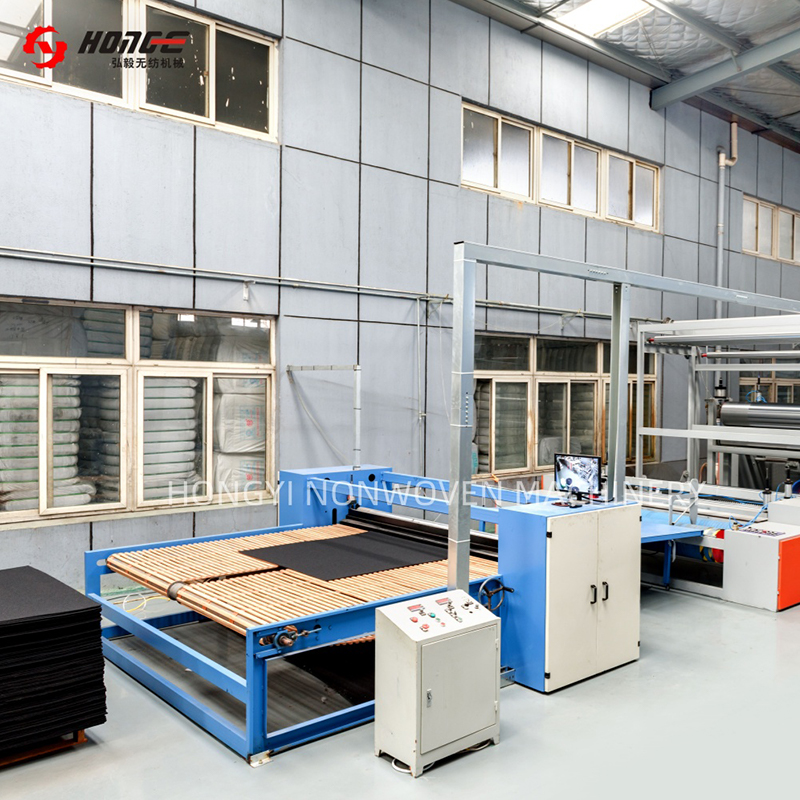 HYL Thermal Bonded Wadding Production LineAs the article notes, wadding products are usually quoted as complete systems, and this line integrates opening, airlay forming, thermal oven bonding, and winding to produce hard or soft wadding for mattresses, cushions, and home textiles.View Product →
Frequently Asked Questions
Is airlaid the same as drylaid?
Drylaid covers any web formed from dry fiber, so both carding and airlay are drylaid routes. In machinery catalogs, airlay usually means random air laying of staple fiber, while pulp-based airlaid is a separate, paper-like process.
Which process handles recycled fiber better?
Airlay. Short, brittle, and blended waste fibers are exactly what the aerodynamic route was developed for, whereas a card needs sound staple fibers to form a clean, continuous web.
Can carding ever produce balanced strength?
Not from a single web. A cross lapper stacking carded webs at 90 degrees brings MD and CD values close together, which is standard practice on needle-punched felt and geotextile lines.
Does airlay save equipment because it forms heavy webs directly?
It saves cross lapping at high grammages, but it does not save bonding. The loose airlaid web always needs a bonding step, most often a thermobonding oven with a share of low-melt fiber.