

Content
- 1 Needle Punching Machine: Main Components
- 2 The Needle: What the Barbs Actually Do
- 3 Key Needle Punching Parameters and Their Effect
- 4 How Needle Punching Fits Into a Nonwoven Line
- 5 Common Applications and What They Mean for Machine Choice
- 6 Frequently Asked Questions About Needle Punching
- 7 Conclusion: A Mechanical Process, But Not a Simple One
If you search "needle punching" online, most results will show craft tutorials for hand punch needle embroidery. That craft uses a hollow tool to push yarn through fabric and make loops. The industrial needle punching process is different: it uses barbed needles to mechanically interlock loose fibers into a durable nonwoven fabric.
Here is the simple answer: needle punching works by repeatedly driving barbed needles through a fiber web. The barbs catch fibers on the way out and pull them into the thickness of the web, which makes the fibers tangle together and gives the fabric strength. The process needs no binder and no melting, so it is one of the most direct and economical ways to make needled felts, geotextiles, automotive interior materials and other nonwoven products.
Needle Punching Machine: Main Components
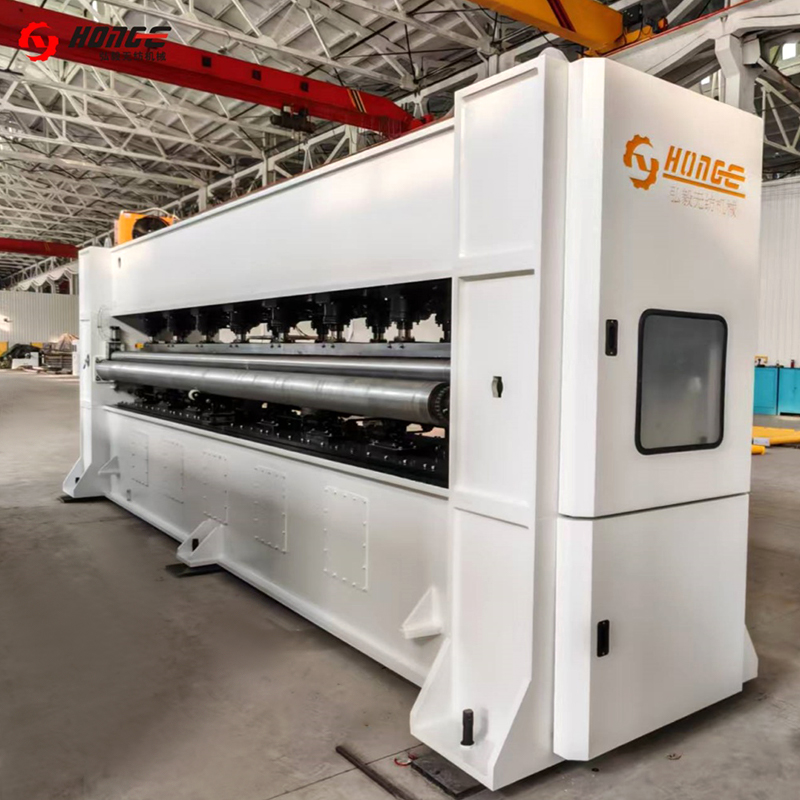
A standard needle punching machine looks intimidating, but the working principle is organized around a few key assemblies.
- Feed rollers: They move the fiber web into the machine and control its linear speed.
- Needle beam and needle board: The board carries thousands of needles and moves up and down at high frequency.
- Stripper plate: It holds the web while the needles retract, preventing the fibers from being lifted upward.
- Bed plate: It supports the web during penetration and limits how deep the needles can go.
Each stroke of the needle beam creates thousands of penetration points across the full web width. The board can be several meters wide and contain between 2,000 and 8,000 needles per meter, which is why a single needling unit can process a fiber web at speeds of several meters per minute. The needle punching machine is the heart of this process and deserves the most attention during equipment selection.
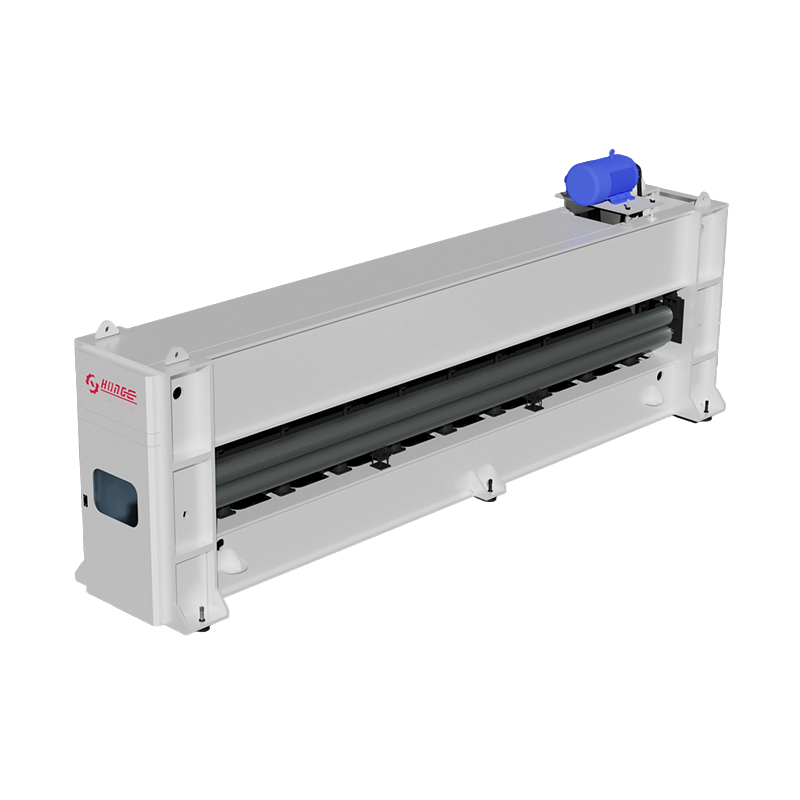
 HYZC Needle Punching Machine for Nonwoven ReinforcementThis needle loom offers a wide working width and multiple board configurations, making it a central choice when selecting equipment for reinforcing and finishing nonwoven fabrics.View Product →
The Needle: What the Barbs Actually Do
A needle punching needle is not a smooth sewing needle. Its shaft carries several sharp barbs with defined cutting angles. The number of barbs, the shape of the cross-section and the barb depth determine how much fiber is caught during each stroke.
- The needle tip penetrates the fiber web.
- A barb hooks a small bundle of fibers as the needle moves down.
- As the needle withdraws, the barb pulls those fibers from the surface toward the middle of the web.
- Thousands of repeated penetrations gradually convert the loose web into a compact, entangled structure.
If the barb is too deep, fibers break; if it is too shallow, few fibers are caught and the fabric stays weak. That is why needle geometry and stroke adjustment matter more than most nonwoven buyers initially realize.
Key Needle Punching Parameters and Their Effect
The machine provides the motion, but the result depends on parameters that the operator can adjust.
| Parameter | Typical Range | Effect on the Web |
|---|---|---|
| Punching depth | 6–15 mm | More penetration gives stronger entanglement, but too much can break fibers and create visible needle marks. |
| Punching frequency | 200–800 strokes/min | Higher frequency raises output, yet increases needle wear and machine vibration. |
| Needle density on the board | 2,000–8,000 needles/m | Higher density creates more anchoring points, making the fabric denser and stiffer. |
| Feed speed | 1–10 m/min | Lower speed, at a fixed frequency, means more needling per square meter and a stronger web. |
These figures are not fixed recipes. Fiber type, fiber fineness, web weight and the final application will all change the ideal setting. In practice, a new line should be tested with small samples before the full production run.
How Needle Punching Fits Into a Nonwoven Line
To answer "how does needle punching work" more completely, it helps to look at the whole production sequence:
- Opening and blending: Bales of fiber are opened, mixed and cleaned into a uniform blend. A good fiber blending machine improves web evenness from the very start.
- Web forming: A carding machine or airlay machine opens the blend into a thin, even web.
- Cross lapping: A cross lapper folds the web back and forth to build thickness and width.
- Pre-needling: A low-density needling step holds the thick web together so it can be transported safely.
- Main needling: One or more needle zones provide the final strength and surface finish.
- Winding and finishing: The fabric is wound, cut, and if necessary passed through an oven or ironing machine for heat setting.
The first two steps control uniformity; cross lapping controls thickness and width; needling controls strength and density. The line is only as stable as its weakest station, which is why machinery selection should not focus on the needle loom alone.
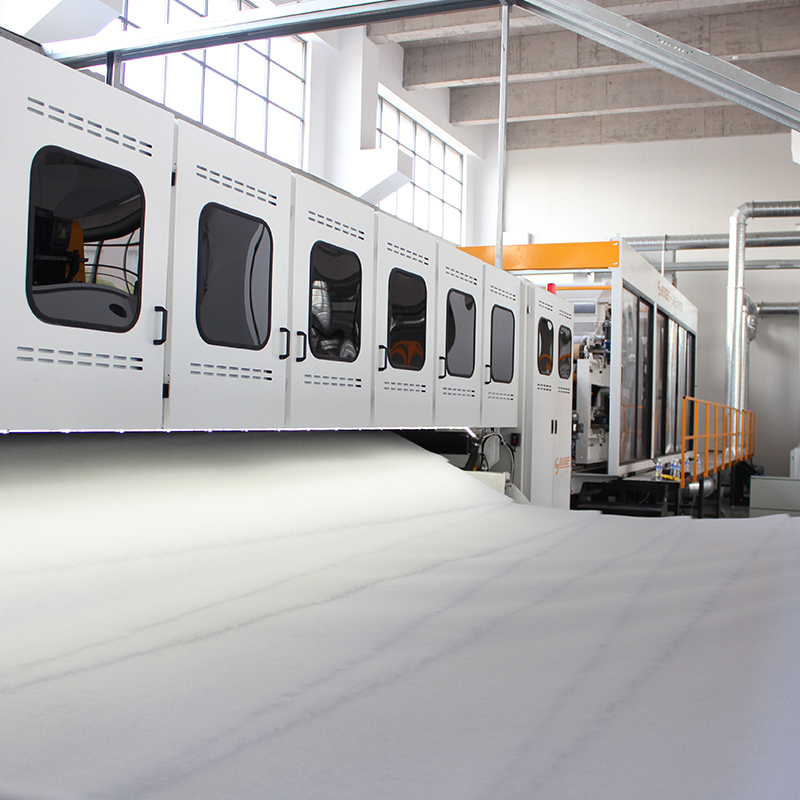 HYPW Cross Lapper for Uniform Fiber Batt FormationThis high-speed cross lapper folds carded webs evenly to control thickness and width, with servo drives and automatic width detection to ensure stable output for downstream bonding.View Product →
Common Applications and What They Mean for Machine Choice
Needle punching is used in dozens of industries. In our production-line conversations, the most common end uses include geotextiles, automotive interior parts, filtration media, carpets and wadding. For example, filtration media usually needs a high number of punches per square centimeter to form a tortuous pore path, while carpet backing is needled more lightly to retain flexibility. The same machine can cover these products, but the configuration will differ in needle type, stroke adjustment and number of needling zones.
Typical needling density by application
- Geotextiles 26%
- Automotive 22%
- Filtration 18%
- Carpet 15%
- Other 19%
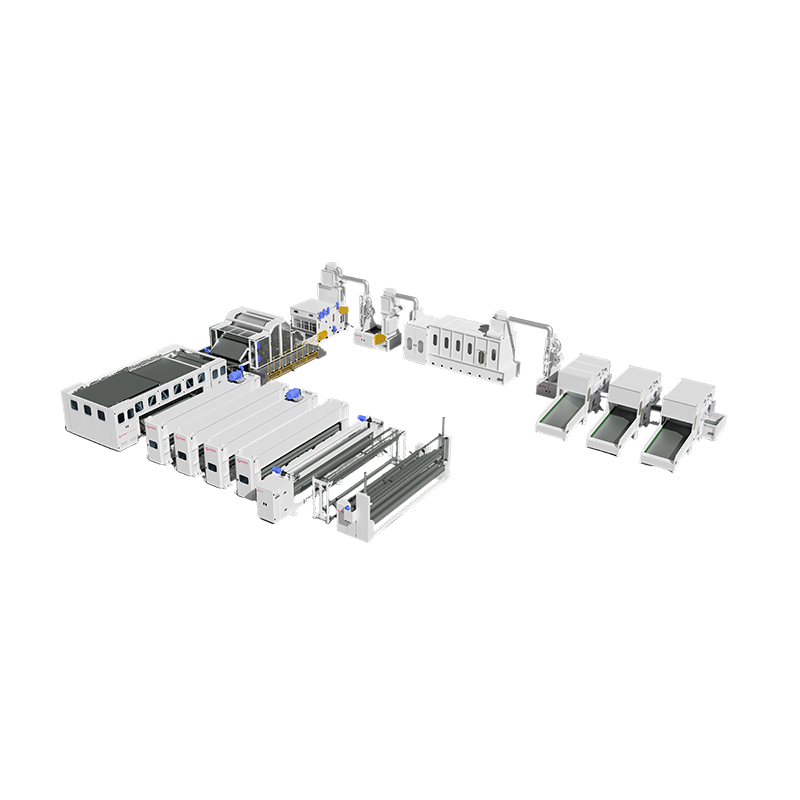
If you are planning a complete synchronized line, the most practical way to start is to look at a needled felt production line, which combines the opening, blending, carding, cross lapping, needling and winding sections into one supervised process. The layout of each station depends on the final product width, weight and output target.
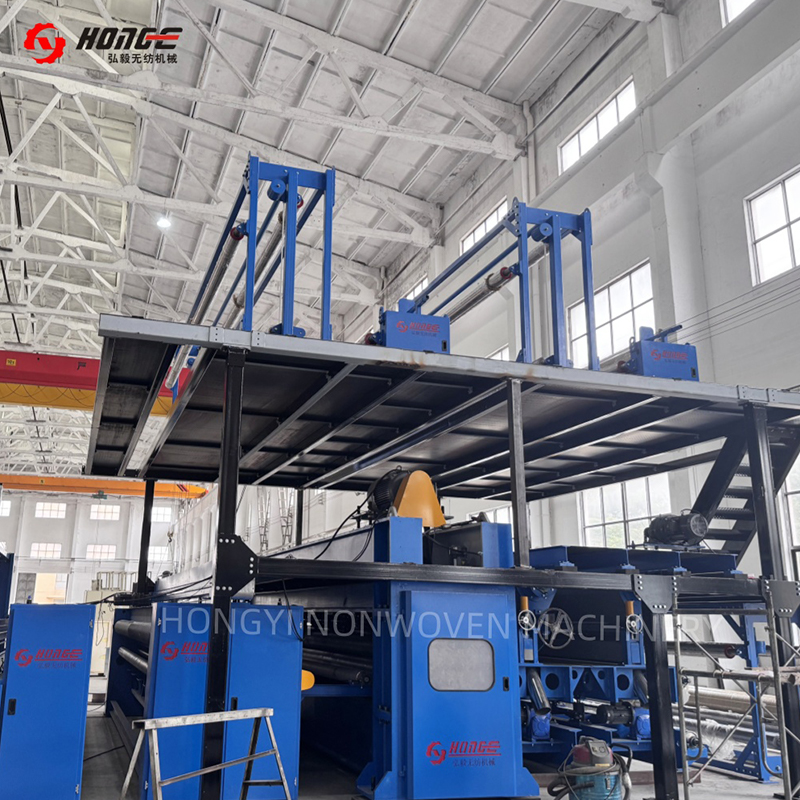 HYL Needle Punching Felt Production LineThis complete synchronized line combines opening, carding, cross lapping, needling, and winding, producing needle-punched felt in widths up to 9000 mm for diverse industrial applications.View Product →
Frequently Asked Questions About Needle Punching
Is industrial needle punching the same as hand punch needle embroidery?
No. Punch needle embroidery is a handcraft process that creates decorative loops on fabric. Industrial needle punching is a mechanical bonding process for nonwoven production. They share a similar name, but the equipment, scale and final product are completely different.
Does needle punching work on natural fibers like wool or jute?
Yes, natural fibers can be needle-punched when their fiber length and crimp are suitable. Wool and jute felts are common. However, many natural fibers benefit from blending with synthetic fibers to improve web strength and abrasion resistance, especially in industrial applications.
How often do needles need to be replaced?
There is no universal interval. Abrasive fibers, high punching density and high speed all accelerate needle wear. In many plants, operators inspect the needle board regularly and replace damaged needles as part of routine maintenance.
Can one needle punching machine handle different products?
Yes, within limits. If the planned range is similar, for example geotextiles of different weights and thicknesses, you can adjust needle depth, needling density and line speed. If your catalog jumps from thin filtration media to heavy flooring, you may need more than one needling configuration or a line with multiple needling zones.
Can needled nonwoven fabric be recycled?
Needle punching uses no chemical binder, so a single-polymer needled fabric can often be recycled more easily than chemically bonded nonwovens. Production edge trims are also frequently collected and fed back into the opening system.
Conclusion: A Mechanical Process, But Not a Simple One
Industrial needle punching works by converting vertical needle motion into horizontal fiber entanglement. The barbed needle is the core tool; the needle board, the stripper plate, the bed plate and the feed system together create an environment where thousands of needles can work in harmony.
When investing in a needle punching line, the first question is not the price of the loom but the exact product specification you plan to make: target weight, thickness, strength, permeability and surface appearance. A reliable nonwoven machinery manufacturer should be able to recommend the correct pre-needling and main-needling configuration, as well as the supporting opening, blending and lapping equipment.