

Content
When a filter loads up too fast or lets fine dust slip through, the problem is almost always in the media. The nonwoven sheet at the heart of the filter decides how many particles get caught, how much air or liquid can pass, and how long the element lasts before it needs replacement. Nonwovens dominate industrial filter media because they can be engineered to a target fiber diameter, pore size, thickness, and basis weight. That tunability lets a producer balance filtration efficiency against pressure drop for a specific use, from compressor intake air to process water in a beverage plant.
Why Nonwovens Are a Natural Fit for Filter Media
Nonwovens are formed by bonding loose fibers into a sheet using mechanical, thermal, or chemical methods. Because the fibers are not woven into yarns, they create a tortuous, three-dimensional pore network. Particles are caught by sieving, inertial impaction, interception, or diffusion, and each mechanism can be promoted by adjusting fiber size, web density, and thickness. This is why two filter media made from the same polymer can perform completely differently: the structure is engineered, not inherited from the raw material.
Fiber diameter is the single most influential variable in filter performance. Fine fibers in the 1–3 µm range capture sub-micron particles efficiently; coarser fibers between 20 and 40 µm keep pressure drop low and provide depth loading. For this reason, many filter products deliberately combine coarse and fine layers in a gradient structure that removes large particles first and protects the fine layer from premature blinding.
Four parameters define a filter grade in practical terms:
| Parameter | Typical range | Effect on filter performance |
|---|---|---|
| Fiber diameter | 1–40 µm | Smaller fibers increase capture efficiency |
| Porosity | 60–90% | Higher porosity lowers pressure drop |
| Basis weight | 30–1000 g/m² | Higher weight increases dirt-holding capacity |
| Thickness | 0.2–10 mm | Greater thickness improves depth filtration |
These numbers are not independent. Increase basis weight and efficiency goes up, but pressure drop follows. Product design is about finding the combination that meets the filtration standard with the lowest energy cost.
Main Applications of Nonwoven Filter Media
Nonwoven filter media serves four high-volume filtration segments. Each places a different demand on the media, but all rely on the same ability to fine-tune pore structure:
- Air filtration: HVAC pre-filters and final filters, cleanroom ceilings, dust collector bags, gas turbine intake filters, and portable air purifiers.
- Automotive filtration: engine intake air filters, cabin air filters, fuel filters, and lube oil filters, which need pleatability and thermal stability.
- Liquid filtration: potable water, industrial process liquids, food and beverage, metalworking coolants, and chemical baths.
- Healthcare and safety: surgical masks, respirators, anesthesia filters, and filter layers in single-use medical devices.
In every segment, the same balancing act applies: a media dense enough to meet efficiency targets but open enough to allow acceptable flow. Nonwovens avoid the worst of this trade-off through gradient structures and composites, which is why they continue to gain share in pleated panels, cartridge filters, and liquid filter plates.
How Nonwoven Filter Media Is Produced
Six production methods cover almost the entire filter media market. Each creates a different pore geometry, and each has a natural field of use.
Carding and Needle Punching
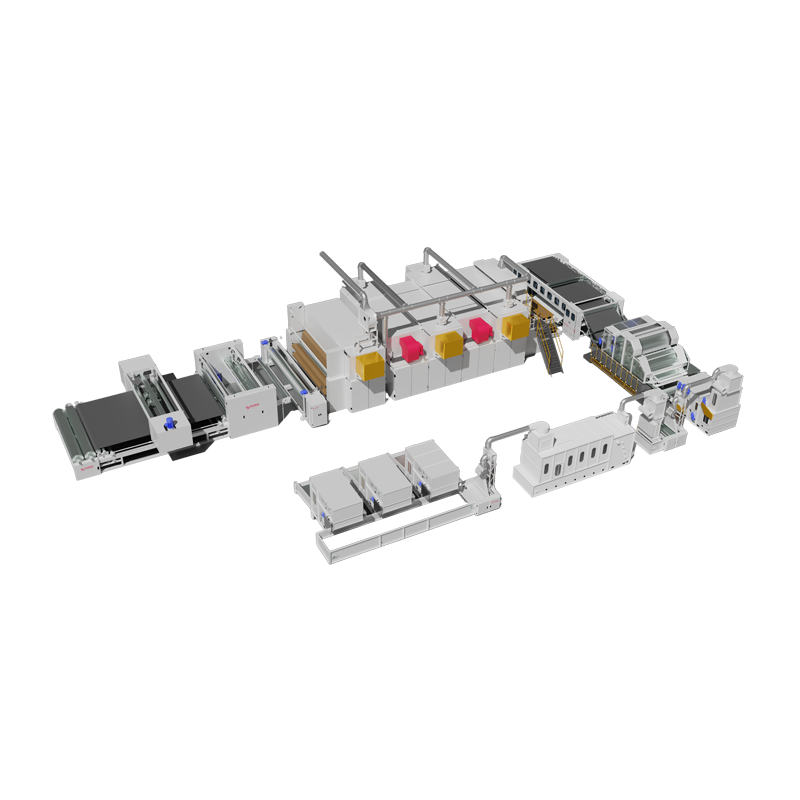
Carding opens and aligns fibers into a uniform web, and needle punching entangles that web mechanically. The resulting felt has a bulky, open structure with high permeability and high dirt-holding capacity. Needle-punched filter felt is standard in dust collection, hydraulic systems, and vacuum cleaners. Because polyester, polypropylene, nylon, and flame-retardant fibers can be processed, the media covers a wide range of thermal and chemical exposure. A needle punching felt production line is usually the first choice when mechanical strength and service life matter most.
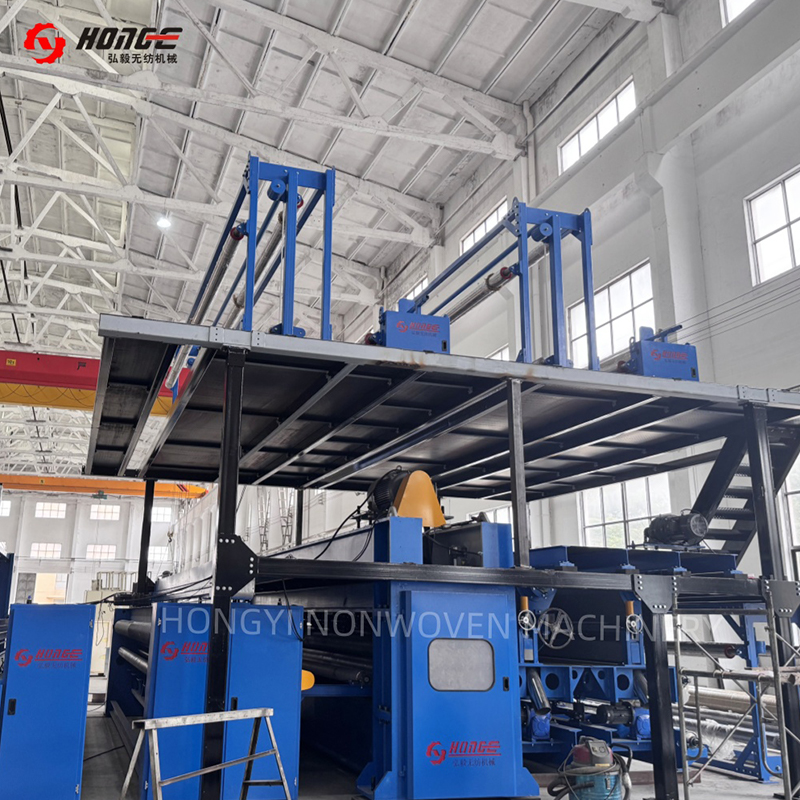 Needle Punching Felt Production Line Supplier | HongyiChangshu Hongyi Nonwoven Machinery Co., Ltd. is a China needle punching felt production line supplier & manufacturer. Width ≤8500mm, 100–...View Product →
Airlaying
An airlay machine suspends fibers in an air stream and deposits them randomly on a forming conveyor. The resulting web is isotropic and lofty, with no preferred fiber direction. This structure makes airlaid media effective where contaminants must be absorbed into the bulk rather than held on the surface: oil sorbents, industrial wipes, coolant filters, and pre-filter layers that protect finer media downstream. An airlay machine for filter media can handle synthetic and natural fibers with low mechanical stress, which preserves fiber length and keeps the media strong.
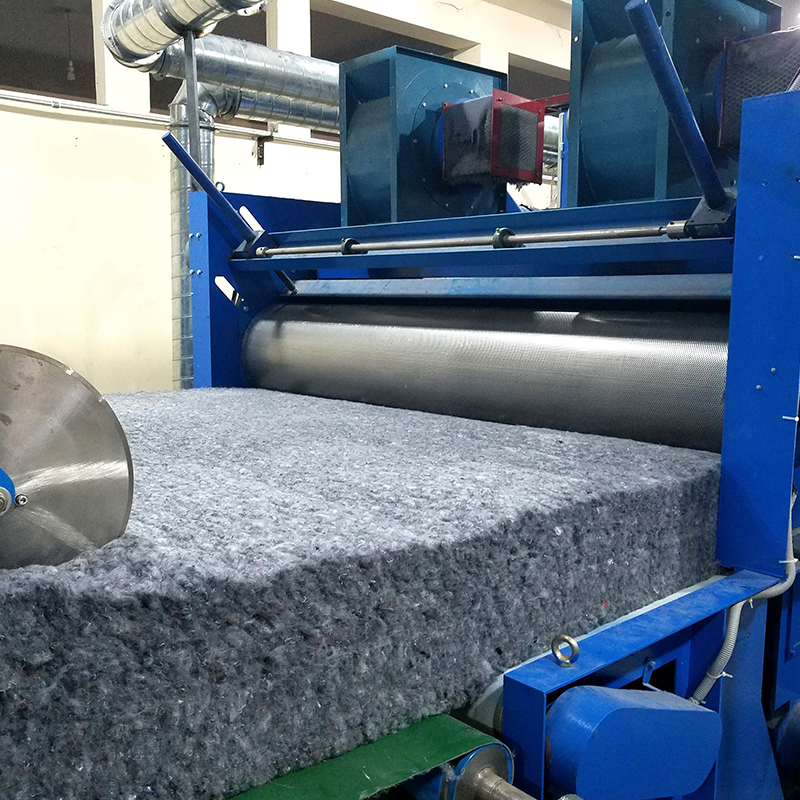 Airlaid Felt Machine & Production Line Supplier | HongyiChangshu Hongyi Nonwoven Machinery Co., Ltd. is a China airlaid felt machine & airlaid production line supplier & manufacturer. 800kg/h, ...View Product →
Meltblown
Meltblown is the method used when maximum fine-particle efficiency is the goal. Polymer pellets are melted, extruded through fine spinnerets, and attenuated by hot air into microfibers with diameters of 1–5 µm. Meltblown media is the core of respirators, HEPA filters, and fine liquid cartridges. Because the layer is relatively fragile, it is usually combined with a spunbond carrier or a needle-punched support in actual filter construction.
Spunbond, Wetlaid, and Laminated Media
Spunbond media is made from continuous filaments, giving dimensional stability and strength but a coarser pore size; it appears as pleat support, pre-filter, or outer layer of composite media. Wetlaid media is formed like paper from short fibers suspended in water and produces the fine, uniform pores required for liquid filtration. Lamination bonds a fine layer to a strong carrier, producing a gradient structure that handles the full filtration job in one roll.
| Method | Fiber diameter | Filtration role | Typical application |
|---|---|---|---|
| Carded needlepunch | 10–40 µm | Depth filtration | Dust collector bags, hydraulic filters |
| Airlay | 15–50 µm | Depth absorption | Oil sorbents, prefilters |
| Meltblown | 1–5 µm | Fine capture | Respirators, HEPA, fine liquid filters |
| Spunbond | 15–40 µm | Support and pre-filtration | Pleat support, outer layers |
| Wetlaid | 0.5–10 µm | Sieving and fine retention | Fine liquid filtration media |
| Laminated composite | Varies by layer | Gradient filtration | Multi-layer filter cartridges |
Equipment Decisions That Determine Filter Quality
Filter media tolerates very little machine inconsistency. A streak in the web becomes a channel for particles to bypass the filter. A variation in basis weight becomes a variation in measured efficiency. That is why the equipment chain matters as much as the fiber recipe.
Fiber Preparation and Blending
Everything begins in the opening and blending stage. If the fiber mix reaches the card in uneven clumps, no subsequent step can repair the damage. A big chamber blender accumulates and homogenizes the fiber feed, which directly improves cross-machine uniformity. What a nonwoven big chamber blender does is essentially to turn a series of batches into one continuous, consistent fiber supply.
Feeding and Carding
The vibrating feeder is the last quality gate before the card. It meters fiber to the card intake at constant density so the carding machine can produce a web without thick and thin zones. Why a nonwoven vibrating feeder matters becomes obvious when basis weight variation shows up as inconsistent filter ratings on the finished roll. The card itself sets fiber orientation and web evenness for the whole downstream process, so the carding machine for filter-grade media must run with stable cylinder and doffer speed control.
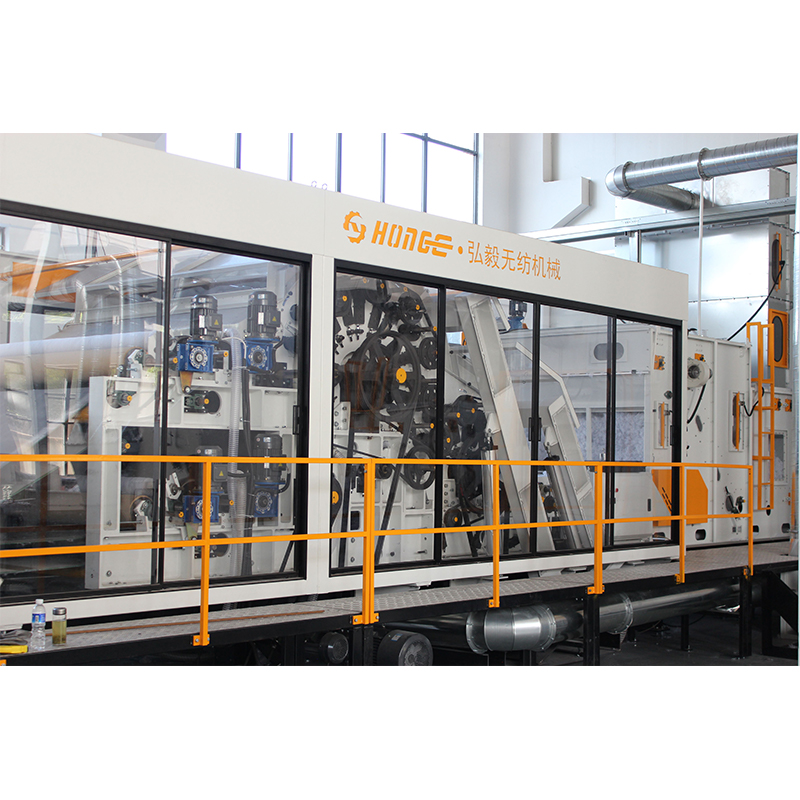 Nonwoven Carding Machine Supplier & Wholesale | HongyiChangshu Hongyi Nonwoven Machinery Co., Ltd. is a China nonwoven carding machine supplier & manufacturer. Single/double cylinder, CE cert...View Product →
Bonding, Winding, and Slitting
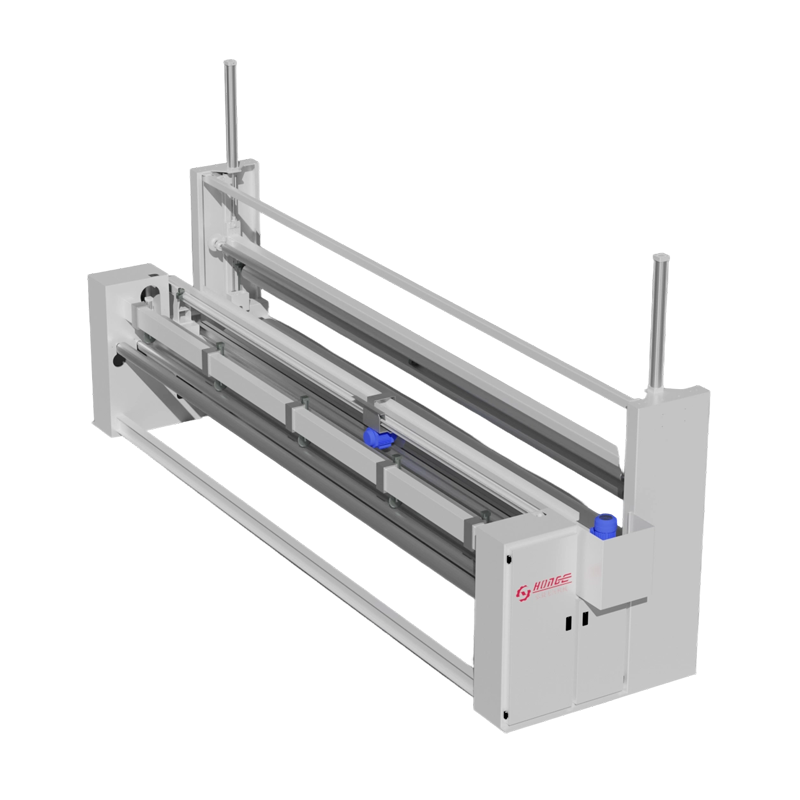
Bonding fixes the structure, but the line is not finished until the media becomes a clean, stable roll. Filter producers who pleat media downstream rely on accurate winding and clean slitting. A telescoped roll or a ragged edge stops a pleating line just as surely as a bad media sample would.
What to Review Before You Build a Filter Media Line
A line for filter media is different from a line for geotextiles or wadding. Filter customers ask for test data, not just roll samples, and they expect batch-to-batch reproducibility. Before investing, review these points:
- Filtration standard and test particle size: the efficiency target, such as MPPS or 0.3 µm for HEPA-grade media, dictates the fiber diameter and structure you must produce.
- Fiber range and chemistry: polyester and polypropylene cover most applications, but nylon, meta-aramid, and flame-retardant fibers expand your addressable market.
- Line width and speed must match your downstream pleating, slitting, or lamination equipment; a fast carding machine is no advantage if converting is the bottleneck.
- Grade change flexibility: filter producers rarely run one grade for long, so the line must accept quick changes to basis weight, blend ratio, and line speed.
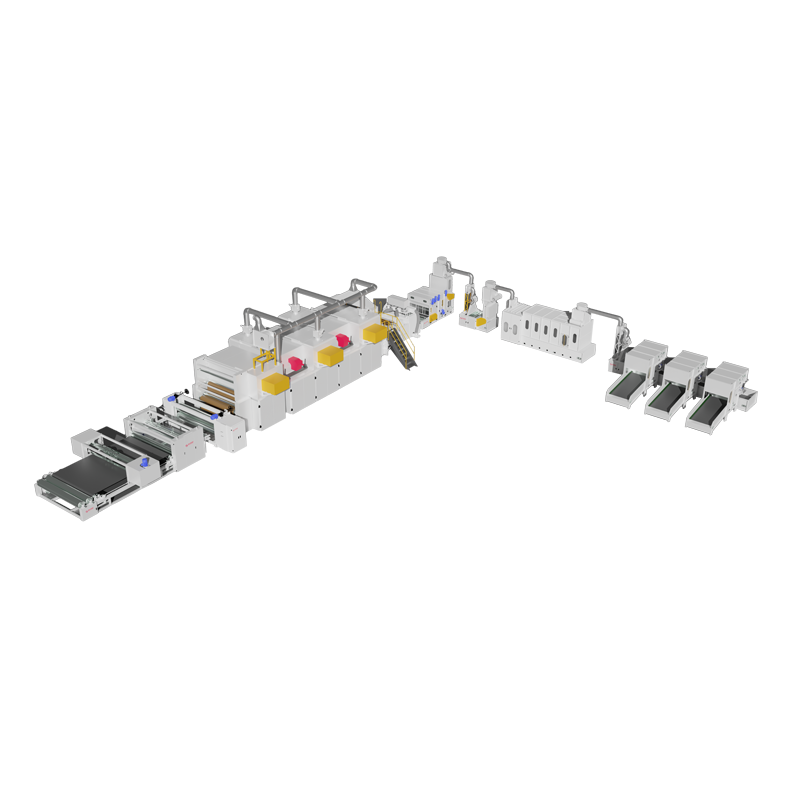
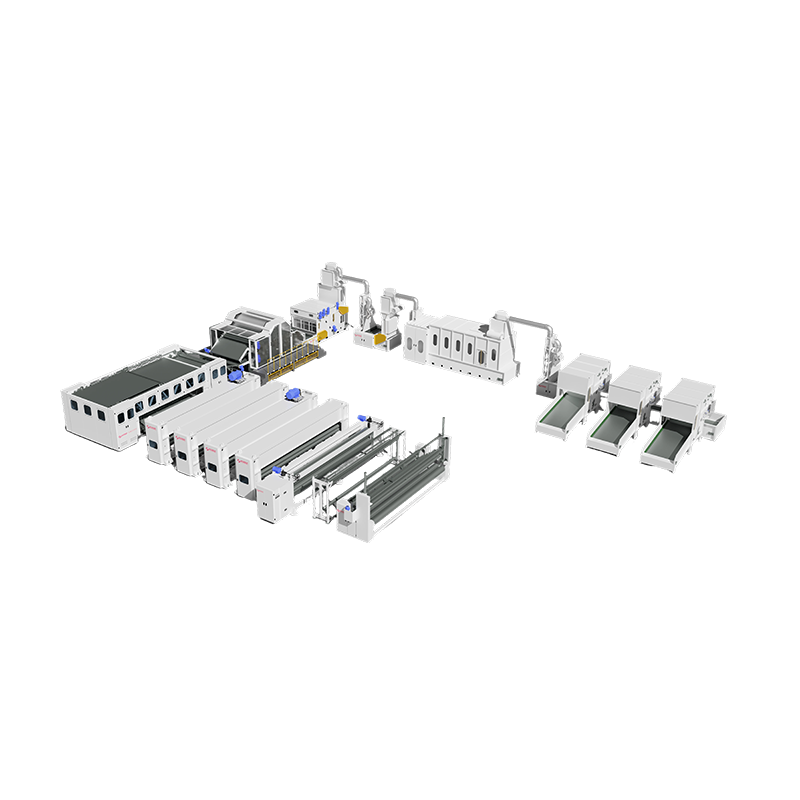
Nonwoven filter media production is a chain: opening, blending, feeding, carding, web formation, bonding, and winding. Each step inherits the errors of the previous one. Working with a machinery supplier who provides the complete chain reduces integration risk because the machines are designed to run as one process. Changshu Hongyi has supplied needle-punched felt lines, airlaid lines, and thermal-bonded lines to more than 20 countries over 20 years of nonwoven machinery experience, and that full-process perspective is available to filter media producers planning their next line.