

Content
Before a nonwoven fabric can be bonded, strengthened, or finished, the fibers must first be arranged into a loose, sheet-like structure. That step is called web forming, and it is the single most influential stage in the entire production process. The uniformity, strength, thickness, and hand feel of your final product are largely locked in at this point—bonding can only reinforce what the web already provides.
If you are a production manager evaluating a new line, an owner planning capacity expansion, or a professional new to the industry, you need a clear framework for how different forming methods work and how to choose among them. This guide explains the main web forming techniques, compares their practical trade-offs, and maps each method to the equipment required to execute it reliably.
What Is Web Forming and Why Does It Matter?
Web forming (also referred to as web formation) is the process of converting loose, baled fibers into a continuous, uniform sheet known as a web. In traditional textiles, fibers must first be spun into yarn, and then yarns are woven or knitted into fabric. Nonwoven production skips the yarn stage entirely: fibers go directly from a web to a finished fabric after bonding and finishing. Because there is no yarn structure to hold things together, the quality of the fiber web itself becomes the primary determinant of the end product's performance.
A typical nonwoven production line follows three main stages:
- Web forming: Loose fibers are opened, blended, and arranged into a sheet.
- Web bonding: The web is consolidated through mechanical, thermal, or chemical means.
- Finishing and conversion: The fabric is treated, wound, slit, or cut for its final application.
Achieving a consistent, defect-free web in the first stage is critical. Problems such as fiber clumps, uneven basis weight, or weak spots cannot be fully corrected later. This is why equipment selection for web forming deserves careful attention—it sets the ceiling for what your entire line can produce.
The Main Web Forming Techniques Explained
Web forming methods fall into two broad categories: those that use staple fibers (cut, discrete lengths of fiber) and those that use continuous filaments. Staple fiber methods include dry-laid techniques like carding and airlaying, as well as wet-laid processes. Filament methods include spunlaid and meltblown, which extrude polymer directly into a web. Each approach has distinct capabilities and limits, and the choice depends heavily on raw materials and target applications.
Carding — The Most Widely Used Dry-Laid Method
Carding is the dominant staple fiber web forming technique, especially for medium-to-heavy weight products. A carding machine uses rotating cylinders covered with fine wire teeth to open fiber tufts, separate them into individual fibers, and align them into a thin, uniform web. The action is mechanical and continuous, making carding one of the fastest dry-laid methods available.
One important characteristic to understand is fiber orientation. A standard carding process produces a parallel-laid web where most fibers are aligned in the machine direction (MD). The result is high tensile strength along the length of the web, but significantly lower strength in the cross direction (CD). If your product requires balanced strength—like many industrial fabrics—you can add a randomization unit or combine carding with cross-lapping, which we cover next. For lighter, softer products such as wipes or filter media, a standard parallel web is often perfectly adequate.
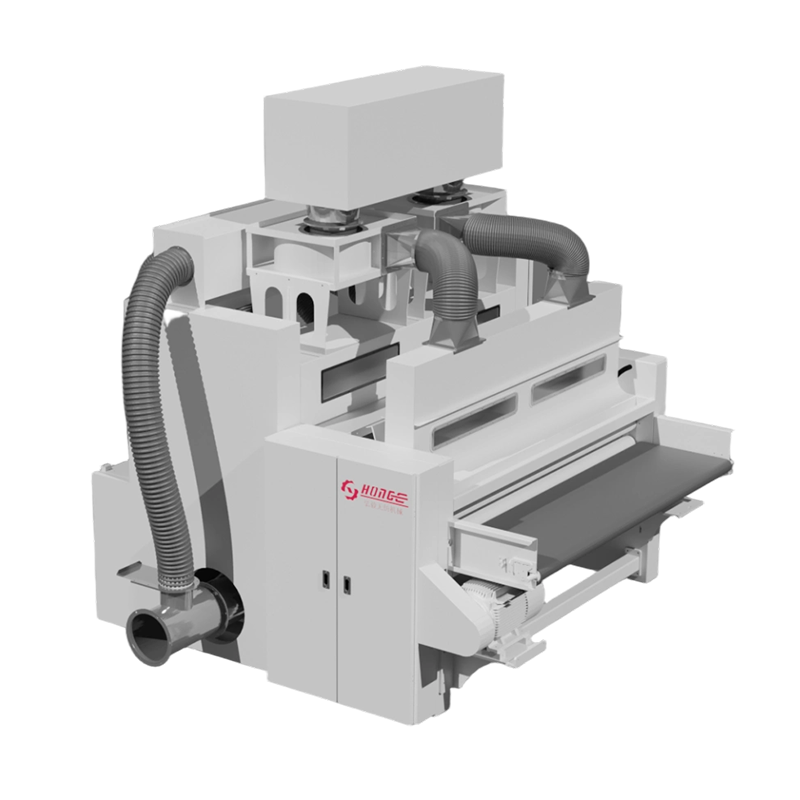
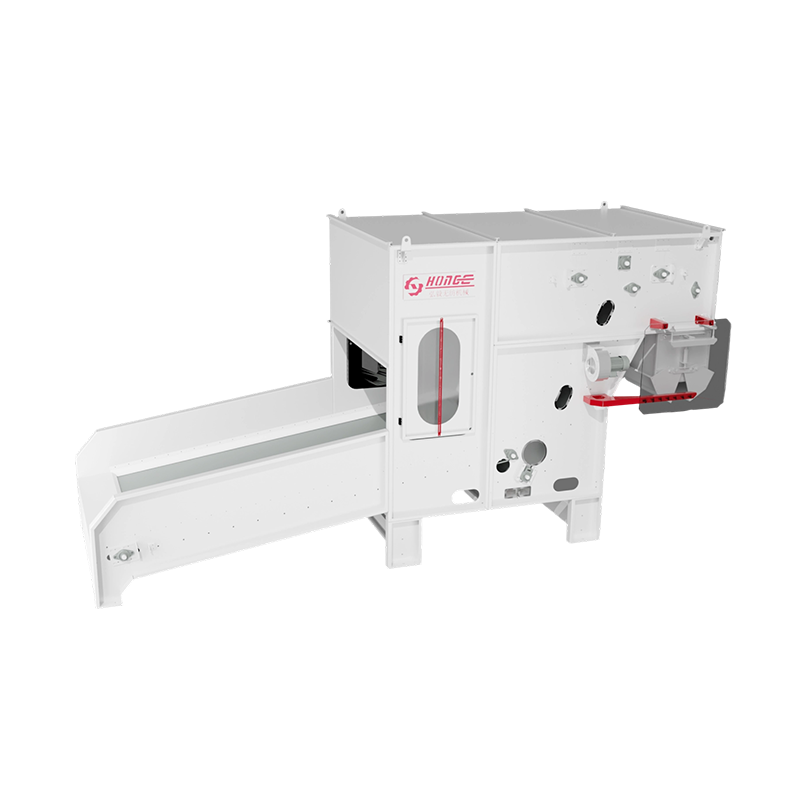
In terms of raw materials, carding handles most natural fibers (cotton, wool, hemp) and synthetic staple fibers (polyester, polypropylene, viscose) with fiber lengths typically ranging from 10 to 150 mm, depending on the card design. The process is energy-efficient and offers high throughput, which is why it forms the backbone of many [carding machines and feeding equipment](https://www.honge-nonwoven.com/product/feeding-carding-equipment/) setups in nonwoven plants. A well-tuned carding system delivers a clean, consistent web at high speed, making it the most cost-effective starting point for most producers.
Cross-Lapping — Building Thickness and Strength
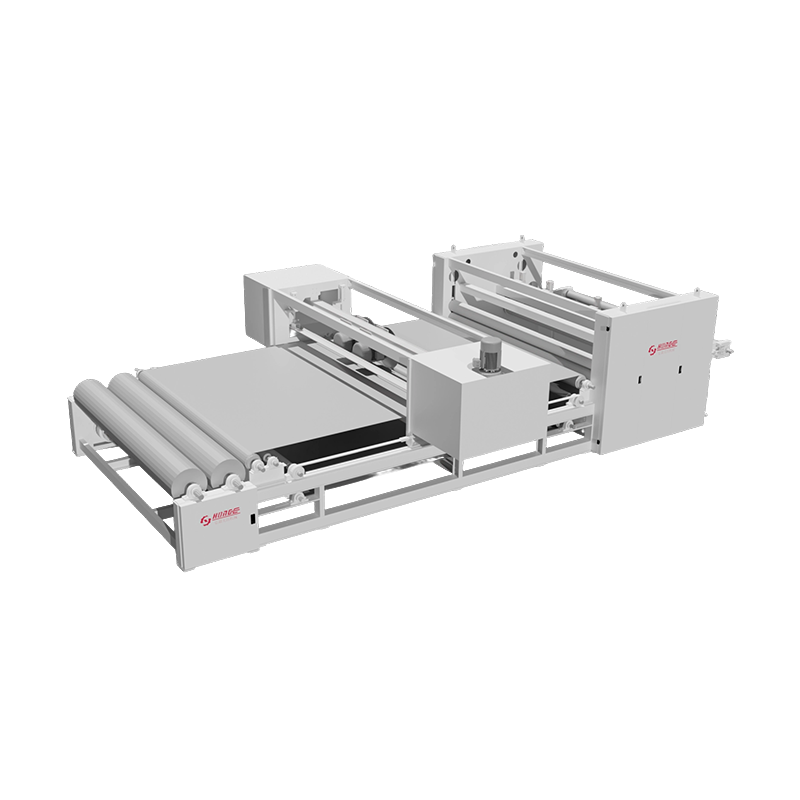
A single carding pass produces a relatively thin web, often only a few grams per square meter. To reach higher basis weights—and to improve CD strength—producers use a cross-lapper. This machine continuously folds the carded web back and forth in layers onto a conveyor, building up thickness and grammage to the required specification.
Cross-lapping is essential in needle-punching lines that produce geotextiles, carpet padding, automotive felts, and other heavy-duty nonwovens. The number of layers and the angle of lapping determine the final MD/CD strength ratio. More laps generally improve CD strength and produce a more isotropic web, but they also reduce line speed. Achieving uniform lapping without edge drafting or fiber distortion requires precise tension control and accurate conveyor synchronization.
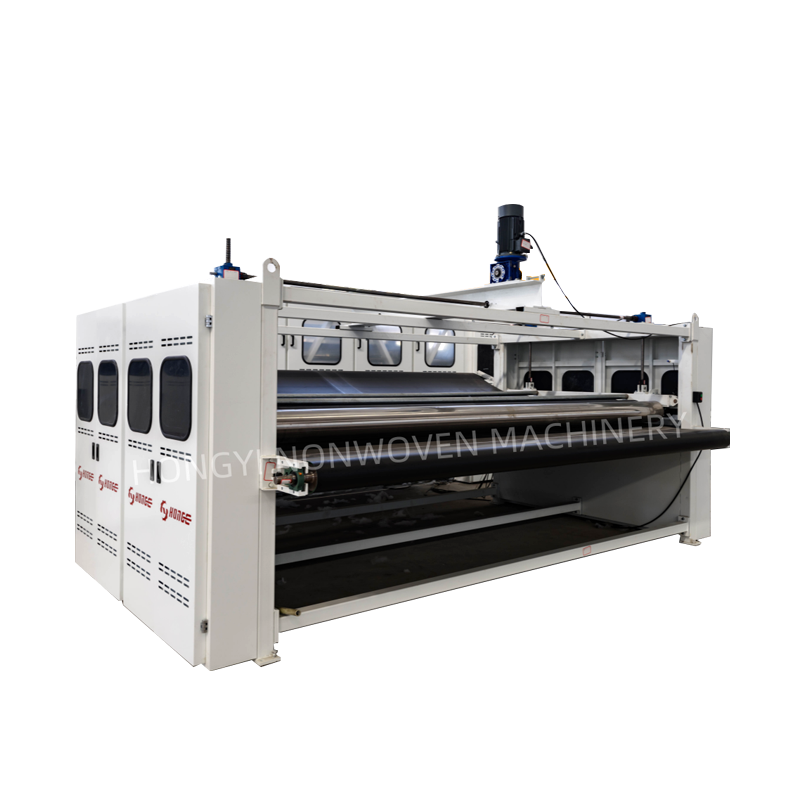
This is where the quality of a [cross-lapper for uniform multi-layer web formation](https://www.honge-nonwoven.com/product/web-forming-needle-punching-equipment/hypw-cross-lapper.html) makes a tangible difference. A well-engineered cross-lapper maintains even layer distribution across the full width, preventing thin edges or heavy center bands that would later show up as inconsistent fabric density.
Airlaying — A Flexible Alternative for Short Fibers
Airlaying offers a fundamentally different approach to dry-laid web forming. Instead of mechanical carding, fibers are suspended and dispersed in an air stream, then deposited onto a moving porous belt where they form a randomly oriented web. This random orientation gives airlaid webs excellent isotropic properties—meaning uniform strength in all directions—along with high loft and softness.
Airlaying is particularly well suited for shorter fibers, typically in the range of 1 to 12 mm, including wood pulp, cotton linters, and superabsorbent particles blended with fibers. This makes the method ideal for absorbent core products like diapers, feminine hygiene pads, adult incontinence products, and dry wipes. The absence of a layering structure means the web has no internal peel planes, which is a key advantage in products that must resist delamination.
The trade-off is line speed. Airlaying systems generally operate at lower throughput than carding lines, and the equipment investment tends to be higher for comparable output. Still, for products that require high absorbency, softness, or a three-dimensional structure, airlaying is often the only viable method. When you choose this route, the performance of your line hinges on the [airlay machine for random-oriented short fiber webs](https://www.honge-nonwoven.com/product/airlay-winding-and-cutting-machine/hyql-airlay-machine.html), which must ensure consistent fiber distribution and controlled web density across the full working width.
Other Forming Routes — Wetlaid, Spunlaid and Meltblown
While dry-laid methods cover the majority of staple fiber production, other routes are important to understand for a complete picture.
Wetlaid web forming is essentially a papermaking process adapted for nonwovens. Fibers are suspended in a large volume of water, then filtered onto a screen to form a web. It works with very short fibers (typically 2 to 20 mm) and can incorporate glass fibers, wood pulp, and specialty synthetic fibers. Wetlaid products include tea bags, medical filtration media, and roofing materials. The method offers excellent uniformity at very high speeds, but the capital cost and water management requirements are substantial.
Spunlaid (spunbond) and meltblown are filament-based processes that skip staple fiber preparation entirely. Polymer chips are melted, extruded through spinnerets, and the resulting continuous filaments are laid directly onto a conveyor belt to form a web. Spunlaid produces strong, cost-effective webs used in hygiene products, agriculture covers, and packaging. Meltblown produces ultra-fine fibers with high surface area, commonly used in filtration and medical masks. Both methods require substantial polymer processing equipment and are typically undertaken by large-scale manufacturers. For producers working with natural fibers or synthetic staple fibers, dry-laid routes remain the more flexible and accessible choice.
How to Choose the Right Web Forming Method for Your Product
Selecting the right web forming technique is not about identifying the “best” method in absolute terms—it is about finding the best match for your raw materials, product specifications, and budget. The following considerations will guide your decision.
- Fiber type and length: Natural fibers like cotton and wool, as well as most cut synthetic fibers, work well with carding. Fibers shorter than 10 mm, or those blended with powders and superabsorbents, generally require airlaying. Continuous polymer filaments are only possible with spunlaid or meltblown.
- Target basis weight: Very light webs (15–30 g/m²) can be produced by carding or spunlaid. Medium weights (30–150 g/m²) suit carding with optional cross-lapping. Heavy products (200 g/m² and above) typically require carding plus cross-lapping or a specialized airlaid process.
- MD/CD strength requirements: If your application demands balanced strength, such as in geotextiles or roofing membranes, choose a randomization system or a cross-lapping configuration. If MD strength is the priority—like in certain packaging materials—a parallel-laid carded web may suffice.
- Product loft and softness: For thermal insulation, wadding, and comfort layers in bedding, airlaying delivers superior bulk and softness compared to carding. Carded products are generally more compact and stronger per unit thickness.
- Production speed and cost: Carding offers the best balance of speed and cost for staple fiber products. Airlaying has higher value potential but lower throughput. Spunlaid offers very high speed but with high capital intensity and limited flexibility in fiber selection.
The table below summarizes common product categories and the web forming methods that are typically selected for each.
| Product Category | Preferred Web Forming Method | Primary Bonding Method |
|---|---|---|
| Geotextiles | Carding + cross-lapping | Needle punching |
| Automotive carpet and felts | Carding + cross-lapping | Needle punching or thermal bonding |
| Wipes and absorbent pads | Carding or airlaying | Hydroentangling or thermal bonding |
| Thermal insulation wadding | Airlaying | Thermal bonding |
| Filtration media | Spunlaid or meltblown | Point bonding or thermal bonding |
| Hygiene absorbent cores | Airlaying | Thermal bonding or latex saturation |
Building a Complete Web Forming Line: From Fiber to Web
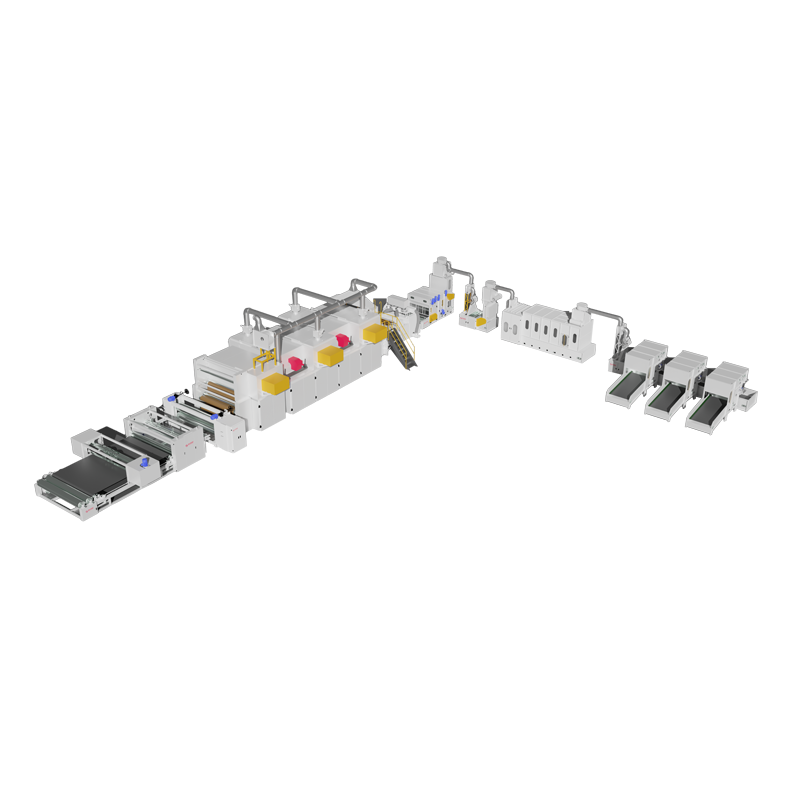
Once you have selected a web forming method, the next step is assembling the equipment line that executes it. Using the dry-laid carding route as an example, a full web forming line includes the following stages.
- Bale opening and pre-opening: Compressed bales are broken apart, and large fiber clumps are reduced to smaller tufts. This stage ensures consistent feed to the downstream equipment.
- Blending and mixing: Different fiber types or lots are proportioned and blended thoroughly. Homogeneous blending is essential for consistent web properties. Using a dedicated fiber mixing machine here avoids later streaks or patches in the web.
- Feeding and carding: The blended fibers are metered evenly onto the card feed apron, then processed by the carding machine to form the initial web. Precise feeding control directly impacts basis weight uniformity.
- Cross-lapping (optional): For heavier or stronger products, a cross-lapper stacks the carded web into a multi-layer batt. The lapper speed and laying angle are set according to the target basis weight and MD/CD strength ratio.
- Transfer to bonding: The finished web moves into the bonding stage—such as a needle-punching machine or a thermal oven—depending on the product specification.
There is a practical reason to consider an integrated line from a single supplier. Each machine in the web forming chain must match the others in terms of working width, speed, and synchronization. When equipment from different sources is combined, mismatches often surface as web tears, uneven draft, or inconsistent density. A manufacturer capable of supplying [web forming and needle punching equipment](https://www.honge-nonwoven.com/product/web-forming-needle-punching-equipment/) as a coordinated system avoids these integration problems. This is particularly true for operations planning a new [complete needle-punching felt production line](https://www.honge-nonwoven.com/product/nonwoven-fabric-production-line/hyl-needle-punching-felt-production-line.html), where the forming and bonding sections must work as one unit from day one.
Conclusion — Get Right Web Forming Equipment for Your Production Goals
Web forming determines the fundamental properties of your nonwoven fabric—uniformity, strength, thickness, and texture. There is no single technique that fits all products, and the right choice depends on your fiber type, target weight, performance requirements, and budget constraints.
Start by defining your product specification, then work backward to the forming method that can realistically deliver it. In many cases, a dry-laid carding line with cross-lapping offers the best combination of flexibility, speed, and cost for staple fiber products. If loft, softness, or short-fiber handling is your priority, airlaying may be worth the additional investment.
Once the method is confirmed, evaluate suppliers on their ability to deliver a coherent, well-integrated line—not just individual machines. The connections between opening, blending, feeding, carding, and lapping are where most quality problems originate. A supplier with over 20 years of experience in nonwoven machinery can help you configure a system that matches your production goals without trial and error.