

Content
- 1 Understanding the Nonwoven Big Chamber Blender Machine
- 2 Key Components of a Big Chamber Blender Machine for Nonwoven Production
- 3 How Does a Nonwoven Big Chamber Blender Machine Work? Step-by-Step
- 4 Industries and Applications: Where Is the Nonwoven Big Chamber Blender Used?
- 5 Big Chamber Blender vs. Standard Blender: Which Is Right for Your Nonwoven Line?
- 6 Key Advantages of Installing a Nonwoven Big Chamber Blender Machine
- 7 Typical Technical Specifications of a Nonwoven Big Chamber Blender Machine
- 8 How to Select the Right Nonwoven Big Chamber Blender Machine for Your Plant
- 9 Maintenance Best Practices for Nonwoven Big Chamber Blender Machines
- 10 Frequently Asked Questions (FAQ) About Nonwoven Big Chamber Blender Machines
- 10.1 Q1: What is the difference between a blender machine and an opener machine in a nonwoven line?
- 10.2 Q2: Can a nonwoven big chamber blender machine process recycled fibers?
- 10.3 Q3: How many fiber types can a big chamber blender handle simultaneously?
- 10.4 Q4: How is blending accuracy ensured in a nonwoven big chamber blender?
- 10.5 Q5: What is the energy consumption of a nonwoven big chamber blender machine?
- 10.6 Q6: Can the nonwoven big chamber blender be integrated into an Industry 4.0 or smart factory environment?
- 10.7 Q7: Is the nonwoven big chamber blender suitable for natural fibers like cotton or wool?
- 11 Conclusion: Is the Nonwoven Big Chamber Blender Machine Worth the Investment?
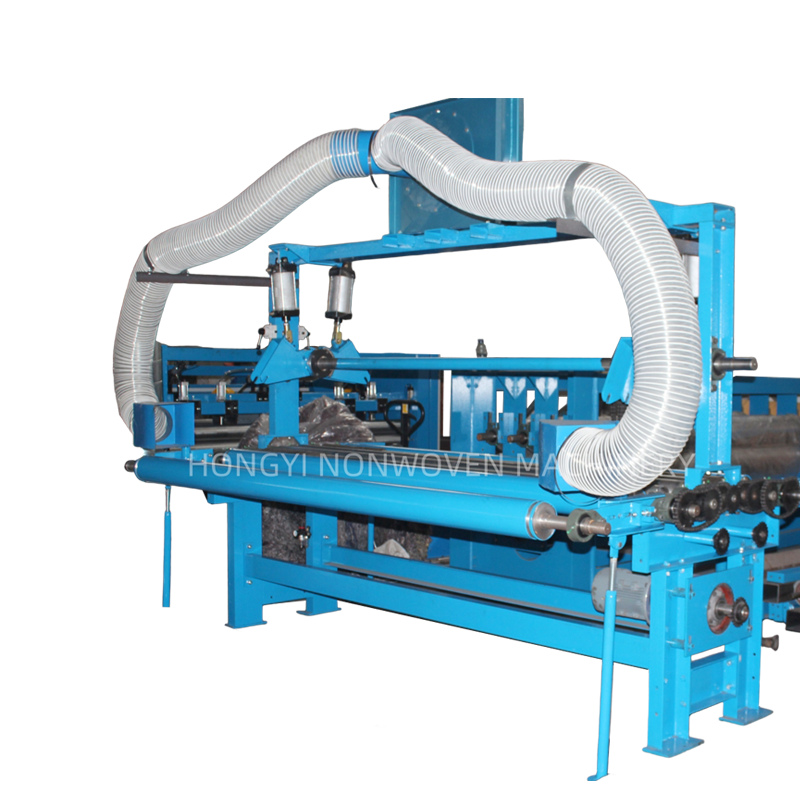
A nonwoven big chamber blender machine is a large-scale industrial mixing system designed to uniformly blend multiple types of fibers — such as polyester, viscose, cotton, and recycled materials — inside a high-capacity mixing chamber before they enter the nonwoven production process. It ensures consistent fiber distribution, homogeneous blending ratios, and continuous feeding, which are essential for producing high-quality nonwoven fabrics at scale.
Understanding the Nonwoven Big Chamber Blender Machine
In the modern nonwoven textile industry, raw fiber blending is not a trivial step — it is the foundation upon which all downstream product quality depends. The nonwoven big chamber blender machine represents one of the most critical pieces of equipment in any nonwoven production facility, handling the volumetric mixing of diverse fiber types with precision and efficiency.
Unlike small-scale mixing hoppers, a big chamber blender offers dramatically increased capacity — typically ranging from several hundred kilograms to several tonnes per hour — enabling manufacturers to maintain continuous production flow without interruption. Its large internal chamber volume allows multiple fiber types to be layered, circulated, and homogenized before the fiber web is formed.
These machines are deployed across a wide variety of nonwoven applications, including automotive interior fabrics, geotextiles, hygiene products, filtration media, home textiles, and industrial felts.
Key Components of a Big Chamber Blender Machine for Nonwoven Production
1. Large-Volume Mixing Chamber
The defining feature of this machine is its oversized blending chamber. This chamber is engineered with internal wall geometry and airflow pathways that promote multi-directional fiber movement, ensuring that no fiber component remains concentrated in any single zone. The big chamber design is crucial for achieving batch-to-batch consistency in multi-component fiber recipes.
2. Multi-Layer Fiber Feeding System
The machine accepts fiber inputs from multiple upstream openers and fine openers. Each fiber type is proportionally dosed and layered into the chamber via a controlled conveyor or pneumatic transport system. This layered feeding strategy is the first step in achieving a homogeneous nonwoven fiber blend.
3. Pneumatic Recirculation System
High-performance fans and duct networks circulate blended fibers through multiple passes within the chamber, further homogenizing the mixture. The pneumatic blending system eliminates fiber clumps and ensures that even fibers with significantly different densities and staple lengths are uniformly distributed throughout the blend.
4. Precision Discharge and Output Control
A motorized curtain or bottom conveyor controls the fiber discharge rate from the blending chamber into the next production stage — typically a nonwoven carding machine or airlay system. This controlled discharge ensures a steady, consistent supply of blended fiber to downstream equipment.
5. PLC Automation and Control Panel
Modern nonwoven big chamber blender machines are equipped with programmable logic controllers (PLC) and touchscreen human-machine interfaces (HMI). Operators can set blending ratios, chamber fill levels, discharge rates, and alarm thresholds with precision, reducing human error and enabling recipe storage for repeat production runs.
How Does a Nonwoven Big Chamber Blender Machine Work? Step-by-Step
- Fiber Preparation: Raw fibers are opened and pre-cleaned by bale openers and fine openers upstream. Each fiber component is prepared separately to a consistent tuft size.
- Proportional Feeding: Each fiber type is dosed in precise weight ratios — controlled by weigh-scale feeders or volumetric feeders — and fed into the blending chamber in alternating horizontal layers.
- Chamber Filling: The large chamber fills progressively with layered fibers. A level sensor monitors the fill state and signals the feeding system to pause when capacity is reached.
- Recirculation Blending: Once filled to the set level, the pneumatic recirculation system activates. Fibers are drawn from the bottom of the chamber, transported through the duct system, and re-deposited at the top — this cycle is repeated multiple times for thorough fiber homogenization.
- Controlled Discharge: The blended fiber mass is discharged at a controlled rate onto a conveyor leading to the carding or airlay section. The discharge rate is automatically synchronized with downstream machine speed.
- Continuous Operation: While one batch discharges, the next batch fills — ensuring uninterrupted production flow with no downtime between batches.
Industries and Applications: Where Is the Nonwoven Big Chamber Blender Used?
The versatility of the big chamber blender machine makes it suitable across a broad range of nonwoven manufacturing sectors:
- Hygiene & Medical Nonwovens: Blending superabsorbent fibers, natural cotton, and bico fibers for diapers, surgical drapes, and wipes.
- Automotive Interior Textiles: Combining recycled polyester, natural fiber (kenaf, flax), and thermobonding fibers for lightweight, sound-absorbing interior components.
- Geotextiles: Homogeneous blending of polypropylene and polyester for soil stabilization and drainage products.
- Filtration Media: Precise blending of micro-denier synthetic fibers for HVAC, industrial, and liquid filtration fabrics.
- Home Textiles & Padding: Blending hollow siliconized polyester with recycled fibers for pillows, mattress pads, and upholstery.
- Industrial Felts: Multi-component blending of wool, synthetic, and functional fibers for press felts and technical textiles.
Big Chamber Blender vs. Standard Blender: Which Is Right for Your Nonwoven Line?
Not all blending machines offer the same capabilities. Here is a direct comparison to help nonwoven manufacturers understand the differences:
| Feature | Nonwoven Big Chamber Blender Machine | Standard / Small Blender Machine |
| Chamber Volume | High capacity (typically 5–30+ m³) | Low to medium (1–5 m³) |
| Production Speed | 300–5,000+ kg/hr | 50–300 kg/hr |
| Fiber Component Count | Up to 6–10+ fiber types simultaneously | Typically 2–4 fiber types |
| Blending Uniformity | Excellent (multi-pass recirculation) | Good (single-pass mixing) |
| Continuous Operation | Yes (parallel fill/discharge cycles) | Limited (batch interruptions common) |
| Automation Level | Full PLC / HMI with recipe management | Basic controls or semi-automatic |
| Footprint | Large floor space required | Compact, suitable for small workshops |
| Investment Cost | Higher initial investment | Lower initial investment |
| Ideal For | Large-scale, high-output nonwoven plants | Small producers, R&D, niche applications |
Key Advantages of Installing a Nonwoven Big Chamber Blender Machine
Superior Blend Homogeneity
The multi-pass pneumatic recirculation system ensures that even fibers with very different physical properties — such as fine denier polyester alongside coarse natural fibers — are thoroughly integrated. This level of fiber blend uniformity directly translates to consistent physical properties across finished nonwoven rolls, reducing waste and customer returns.
Uninterrupted Production Flow
The dual-cycle operation — simultaneous filling and discharging in alternating phases — eliminates downtime between blending batches. For high-speed nonwoven production lines running at several hundred meters per minute, this continuous supply of blended fiber is a critical production requirement.
Flexible Multi-Fiber Recipe Management
With PLC-based recipe storage, manufacturers can switch between different nonwoven fiber blending recipes rapidly — for example, transitioning from a 70/30 polyester/viscose blend for hygiene products to a 50/30/20 polyester/PP/bico blend for automotive applications — without manual reconfiguration.
Reduced Labor and Operational Costs
Automation reduces the need for manual blending checks and adjustments. Combined with the machine's high throughput, the cost-per-kilogram of blended fiber is significantly lower compared to smaller manual or semi-automatic systems.
Compatibility with Recycled Fiber
As sustainability demands grow in the nonwoven industry, the big chamber blender machine excels at incorporating recycled fiber components — including post-consumer polyester, recycled cotton, and industrial waste fibers — into production blends without compromising final product quality.
Typical Technical Specifications of a Nonwoven Big Chamber Blender Machine
| Parameter | Typical Specification Range |
| Chamber Volume | 5 m³ – 30 m³ (custom larger sizes available) |
| Processing Capacity | 300 kg/hr – 5,000 kg/hr |
| Number of Fiber Inlets | 2 – 10 independent fiber feeding lines |
| Fiber Length Compatibility | 20 mm – 120 mm staple fiber |
| Fiber Fineness Range | 0.8 dtex – 40 dtex |
| Main Fan Power | 15 kW – 75 kW (depending on capacity) |
| Control System | PLC + HMI touchscreen with recipe storage |
| Blending Accuracy | ±1% – ±2% by weight per component |
| Construction Material | Carbon steel / Stainless steel optional |
How to Select the Right Nonwoven Big Chamber Blender Machine for Your Plant
Choosing the correct nonwoven blender machine requires careful analysis of your production parameters. Consider the following factors:
- Required Output Volume: Match the chamber capacity and throughput rating to your downstream line speed. A mismatch leads to either fiber starvation or over-accumulation.
- Number of Fiber Components: If your recipes involve 5 or more fiber types, ensure the machine is equipped with sufficient independent feeding lines and weigh-dosing units.
- Fiber Physical Properties: Highly crimped fibers behave differently from flat fibers. Specify your fiber types to the manufacturer so internal chamber geometry and fan specifications can be optimized accordingly.
- Recycled Content Requirements: Recycled fibers often contain impurities and irregular tuft sizes. Confirm that the blender can handle such inputs without frequent jamming or maintenance.
- Integration with Existing Equipment: Verify mechanical and control compatibility with your existing opener lines and carding machines to ensure seamless line integration.
- Available Plant Space: Big chamber blenders require significant floor space and ceiling height. Confirm your facility dimensions against the machine footprint before purchasing.
Maintenance Best Practices for Nonwoven Big Chamber Blender Machines
Proper maintenance of the nonwoven big chamber blender machine ensures long equipment life and consistent product quality:
- Daily: Inspect fiber feeding channels for blockages; check chamber interior for fiber mat buildup; verify sensor readings for level and weight systems.
- Weekly: Clean fan blades and duct interior; inspect conveyor belt tension and alignment; lubricate drive bearings.
- Monthly: Inspect and recalibrate weigh-dosing feeders; check PLC I/O signals; inspect discharge curtain mechanism for wear.
- Annually: Full mechanical inspection by qualified technicians; replace worn belts, seals, and bearings; recalibrate all load cells and sensors.
Frequently Asked Questions (FAQ) About Nonwoven Big Chamber Blender Machines
Q1: What is the difference between a blender machine and an opener machine in a nonwoven line?
An opener machine breaks compressed fiber bales into loose, individual fiber tufts and removes impurities. A blender machine — specifically the big chamber blender — takes the already-opened fibers from multiple openers and homogeneously mixes them into a uniform blend before carding. They serve distinct and sequential functions in the nonwoven fiber preparation process.
Q2: Can a nonwoven big chamber blender machine process recycled fibers?
Yes. Many modern nonwoven big chamber blender machines are specifically designed or configurable to handle recycled fiber inputs, including post-consumer PET fiber, recycled cotton, and re-processed industrial fiber waste. The key is ensuring the upstream opening equipment is also capable of processing recycled materials.
Q3: How many fiber types can a big chamber blender handle simultaneously?
Depending on configuration, a big chamber blender machine can typically accommodate between 2 and 10 independent fiber feeding lines simultaneously. High-end systems can support even more component feeds for complex multi-fiber nonwoven recipes.
Q4: How is blending accuracy ensured in a nonwoven big chamber blender?
Blending accuracy is controlled through precision weigh-scale feeders or volumetric feeders at each fiber inlet. The PLC continuously monitors and corrects feed rates in real time, achieving typical blending accuracy of ±1%–2% by weight per fiber component.
Q5: What is the energy consumption of a nonwoven big chamber blender machine?
Energy consumption depends on chamber size and processing volume. Main fan motors typically range from 15 kW to 75 kW. At full production capacity, a large nonwoven blending system may consume between 30 kWh and 150 kWh per hour. Modern variable-frequency drives (VFDs) help optimize energy use by adjusting motor speed to actual demand.
Q6: Can the nonwoven big chamber blender be integrated into an Industry 4.0 or smart factory environment?
Yes. Advanced nonwoven big chamber blender machines support industrial communication protocols such as Profibus, Profinet, or OPC-UA, enabling integration into centralized MES (Manufacturing Execution Systems) or SCADA platforms. Real-time production data — including blend ratios, throughput, and alarm logs — can be monitored and controlled remotely.
Q7: Is the nonwoven big chamber blender suitable for natural fibers like cotton or wool?
Yes. The big chamber blender machine is fully compatible with natural fibers including cotton, wool, flax, jute, kenaf, and bamboo fiber, as well as blends of natural and synthetic fibers. The chamber and duct system can be constructed in stainless steel for food-grade or medical-grade natural fiber applications.
Conclusion: Is the Nonwoven Big Chamber Blender Machine Worth the Investment?
For any nonwoven manufacturer operating at medium-to-large scale production volumes — or planning to scale up — the nonwoven big chamber blender machine is not simply a convenience; it is a production necessity. The investment pays back through higher product consistency, reduced labor costs, lower raw material waste from blend inaccuracies, and the flexibility to respond rapidly to changing product specifications.
As global demand for sustainable and technical nonwoven fabrics continues to grow across automotive, hygiene, filtration, and construction sectors, production lines equipped with high-performance fiber blending systems will maintain a decisive competitive advantage. The big chamber blender machine stands at the core of that advantage.
When evaluating your next capital equipment investment, prioritize chamber volume, fiber compatibility, automation level, and after-sales support to ensure your nonwoven blending line delivers the performance your business demands for years to come.