

Content
- 1 What Is Nonwoven Converting?
- 2 The Nonwoven Converting Process Step by Step
- 3 Converting Equipment That Performs
- 4 In-House Converting Versus Outsourced Converting
- 5 Quality Control and Tolerances in Converting
- 6 What to Look for When Buying Converting Equipment
- 7 Frequently Asked Questions About Nonwoven Converting
Nonwoven converting is where a production line's work becomes a customer-ready product. A jumbo roll of needle-punched felt or thermal-bonded wadding leaving the main line still needs to be slit to width, wound to a specified density, cut into manageable roll sizes, and in many cases ironed or heat-set to stabilize its surface. How well that conversion is executed determines how much of the fabric becomes saleable goods, how consistent those goods are from roll to roll, and how much ends up as edge trim or rejected scrap.
What Is Nonwoven Converting?
Nonwoven converting refers to the post-formation processing of nonwoven roll goods into the widths, lengths, roll formats, or sheet formats that customers specify. It is separate from manufacturing: web formation, bonding, and finishing treatments create the fabric, while converting shapes that fabric into the final deliverable.
The distinction matters because converting is where hidden quality problems become visible. A web with uneven basis weight will not wind evenly. Poorly controlled tension can stretch a lightweight fabric and change its width before the slitter makes a cut. Even fiber preparation has an influence: when a big chamber blender machine does not mix fibers consistently, the density variation carries through to the converting station. That is why experienced plant managers treat converting performance as a measure of the whole line, not just the finishing equipment.
Converting applies to most fabric families used in industry: needle-punched, thermal-bonded, airlaid, spunbond, and meltblown. Hygiene rolls need precise width control. Cleaning cloths need clean-trimmed edges and consistent roll firmness. Geotextiles need tolerances that allow reliable field installation.
The Nonwoven Converting Process Step by Step
Converting a nonwoven roll follows a defined sequence, whether the line is built around slitting, rewinding, or sheet cutting:
- Unwinding—the jumbo roll is mounted on an unwind stand with a brake or drive that keeps tension constant.
- Slitting—rotary knives or shear-cut blades trim the web to target widths.
- Rewinding—slit webs are wound onto individual cores with controlled tension and nip pressure.
- Cross-cutting or sheet cutting—rolls are cut into short logs or sheets for specific applications.
- Finishing—ironing, heat setting, or edge sealing improves surface consistency and dimensional stability.
- Inspection and packing—edges, roll density, and dimensions are checked before wrapping and labeling.
Batt evenness entering the oven or needling zone determines whether the finished roll has uniform thickness across its width. A nonwoven vibrating feeder is one of the first places that evenness is set; if the batt varies, the converting station sees it as tension fluctuations and surface defects.
Common converting methods
| Method | Typical Output | Common Products |
|---|---|---|
| Roll slitting | Finished rolls from 50 to 2,000 mm width | Hygiene rolls, wipes, industrial roll goods |
| Sheet cutting | Stacked or folded sheets | Wipes, face masks, interlining |
| Die cutting | Shaped components | Cosmetic pads, medical dressings |
| Thermal or ultrasonic bonding | Sealed edges and laminated sections | Protective covers, filter pockets |
Converting Equipment That Performs
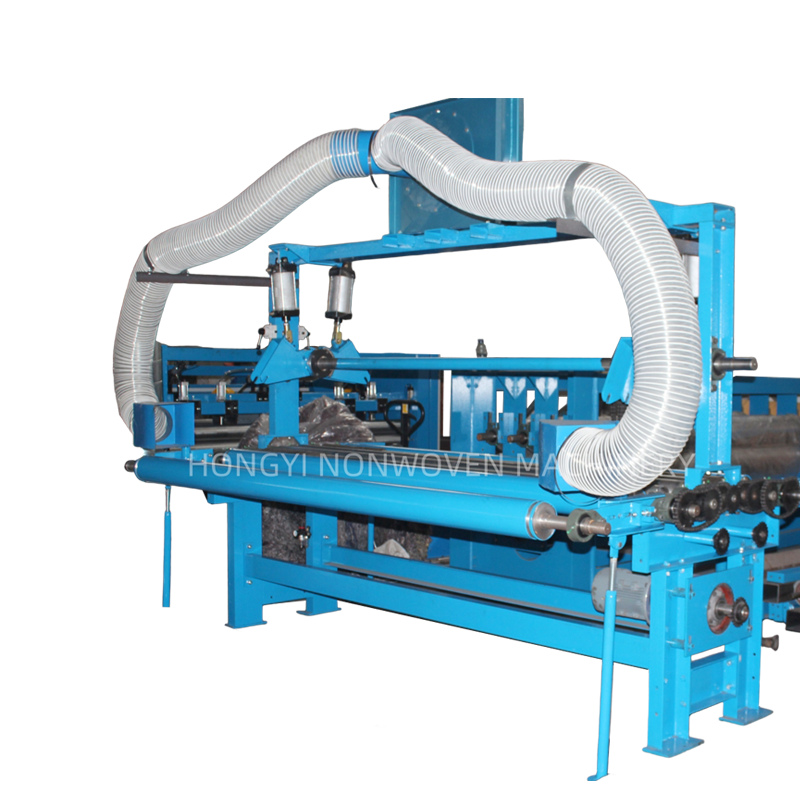
Reliable converting equipment is defined by three capabilities: precise tension control, clean cutting, and repeatable winding. Tension control prevents stretching of lightweight webs and telescoping of heavy felts. Cutting accuracy determines whether a roll actually meets its labeled width. Winding density affects how a roll behaves when a customer unwinds it at high speed.
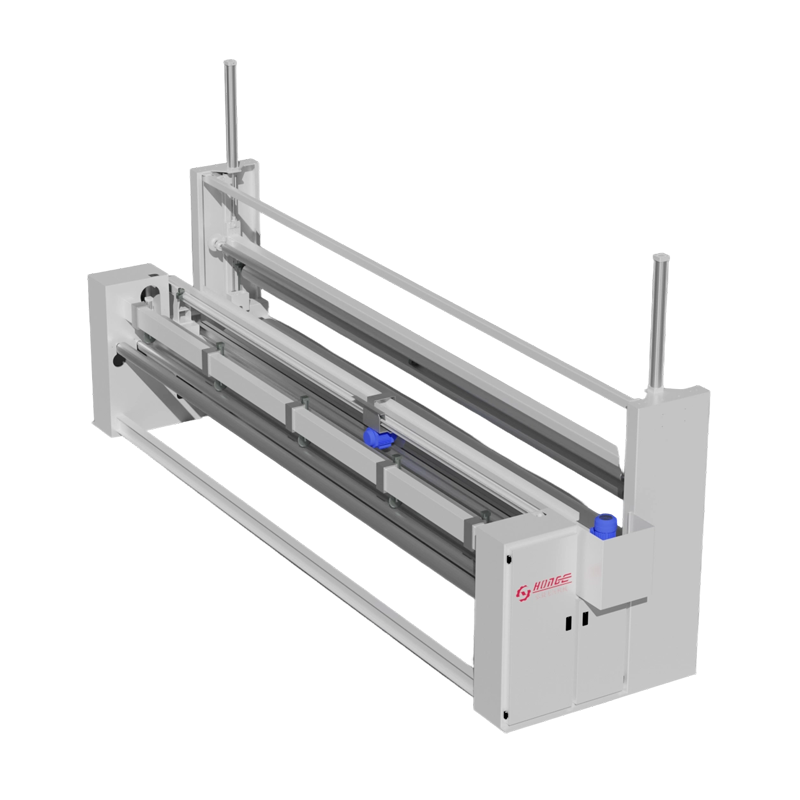
At the slitting stage, a HYFQ slitting machine uses precise blade positioning against a hardened roll to produce clean, straight edges without fiber melt or ragged trim. This matters most for products like cleaning cloths and medical wipes, where a single stray fiber at the edge triggers a quality rejection.
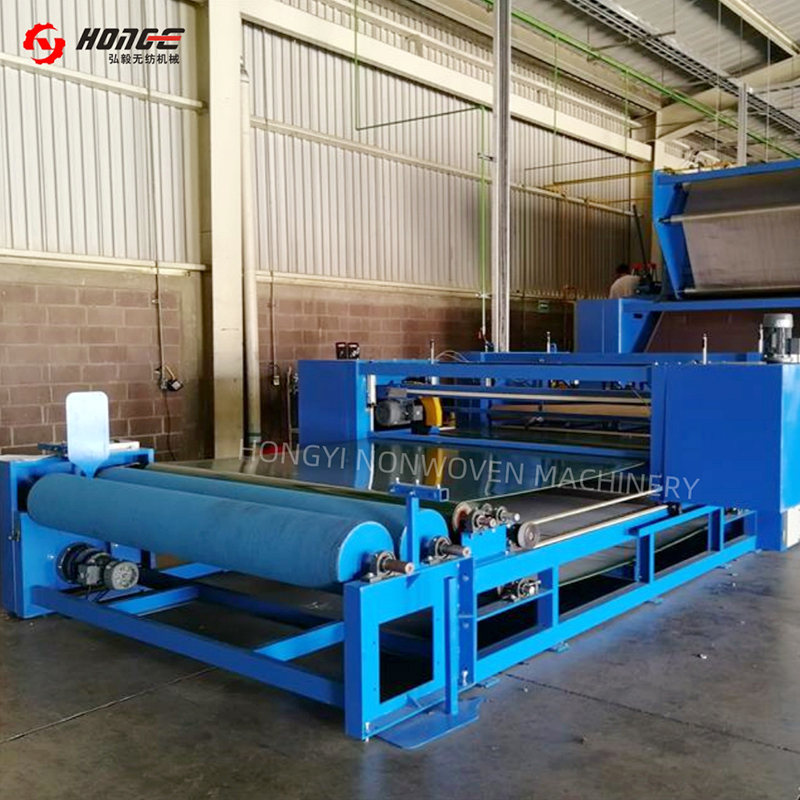 Nonwoven Slitting Machine Supplier & Wholesale | HongyiChangshu Hongyi Nonwoven Machinery Co., Ltd. is a China nonwoven slitting machine supplier & manufacturer. Integrated platform, precision...View Product →
Roll building is the other half of the equation. A HYSJ winder and cutter manages the tension profile across the full winding stroke so that each finished roll has uniform firmness from core to outer layers. When the set length is reached, the machine cuts and transfers to a new core without stopping the line, which directly reduces roll-change waste.
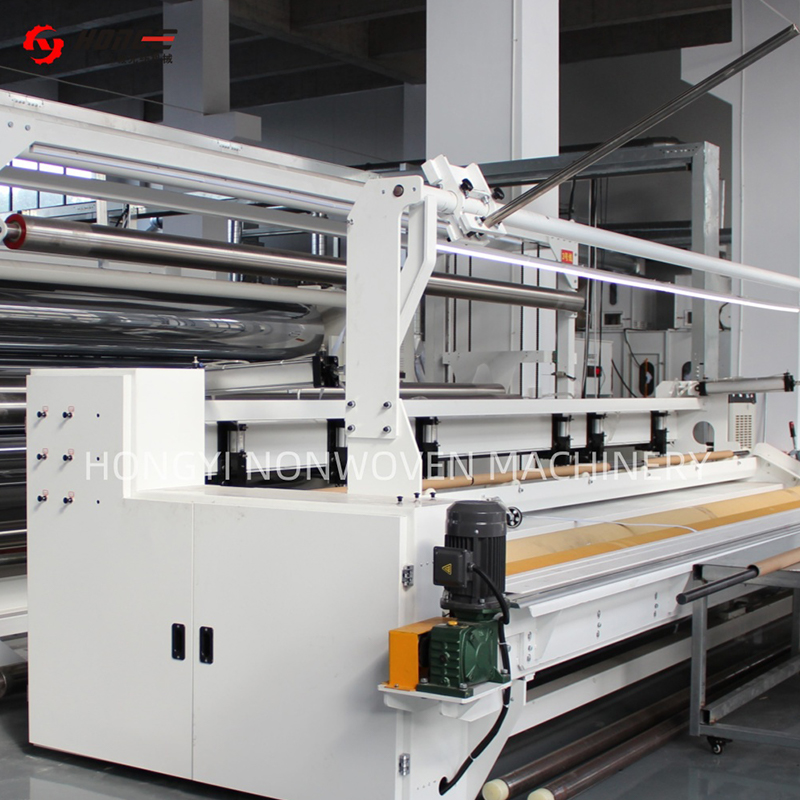 Nonwoven Fabric Slitting and Winding Machine Supplier | HongyiChangshu Hongyi Nonwoven Machinery Co., Ltd. is a China nonwoven fabric slitting and winding machine supplier & manufacturer. Width ≤10m,...View Product →
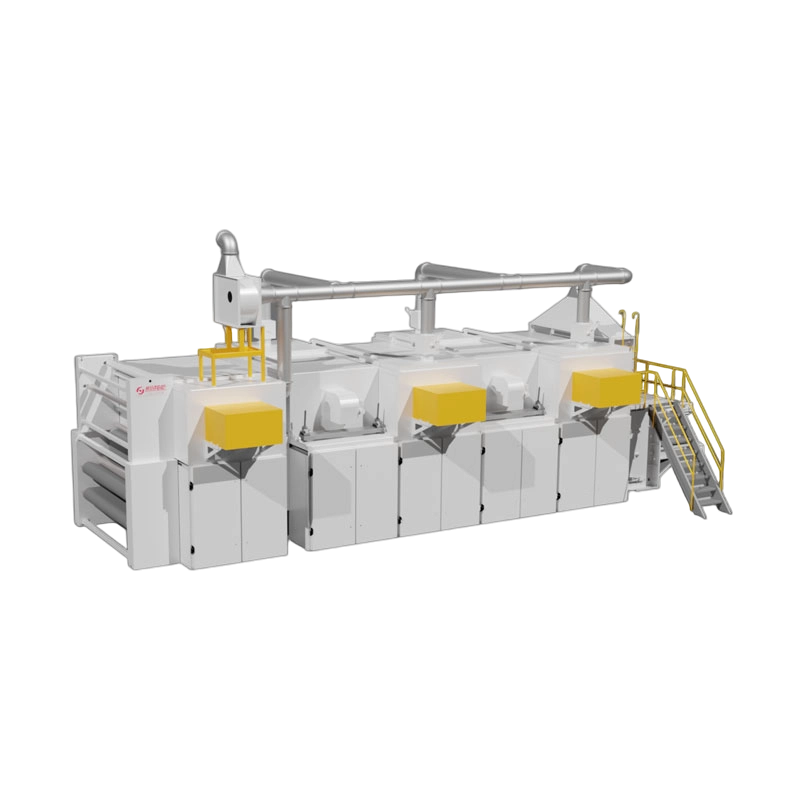
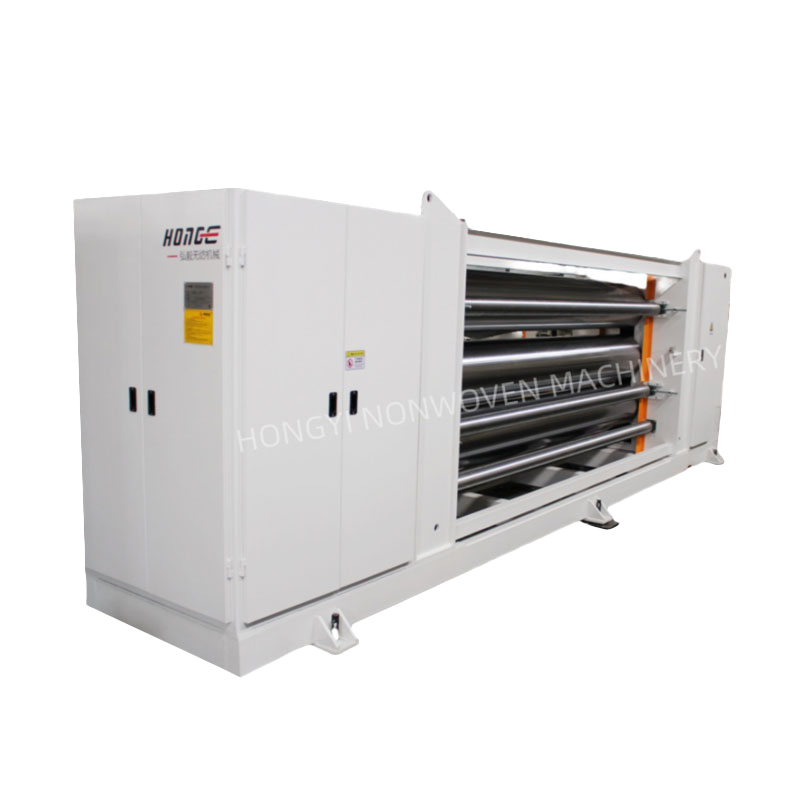
Thermal-bonded wadding and needle-punched felt usually benefit from a finishing pass. A HYTG nonwoven fabric ironing machine applies controlled heat and surface pressure to smooth loose fibers and stabilize the fabric, so subsequent slitting produces a cleaner edge and the final roll stays dimensionally stable in storage.
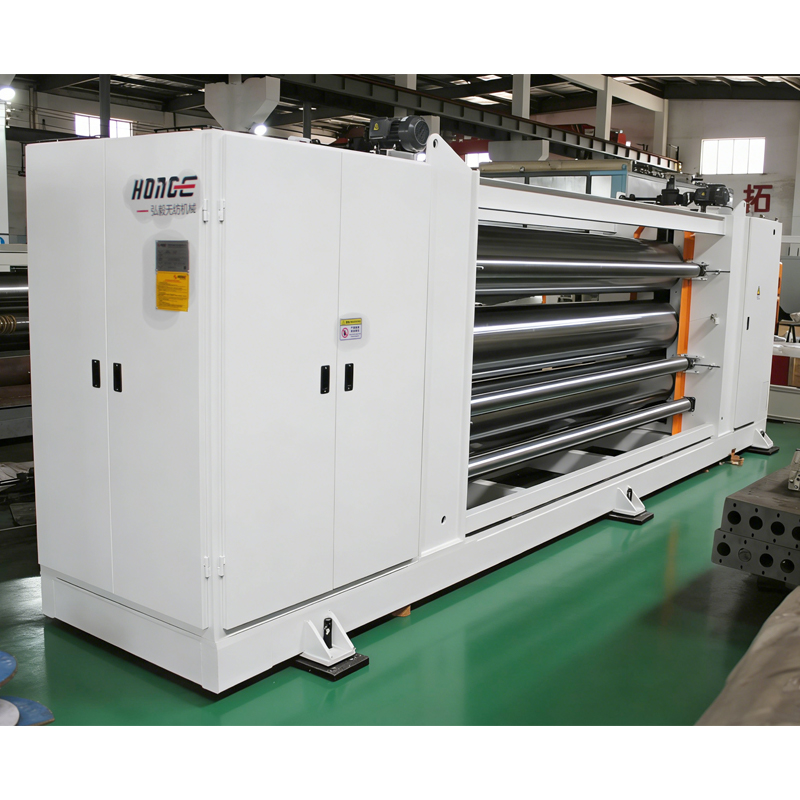 Nonwoven Fabric Ironing Machine Supplier & manufacturer | HongyiChangshu Hongyi Nonwoven Machinery Co., Ltd. is a China nonwoven fabric ironing machine supplier & manufacturer. 2–3 roller, width 2000–7...View Product →
In-House Converting Versus Outsourced Converting
For a manufacturer that already produces nonwoven roll goods, the decision to add or expand in-house converting usually comes down to control and margins. Shipping a 3.2-meter jumbo roll to an outside converter adds freight, handling, and a second margin layer, and it delays the finished rolls from reaching the customer.
In-house converting shortens lead times and allows custom-width orders that would be uneconomical to outsource. It also keeps quality problems visible: if a roll winds badly, the line operator sees it in the same shift and can correct the upstream cause. Outsourcing remains sensible for trials, very low volumes, or products that need specialized capabilities used only occasionally.
- Lead time control—convert today's production today instead of queuing at a third party.
- Yield retention—capture edge trim and start-up waste for in-house reuse where the line permits.
- Custom orders—accept retail-width orders from 50 mm upward without negotiating a converter's minimums.
- Quality feedback—converting defects point directly to upstream process parameters.
Quality Control and Tolerances in Converting
Converting quality is measured in millimeters and grams. Width tolerance for hygiene and wipes products is typically ±1 to ±2 mm. Industrial felt products commonly run at ±3 mm. Roll density is expressed as a target firmness range, checked by measuring roll weight, diameter, and contact pressure. Edge straightness is visually inspected; an hourglass or bell shape indicates a tension problem that will only worsen as the roll grows.
Waste in converting is never zero, but it is controllable. The chart below shows where that waste typically appears on a well-run line:
Automation reduces the human-dependent share of waste. Automatic roll change, preset length counting, and automatic tension adjustment cut the roll-change loss that is the second-largest contributor. The difference between a 15-minute manual roll change and a 3-minute automatic change adds meaningful productive hours across a shift.
What to Look for When Buying Converting Equipment
Purchasing converting equipment starts with matching the machine to the product mix. A line that will run mostly wipes has different requirements from one that runs needle-punched geotextile rolls every day.
- Speed compatibility—the converting line should keep up with the slowest production line feeding it.
- Width range—check the minimum and maximum usable widths, not just the maximum trim width.
- Roll diameter capacity—confirm the unwind stand can handle the jumbo roll weights you actually produce.
- Tension control—look for independent tension zones with fast response, because light and heavy fabrics behave differently.
- Automation level—automatic core loading, splicing, and roll change directly reduce the biggest labor cost on the line.
- Energy and maintenance—compare motor efficiency, blade replacement intervals, and access to wear parts.
Supplier experience matters in converting more than in other line segments, because converting problems are usually diagnosed across the boundary between the main line and the finishing equipment. Changshu Hongyi Nonwoven Machinery is one example of a supplier with more than 20 years in nonwoven machinery and equipment installed across more than 20 countries, including Mexico, Brazil, Turkey, Egypt, Bangladesh, and Vietnam. That breadth helps when a line must be tuned for different raw materials, climates, and operator skill levels.
Before committing, review the supplier's recent industry news and case references to confirm they are actively building and supporting lines in your product sector, rather than selling one-off prototypes.
Frequently Asked Questions About Nonwoven Converting
Is nonwoven converting the same as nonwoven manufacturing?
No. Manufacturing produces the fabric itself through web formation and bonding; converting transforms that manufactured roll into sized, wound, cut, or finished products. Manufacturing determines fabric properties, while converting determines product format and usability.
What width tolerances are realistic for slit nonwoven rolls?
For hygiene and wipes products, ±1 to ±2 mm width tolerance is typical. For heavier industrial felts and geotextiles, ±3 mm is more common. Tolerance depends on fabric weight, edge quality, and unwinding tension stability.
Can one converting line handle different nonwoven types?
Yes, within limits. A slitting line can usually process needle-punched, thermal-bonded, and airlaid fabrics when blade type, tension settings, and winding parameters are adjustable. Very light meltblown webs and heavy stiff felts may require different knife systems or winding roller surfaces.
Roll-change downtime and rejected rolls at start-up are the two most underestimated costs. Both are directly reduced by automatic roll change and repeatable tension control, which is why those features pay for themselves quickly on lines with frequent product changes.