

Content
After carding, a nonwoven web can be too soft and fragile to survive handling. If you have run a 100% polyester carded web, you know it falls apart at the unwind stand. Thermobonding solves that problem by using heat to melt a thermoplastic fibre component at the crossover points, then allowing it to solidify into a locked network. It is a versatile, high-speed bonding method used across hygiene, filtration, furniture, automotive, and wipes.
What Is Thermobonding?
Thermobonding, also called thermal bonding, heat bonding, or melt bonding, applies heated air, heated rolls, or ultrasonic energy to soften or melt the surface of thermoplastic fibres. The melted polymer forms discrete bond points where fibres cross. When the web cools, these points harden and give the fabric strength and dimensional stability. Because the binder is part of the fibre blend, no chemical latex or resin is required.
Before the web reaches the bonding stage, even feeding and carding make a big difference. A vibrating feeder meters fibre evenly into the carding machine, and variations there show up later as weak or stiff spots after bonding. Our guide to vibrating feeders explains why feeding consistency matters.
Why Convert to Thermobonding?
The main attraction is economics. Thermobonding runs at high line speeds, reduces binder handling, and eliminates the drying section used in latex-bonded lines. It also improves recyclability because the finished fabric can be remelted without separating binder from fibre. For products that need soft drape, controlled loft, or an embossed surface, thermal bonding gives repeatable results.
| Parameter | Thermobonding | Chemical bonding | Needle punching |
|---|---|---|---|
| Binder added | Thermoplastic fibre or powder | Latex or resin | None |
| Typical line speed | High | Medium | Medium |
| Fabric hand | Soft to stiff | Soft to stiff | Textile-like |
| Recyclability | Good | Limited | Good |
| Energy profile | Moderate | High, drying needs | Moderate |
Three Main Thermobonding Processes
Three process variants dominate commercial production. The right choice depends on the product's target weight, loft, and surface finish.
Calender Bonding
Calender bonding passes the web through a heated nip between two rolls. One roll is often engraved so that bonding occurs only at raised points. Roll temperature, nip pressure, and dwell time determine bond strength and softness. This method is common for hygiene materials, filter media, and packaging fabrics.
Through-Air Bonding
Through-air bonding forces hot air through an open, porous web. Because heat is applied gently and uniformly, the method preserves loft and bulk. A precision nonwoven fabric oven with zoned temperature control is the core of this process, and it suits waddings, insulation bats, and other bulky structures.
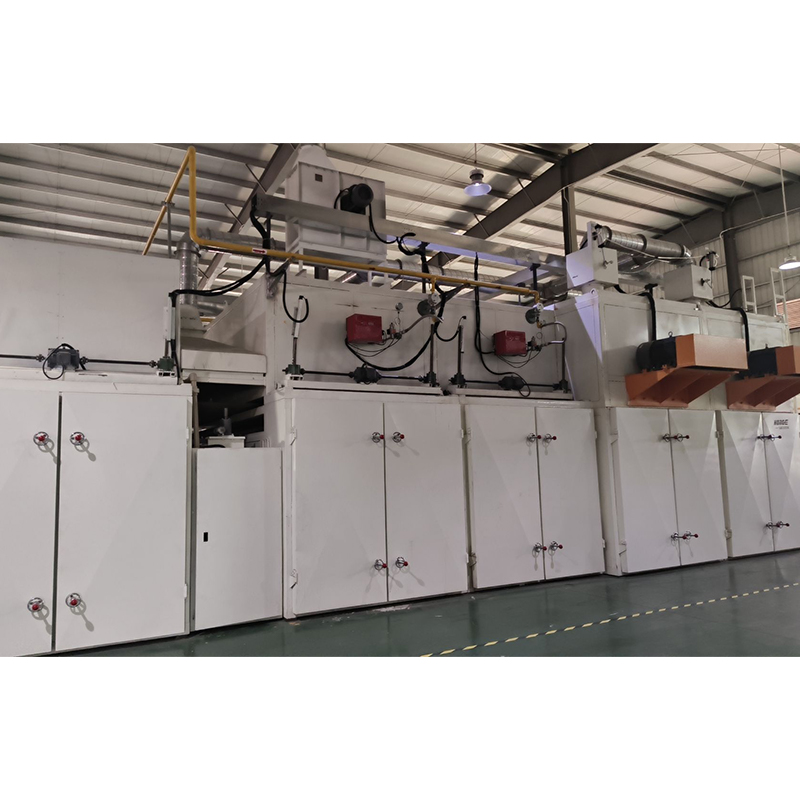 Nonwoven Fabric Oven Supplier & Wholesale | HongyiChangshu Hongyi Nonwoven Machinery Co., Ltd. is a China nonwoven fabric oven supplier & manufacturer. Hot air penetration, width ≤5000mm,...View Product →
Ultrasonic Bonding
Ultrasonic bonding uses high-frequency vibration to melt fibres locally without a heated roll or oven. It creates continuous or patterned bond lines and is often used for medical products, face masks, and disposable packaging.
Fibre Selection and Temperature Windows
Thermobonding requires at least one component that softens and flows before the other fibres degrade. Common binder systems include polyethylene (PE), polypropylene (PP), co-polyester (coPET), and polylactic acid (PLA). Bi-component fibres with a low-melt sheath and a higher-melt core provide strong bonds while preserving the core's mechanical properties. Typical binder content ranges from 10 to 50 percent, depending on the target stiffness and strength.
Temperatures in the chart are guide values. Actual oven or calender settings also depend on web density, line speed, and dwell time.
What to Consider Before Buying a Thermobonding Line
Before investing, inspect how the line controls the variables that affect bond quality.
- Temperature uniformity: Aim for a few degrees difference across the full working width; wide webs punish uneven heating.
- Nip pressure and gap control: Precise settings prevent overbonding or missed bond points.
- Airflow and dwell time: In ovens, strong airflow improves heat transfer but can disturb light webs.
- Cooling section: Bond points need controlled cooling to set final strength.
- Line speed control: Speed must match upstream carding and cross-lapping output.
- Energy efficiency: Heat recovery and insulation reduce operating cost over years of production.
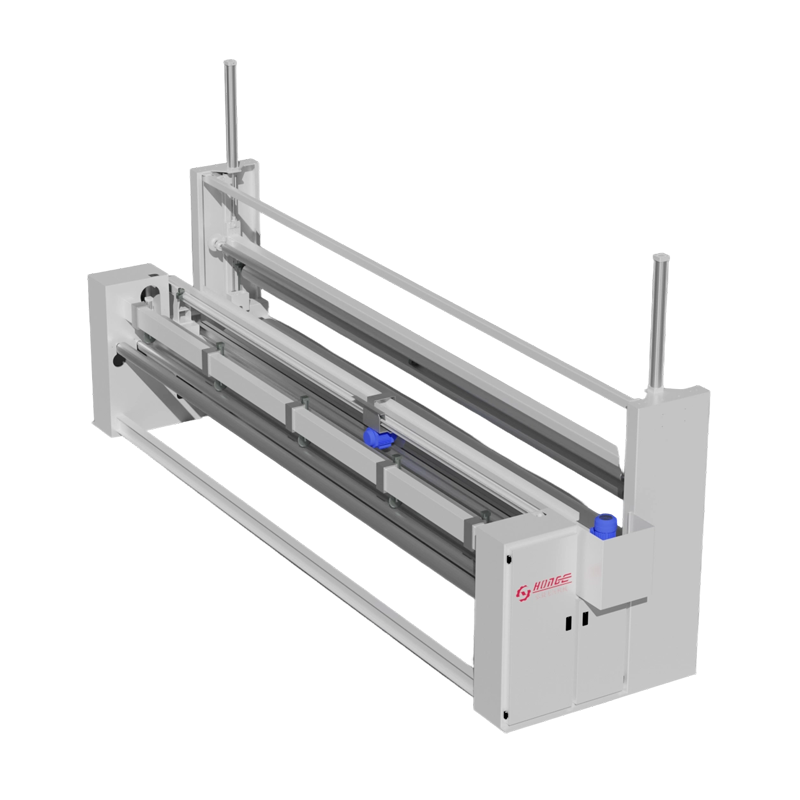
For a new plant, an integrated thermal bonded wadding production line combines feeding, carding, bonding, and winding in one setup. For an existing plant, adding a finishing ironing machine can improve surface smoothness and thickness control without replacing the whole line.
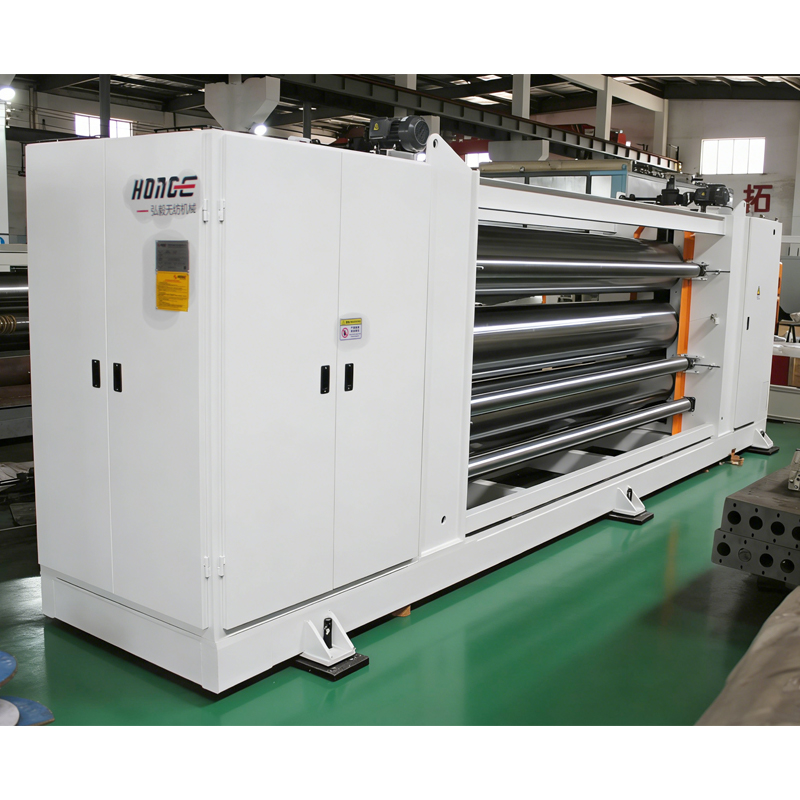 Nonwoven Fabric Ironing Machine Supplier & manufacturer | HongyiChangshu Hongyi Nonwoven Machinery Co., Ltd. is a China nonwoven fabric ironing machine supplier & manufacturer. 2–3 roller, width 2000–7...View Product →
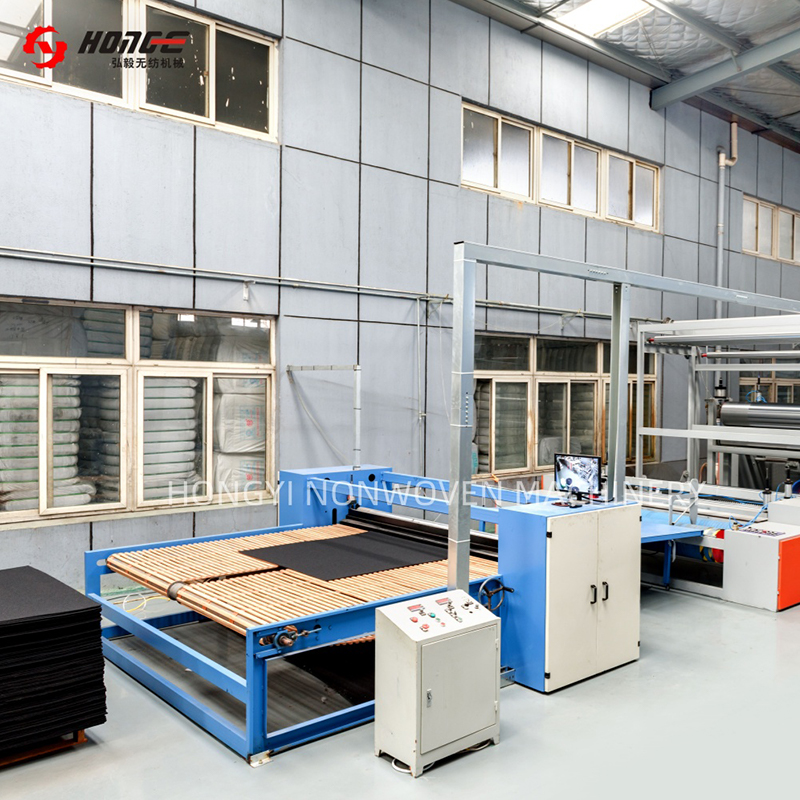 Thermal Bonded Wadding Production Line Supplier | HongyiChangshu Hongyi Nonwoven Machinery Co., Ltd. is a China thermal bonded wadding production line & machine supplier & manufacturer. 60–5000...View Product →
Where Thermobonded Nonwovens Are Used
Thermobonded fabrics appear in products that require fast production, consistent thickness, and no chemical binder.
| Segment | Typical products | Why thermobonding fits |
|---|---|---|
| Hygiene | Wipes, sanitary pads, diaper liners | Soft hand, fast line speed, binder-free |
| Medical | Surgical gowns, face masks | Clean process, ultrasonic patterning |
| Filtration | Cabin air filters, liquid filter media | Pattern-bonded porosity and strength |
| Furniture | Wadding, mattress interlinings, insulation bats | Through-air bonding preserves loft |
| Automotive | Interior trim, carpet backing, sound insulation | Dimensional stability and recyclability |
Frequently Asked Questions About Thermobonding
Is thermobonding the same as heat bonding?
Yes. Thermobonding is a form of heat bonding, and many suppliers use the two terms interchangeably. Melt bonding is another common name.
Which fibres can be thermobonded?
Any blend with a thermoplastic component can be bonded. Polyester, polypropylene, polyethylene, and PLA are the most common. Bi-component fibres make the process easier to control because the low-melt sheath bonds while the core keeps the web structure.
How much binder fibre should be used?
Most thermobonded products use 10 to 30 percent binder fibre by weight. Higher binder content raises stiffness and strength but reduces softness and can increase raw-material cost.
Can thermobonding be combined with other bonding methods?
Yes. Some lines combine needle punching with a calender, or through-air bonding with infrared preheating. Combination processes make it possible to tailor tensile strength, compression recovery, and surface texture in one fabric.
Thermobonding is not a single recipe; it is an adjustable toolkit. The right fibre blend, temperature, pressure, and dwell time depend on your web's basis weight and the final product's mechanical demands. Understanding these variables helps you evaluate equipment specifications and choose a line that will perform at commercial speeds.