

Content
- 1 Match The Bonding Process To What Your Fabric Must Do
- 2 Before Bonding: Why Fiber Opening And Blending Decide Web Quality
- 3 Feeding, Carding And Auto Leveling: Building An Even Web
- 4 Process-Matched Equipment From Our Production Range
- 5 Finishing And Auxiliary Equipment That Round Out A Line
- 6 Matching Process To End Product: Four Industry Examples
- 7 Quick Reference: Choosing Your Process In Three Questions
There is no single best nonwoven process. Needle punching wins on tensile strength and is the right call for geotextiles, automotive parts and filtration media. Thermal bonding wins on softness and loft, and it is the right call for wadding, insulation and mattress padding. Airlaid forming wins on cost efficiency with short and recycled fibers, and it is the right call for waste felt, absorbent pads and low-density cushioning. Everything below explains why, with the equipment that makes each route work.
Match The Bonding Process To What Your Fabric Must Do
Buyers searching for nonwoven fabric machinery often start with a product spec sheet rather than a process name — a target GSM, a tensile strength, a hand feel. Working backward from that spec is the fastest way to land on the right bonding technology. The table below lines up the three dry-laid routes against the variables that actually decide fabric performance.
| Process | Bonding Method | Typical GSM Range | Core Strength | Typical End Products |
| Needle Punching | Mechanical fiber entanglement | 150 – 1200 gsm | High tensile and puncture resistance | Geotextile, auto trunk liner, filter cloth |
| Thermal Bonding | Low-melt fiber fusion under heat | 80 – 800 gsm | High loft and softness | Wadding, mattress felt, insulation |
| Airlaid Forming | Aerodynamic web laydown | 100 – 600 gsm | Fast processing of short or recycled fiber | Waste felt, absorbent pads, cushioning |
Needle Punching: Mechanical Entanglement For Strength-Critical Fabrics
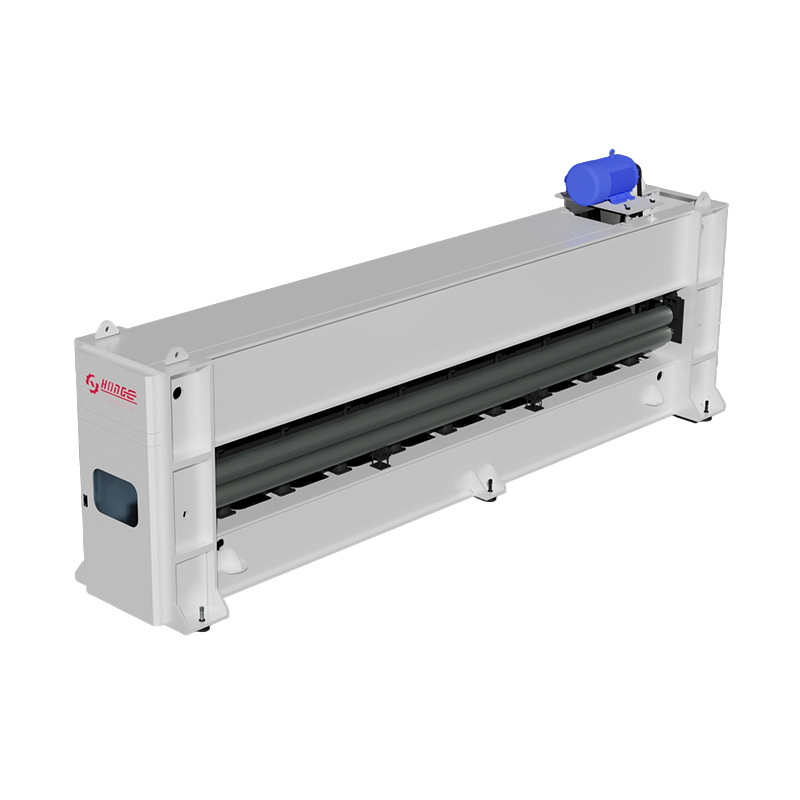
A needle punching machine drives thousands of barbed needles through a layered fiber web at stroke frequencies commonly between 500 and 1,200 strokes per minute. As the needles retract, the barbs pull individual fibers vertically through the web, locking layers together without any adhesive or heat. Penetration depth is typically adjustable from 5mm to 25mm, which lets one line switch between light filter media and heavy geotextile felt.
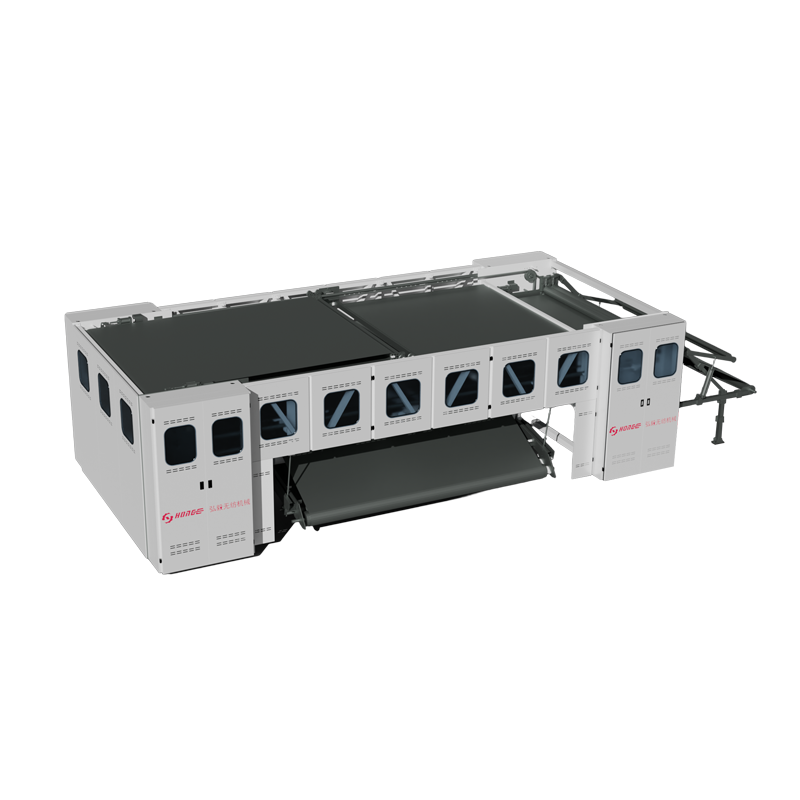
Because bonding is purely mechanical, the resulting fabric keeps most of its raw tensile properties, which is why needle punched felt dominates road-construction geotextile, automotive interior trim, and industrial filter cloth. The web itself is built upstream by a cross lapper machine, which folds the carded web back and forth to stack multiple layers to the target weight before the needle loom locks them together. A well-tuned cross lapper keeps layer overlap even across the full width, which is what prevents thin spots from showing up as weak points later in the needle-punched sheet.
Thermal Bonding And Heat Setting: Loft And Softness Without Chemicals
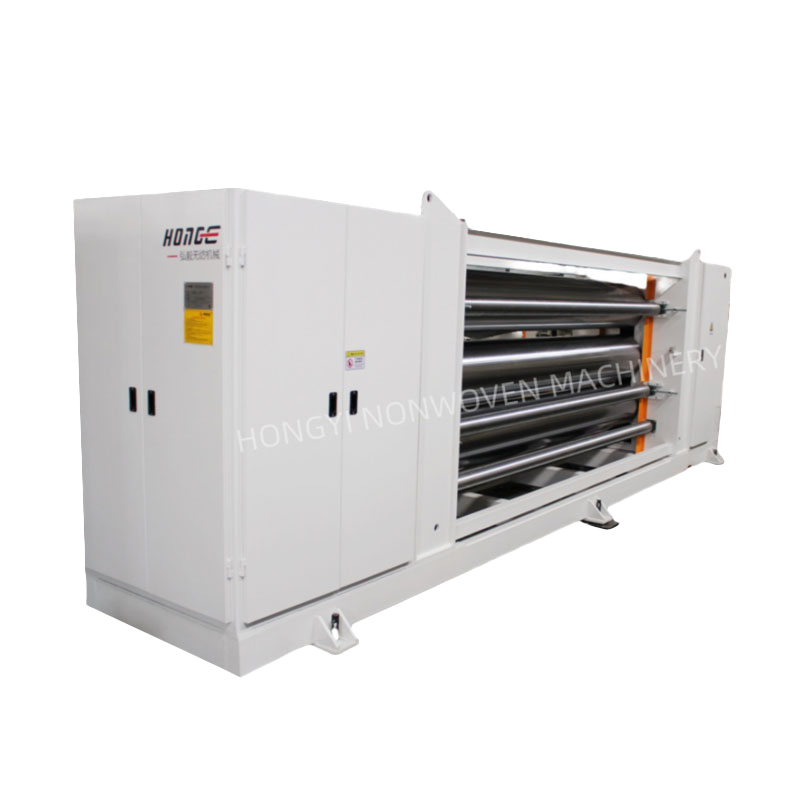
A nonwoven fabric oven circulates heated air through a loosely carded web, melting the outer sheath of a low-melt bicomponent fiber while leaving the core fiber intact. As the web cools, the melted sheath resolidifies at fiber crossing points, producing a bulky, resilient structure with a soft hand feel — exactly what mattress felt, quilted lining, and thermal insulation batting need. A downstream nonwoven fabric ironing machine can then calender the surface where a smoother, denser finish is required, such as for carpet backing or heavier cleaning cloth. This is why a thermal bonded wadding production line is usually specified with both an oven and a calender stage rather than the oven alone.
Airlaid Forming: Turning Short And Recycled Fibers Into Felt
- Fiber LengthAirlaid handles staple lengths as short as 6–20mm, well below the minimum length a card cylinder needs to grip and align fiber.
- Raw MaterialAn airlaid felt machine is the standard route for recycled textile waste, garnetted clippings, and off-spec fiber that would otherwise be scrapped.
- Line StructureA complete airlaid production line pairs the forming head with an airlay winding and cutting machine, so felt is sheeted or rolled straight off the line at target width and length.
- Cost PositionBecause it skips the carding stage, an airlaid waste felt production line typically has a lower per-kilogram processing cost than carded routes on the same raw material volume.
This is the process most often shortlisted by buyers with a sustainability mandate, since it converts fiber that a carding line would reject into usable insulation or padding felt.
Before Bonding: Why Fiber Opening And Blending Decide Web Quality
None of the three bonding routes performs well on a poorly prepared fiber mix. This is the stage that gets underestimated in early sourcing conversations, yet it determines whether the finished fabric has consistent weight and strength across its width.
Feeding, Carding And Auto Leveling: Building An Even Web
Feeding & carding equipment is where fiber becomes a continuous web for the first time, and it is also where most GSM variation originates if the equipment is undersized or poorly matched to the fiber type.
Meters loose fiber onto the card inlet at a controlled, steady rate rather than in surges, which is the baseline requirement for even web weight.
Transports fiber by air duct between processing stages, reducing manual handling and fiber loss on longer production lines.
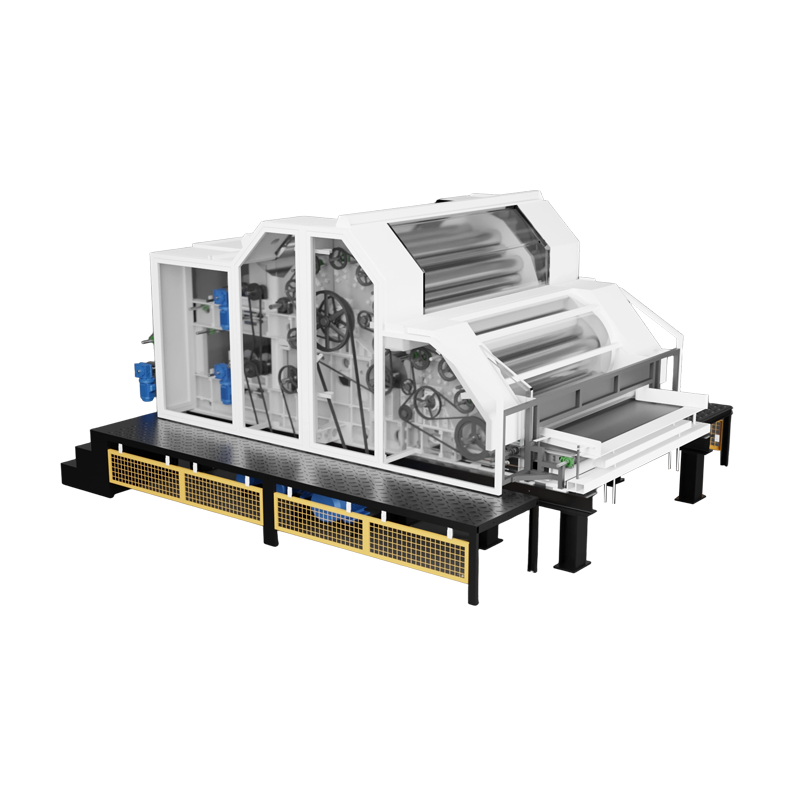
Opens, blends and parallelizes fiber using wire-clothed cylinders; single-cylinder and double-cylinder configurations trade off speed against web uniformity.
Continuously measures web weight and adjusts feed speed in real time, typically holding GSM variation within a tighter band than manual feed control.
Process-Matched Equipment From Our Production Range
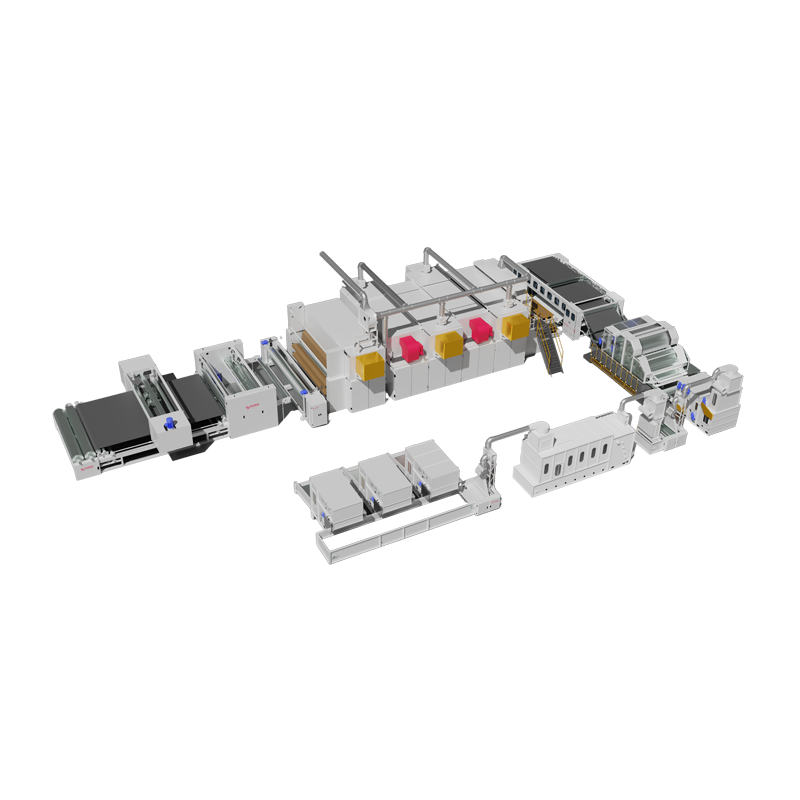
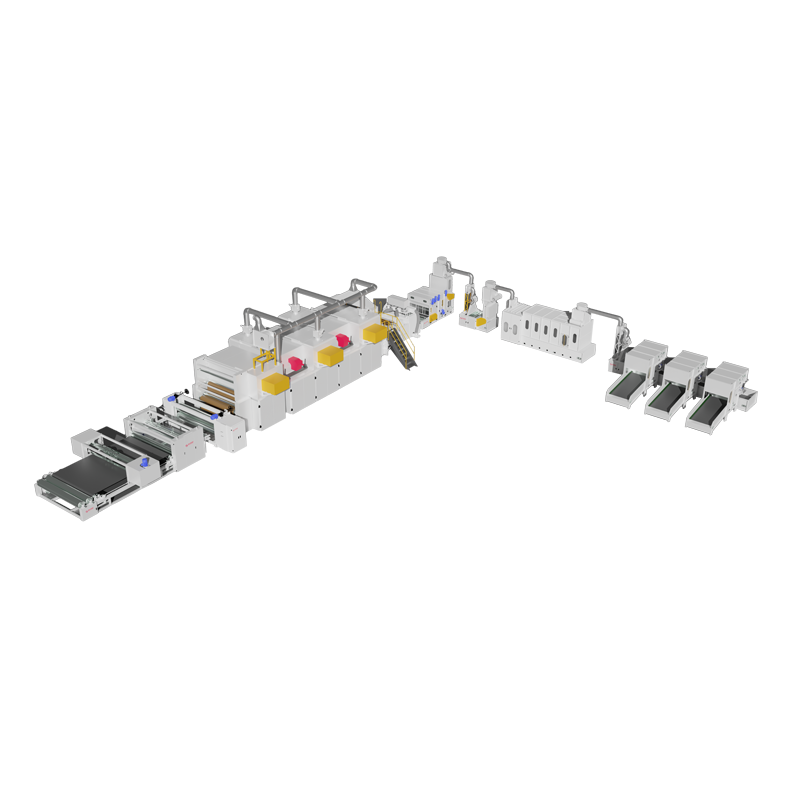
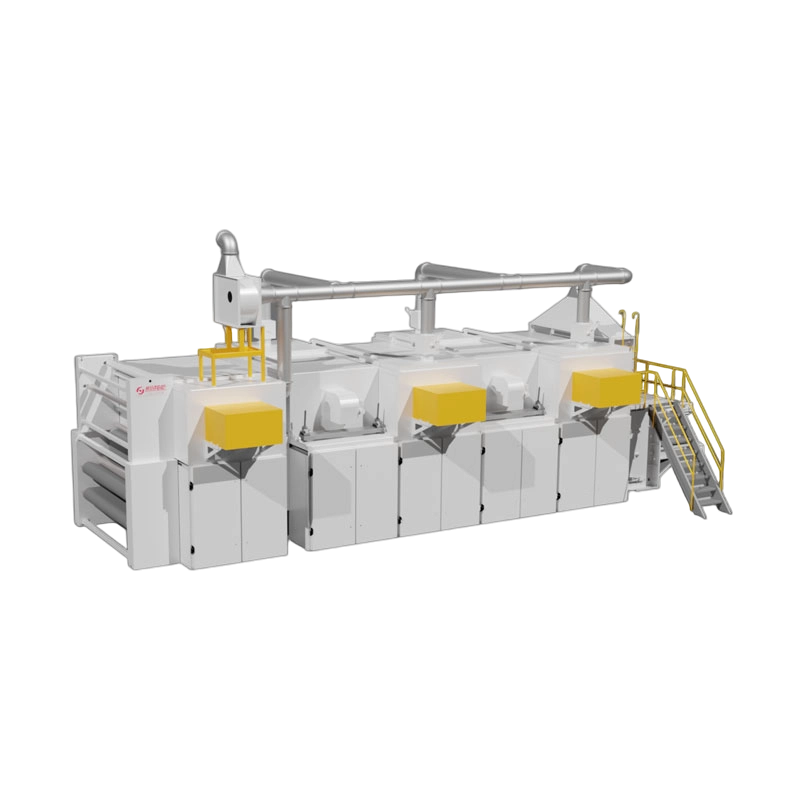
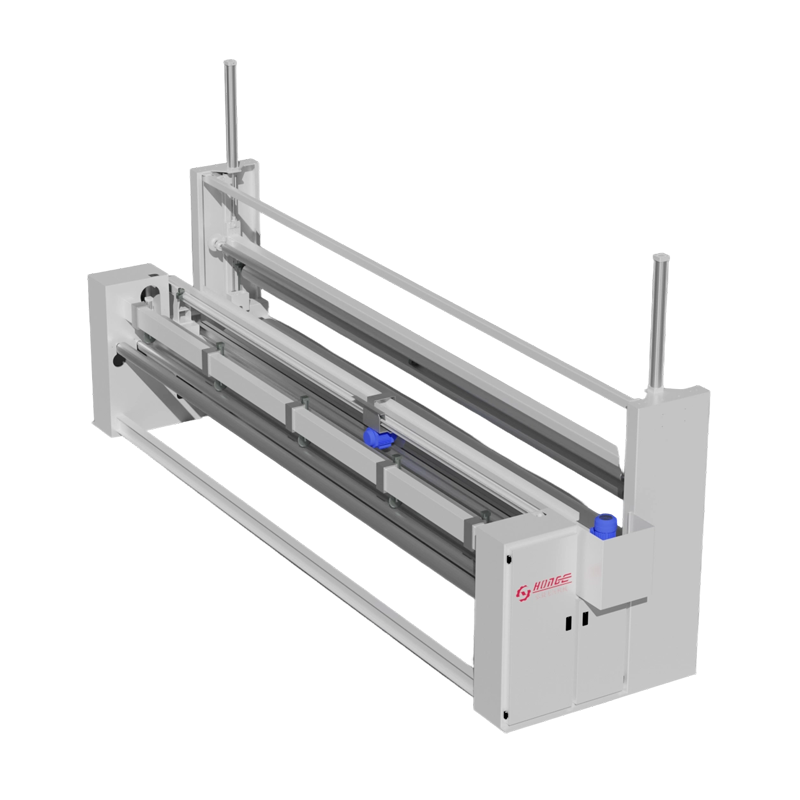
Each stage described above corresponds to a machine in our catalog, engineered and CE certified for continuous industrial duty. Explore the units that make up a complete opening-to-finishing nonwoven line.
Finishing And Auxiliary Equipment That Round Out A Line
The bonding stage rarely runs on its own. A production line needs supporting equipment to keep web feed continuous, trim waste under control, and finished rolls ready for shipment.
Web Handling And Winding
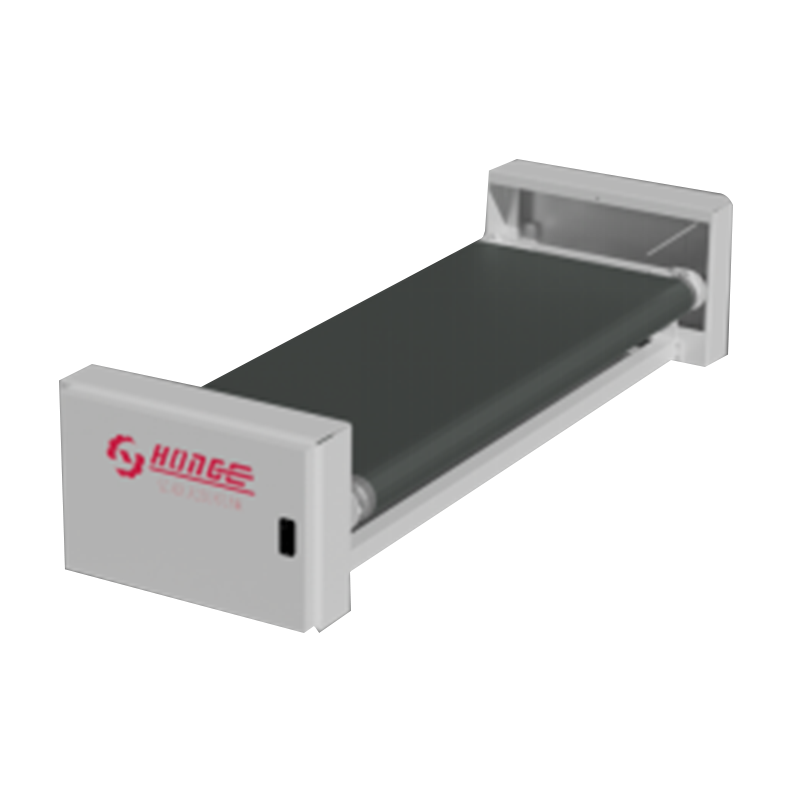
A nonwoven fabric slitting and winding machine cuts wide rolls down to shipping width, while a nonwoven slitting machine specifically handles narrow-width trimming for specialty products such as filter tape or wipe rolls.
A fiber web drafting machine, sometimes called a nonwoven drafting machine, stretches the formed web to adjust final weight and fiber orientation before it reaches the bonding stage.
Continuity And Waste Control
A web accumulator system for nonwoven fabric buffers the moving web during roll changes or short stops, so the bonding line itself never has to pause.
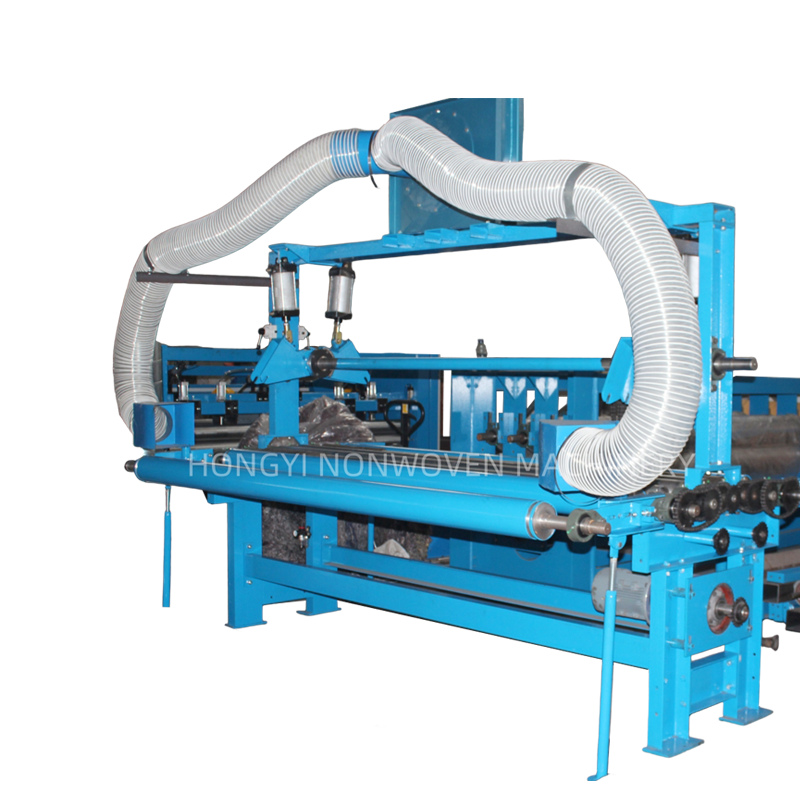
An edge trim opener recycles the narrow strip trimmed from each side of the web back into usable fiber, and a batt feeder machine or fiber feeding machine keeps that reclaimed material moving back into production instead of into a waste bin.
On the carding line, a nonwoven fabric machinery preedge cutting device trims the raw web edge before it enters the cross lapper, preventing uneven edges from compounding into layer misalignment downstream.
Matching Process To End Product: Four Industry Examples
Buyers requesting a customized nonwoven machine solution usually already know their target industry. The table below maps common end markets to the process a nonwoven production line supplier would typically recommend.
| End Market | Recommended Process | Why This Process Fits |
| Civil engineering geotextile | Needle punching felt production line | Puncture resistance and tensile strength under soil load are non-negotiable |
| Automotive interior trim | Needle punching, sometimes thermal-set | Trunk liners and headliners need dimensional stability under heat cycling |
| Mattress and furniture padding | Thermal bonded wadding machine | Loft, resilience and soft touch outweigh raw tensile strength |
| Air and liquid filtration media | High-density needle punching line | Consistent pore structure depends on tightly controlled needle density |
Why CE Certification And A Customized Line Matter More Than Price Alone
When comparing a nonwoven machine manufacturer against a broader nonwoven machinery factory, buyers are rarely comparing identical machines. CE certified nonwoven machinery confirms the equipment has been assessed against EU machinery directive requirements for mechanical safety, electromagnetic compatibility and emergency stop systems, which matters directly during customs clearance and factory insurance sign-off in many import markets.
A capable nonwoven equipment supplier will also treat the production line as one connected system rather than a set of separate machines. Feed rate, card cylinder speed, cross lapper stroke rate and needle loom stroke frequency all have to be synchronized, which is the practical reason most buyers end up requesting a customized nonwoven machine solution rather than assembling individual units from different vendors.
Quick Reference: Choosing Your Process In Three Questions
These three questions will not replace a full technical consultation, but they narrow the shortlist quickly enough to make the first conversation with a nonwoven production line supplier far more productive.