

Content
- 1 Step 1: Read Your Fiber Blend Before You Read a Catalogue
- 2 Step 2: Match Working Width and Speed to the Web You Actually Sell
- 3 Step 3: Size Feeding, Carding and Web Forming as One Line
- 4 Step 4: Check the Details That Decide Uptime
- 5 Step 5: Compare Five-Year Cost, Not the Invoice
- 6 Step 6: Insist on a Trial With Your Own Fiber
- 7 FAQ: Choosing a Nonwoven Carding Machine
Two factories order a nonwoven carding machine with the same working width in the same month. One produces a stable 300 gsm needle-punched felt from day one; the other spends a year chasing weight variation, nep marks and repeated wire loading, then rebuilds the feed section. The card is rarely the only variable — but the specification agreed at quotation stage decides how much of that trouble is even possible.
The short answer: choose the card from the fiber backwards, not from the brochure forwards. Fiber type and staple length set the cylinder wire and the feed system. Target web weight and line speed set the working width. The bonding route — needle punching, thermal bonding or spunlace — sets the delivery, drafting and take-off configuration. Price is a comparison you can only make once those three are fixed.
Step 1: Read Your Fiber Blend Before You Read a Catalogue
Carding is a mechanical opening and aligning process, so the fiber you feed decides what the machine must be built to do. Five properties matter most when you specify a card:
- Staple length. 38 mm polyester and 70 mm wool do not card the same way. Long staple needs more cylinder surface and gentler transfer; short staple needs tighter settings and more carding points.
- Fineness and denier. Microfibers below roughly 1.5 dtex demand precise wire geometry and low tension to avoid fiber damage and nep formation.
- Recycled and reclaimed content. Shorter, dustier fiber requires stronger pre-opening, more suction capacity and metal detection ahead of the card.
- Natural fibers. Wool, jute and cotton bring moisture, vegetable matter and crimp that change the wire profile and the cleaning regime.
- Blend changes. If you switch blends weekly, ask for quick-change clothing, stored recipes and adjustable settings rather than fixed ones.
Write those five points down before you speak to any supplier. A card advertised as "suitable for nonwovens" tells you nothing; a card specified for 60% recycled PET with a 25% dust content tells you what you are buying.
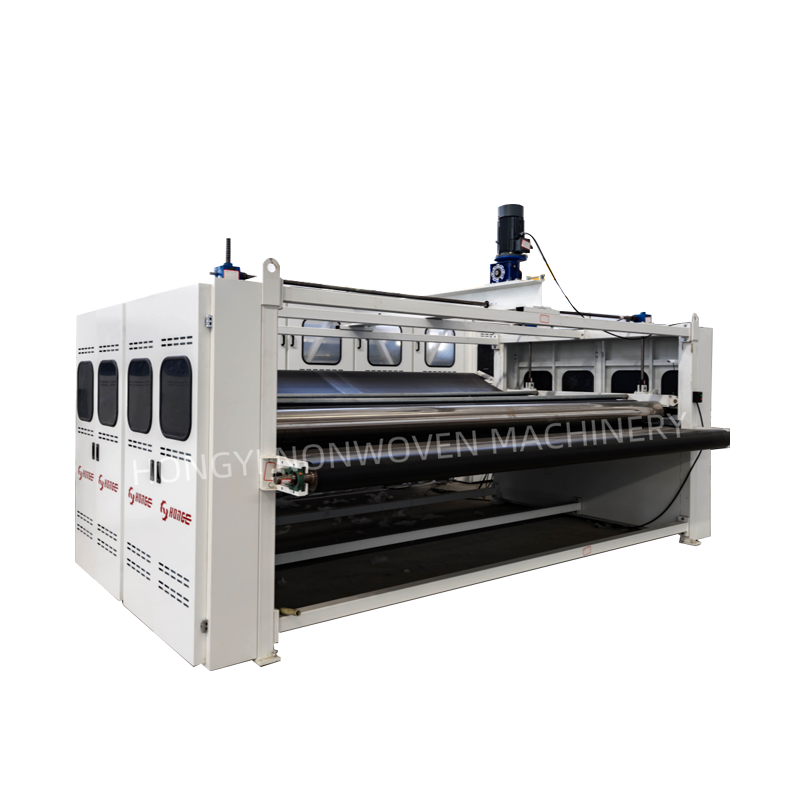
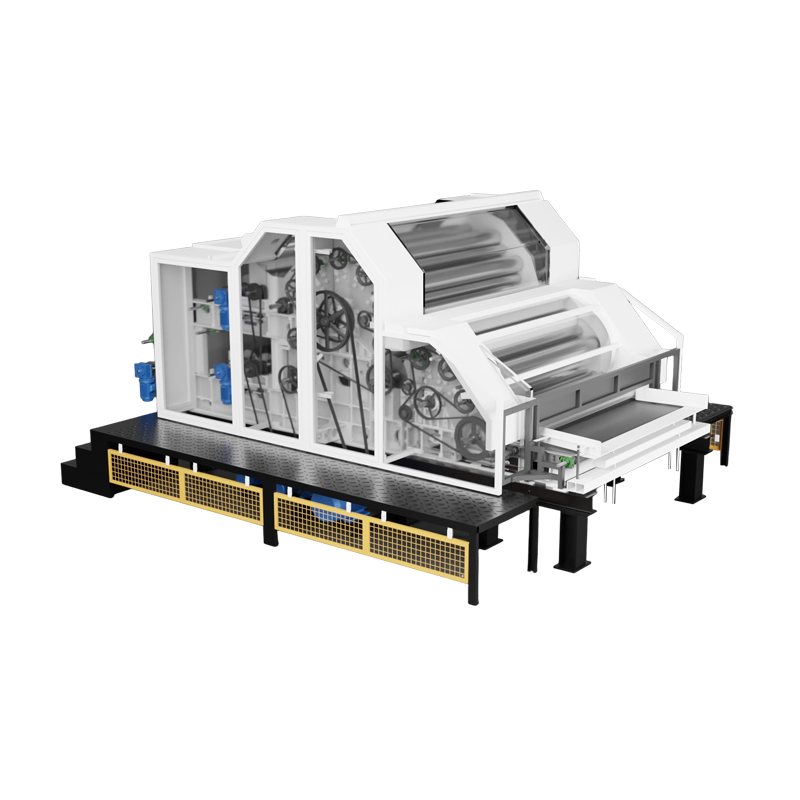
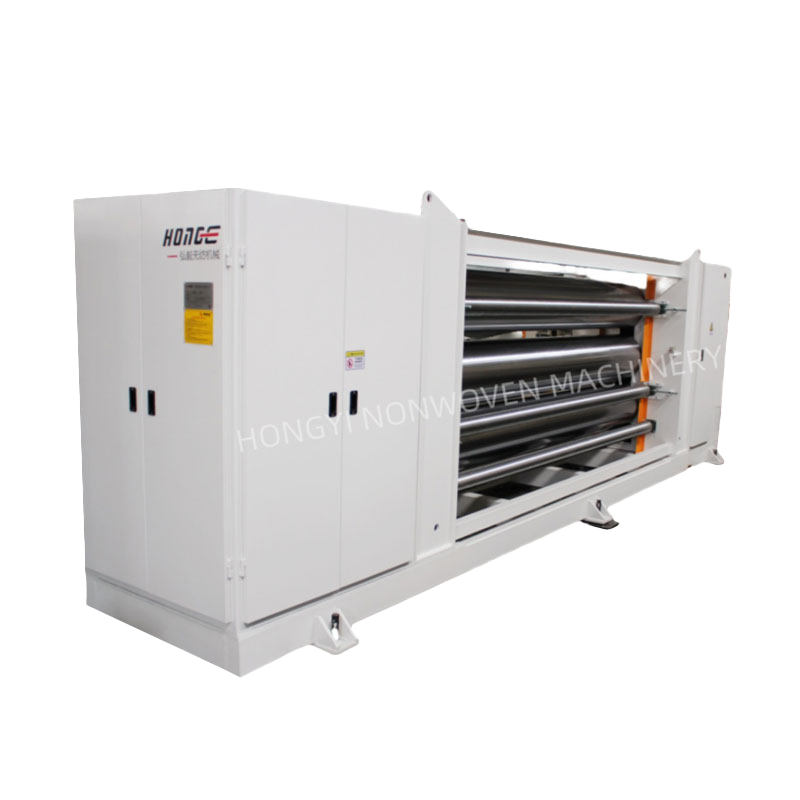
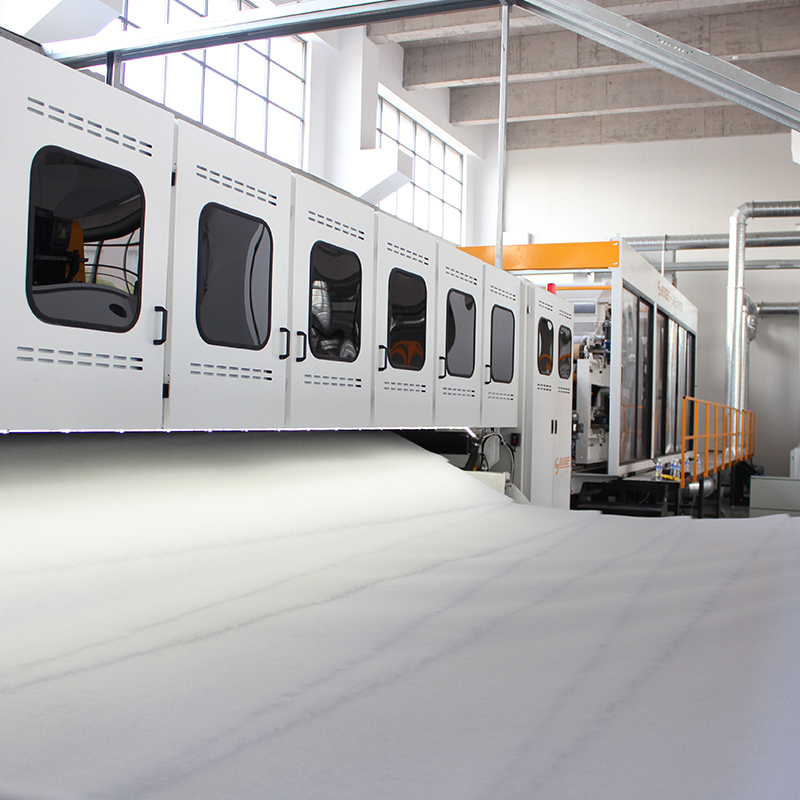
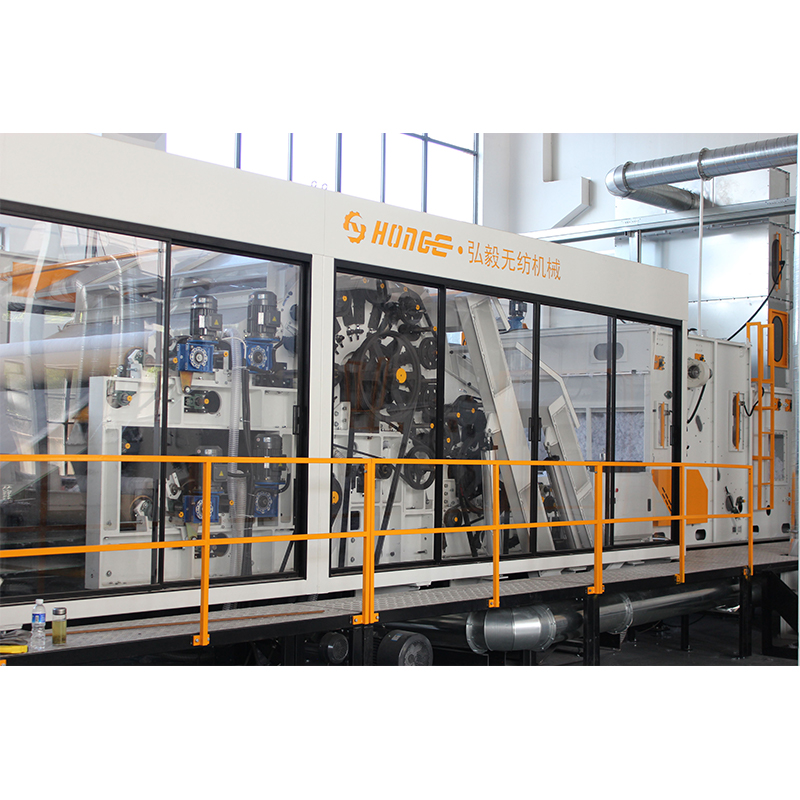 HYSL Carding MachineThis machine is used for fully carding the fiber batt following opening and blending,then forming parallel or random web through doffer and random if required,which is...View Product →
Step 2: Match Working Width and Speed to the Web You Actually Sell
Throughput is arithmetic, not a brochure claim: web weight (g/m²) × working width (m) × line speed (m/min) × 0.06 = kg/h. A 300 gsm felt on a 2.2 m card running at 14 m/min needs about 554 kg/h of carded web. The same card making a 25 gsm hygiene web at 150 m/min would have to deliver roughly 495 kg/h — a very different duty at the same width.
So ask two questions rather than one. What is the maximum output, and what is the output at my web weight and my speed? A card rated at 1,200 kg/h on light web can fall to a third of that when you push 400 gsm through it, and that answer decides whether you need one card or two.
| Card class | Working width | Typical output | Web weight | Best suited for |
|---|---|---|---|---|
| Compact or laboratory card | 0.6–1.0 m | 20–80 kg/h | 15–100 gsm | Sampling, trials, small technical felt batches |
| Standard single-cylinder card | 1.5–2.2 m | 250–600 kg/h | 20–150 gsm | Needle-punched felt, geotextile base, cleaning cloth |
| High-speed tandem card | 2.5–3.5 m | 700–1,300 kg/h | 15–60 gsm | Spunlace, hygiene products, high-volume light webs |
| Wool and natural fibre card | 1.5–2.5 m | 150–400 kg/h | 100–600 gsm | Wool felt, jute felt, thermal-bonded wadding |
Step 3: Size Feeding, Carding and Web Forming as One Line
A card can only deliver a web as even as the batt that enters it. Volumetric feeding is cheaper but drifts when bulk density changes; weigh-pan feeding holds weight per metre far more tightly and pays for itself on light webs. Feed design also has to suit the fiber: a vibrating feeder handles bulky, low-density stock gently, while pneumatic feeding copes better with longer conveying distances and mixed blends.
Downstream, decide how the web leaves the card. Direct take-off into a needle loom suits light webs at high speed. A cross lapper builds a thicker batt and improves the MD/CD strength ratio, which matters for geotextiles and many felt products. Ask the supplier to size feeder, card and lapper against the same throughput target; a card quoted in isolation often arrives with a feeding section that cannot keep up.
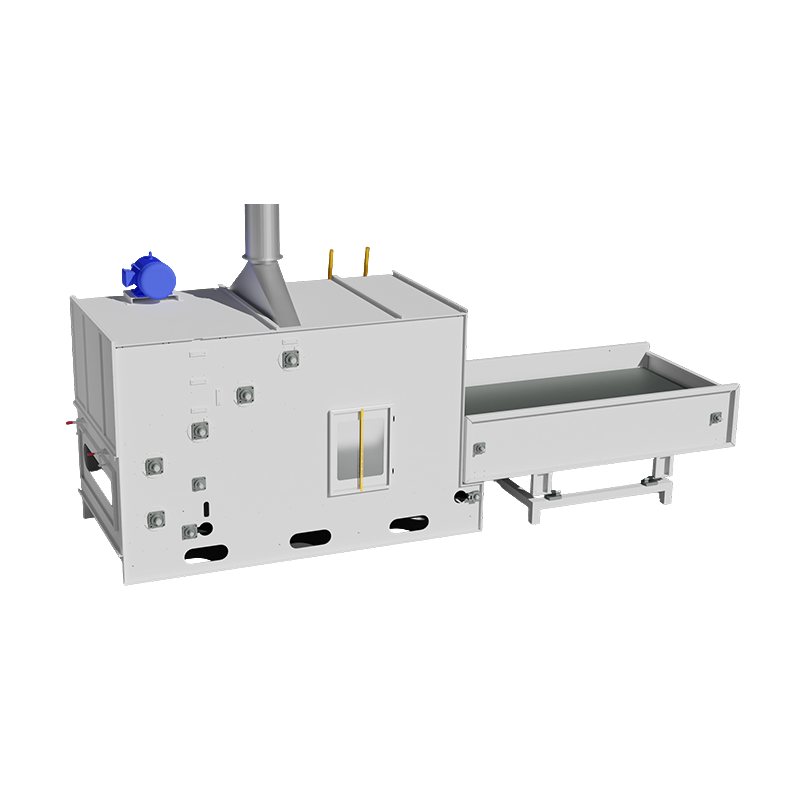
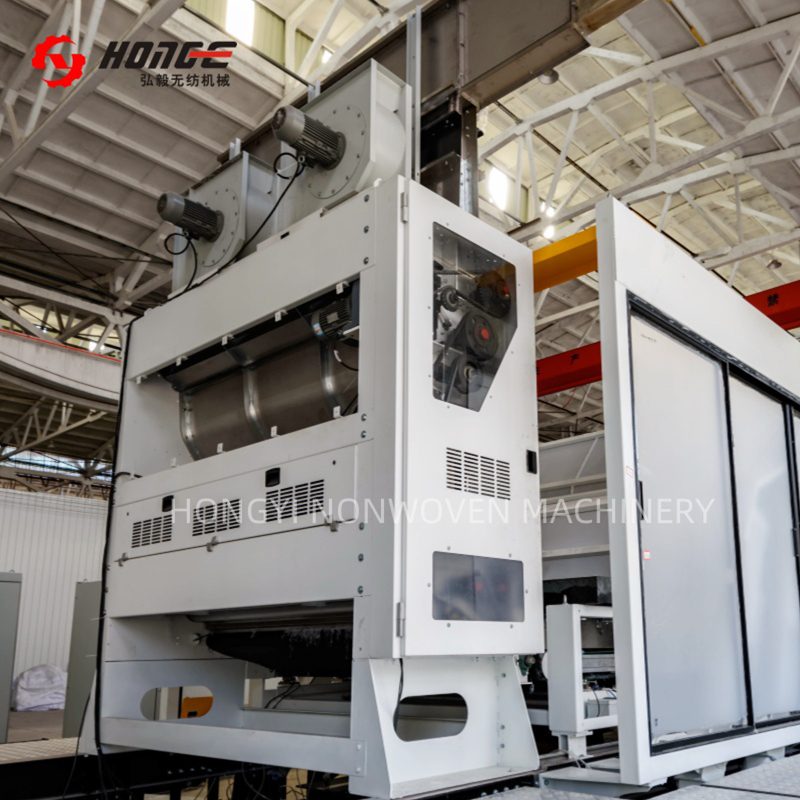 HYQY Pneumatic FeederThis pneumatic feeder is used to mix fiber and store the opened fiber ,then create an even fiber web layer into next working procedure,such as carding machine or for d...View Product →
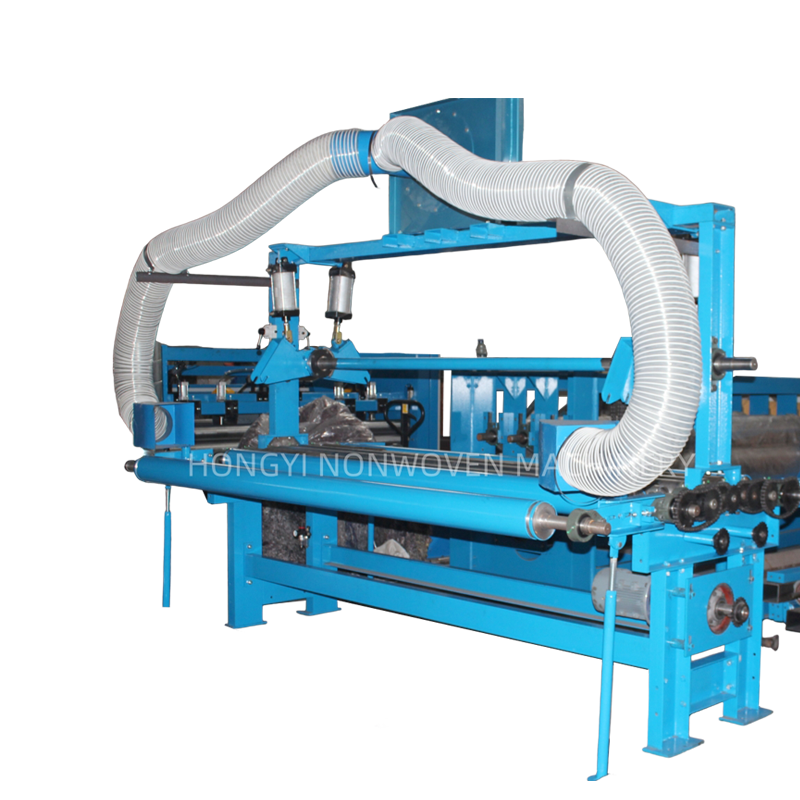
 HYPW Cross LapperThis nonwoven machine is a higher speed unit,aims to to fold and plate the fiber webs from carding machine evenly into the required weight and thickness and then to fe...View Product →
Step 4: Check the Details That Decide Uptime
Two cards with identical width and output figures can behave very differently on a Tuesday night shift. These are the points worth writing into the specification:
- Cylinder diameter and carding area, since more carding points mean gentler fiber treatment and better opening of recycled stock.
- Wire specification and expected life in your fiber, quoted in tonnes or hours rather than "long lasting".
- Auto-levelling type — feed-forward, feedback or both — and the web weight CV% the supplier will guarantee in writing.
- Suction and dust extraction capacity, where waste collects, and how often it must be emptied.
- Doffing and web transfer, and how the web is supported between the card and the lapper.
- Drive and control: variable-frequency drives per motor, PLC platform, recipe storage, remote diagnostics.
- Safety guarding, interlocks and emergency stops that satisfy your local market requirements.
- Maintenance access — how long a wire change, under-card clean or bearing replacement really takes.
Step 5: Compare Five-Year Cost, Not the Invoice
The purchase price is one line in a five-year calculation. If the line produces 554 kg/h and an unplanned stop burns a full hour of output, every stoppage has a price. Add wire replacement cycles, energy per kilogram, spares lead time and the cost of flying in a technician, and two machines quoted 15% apart can swap places entirely.
- Fiber and product fit — 30%
- Output and width — 25%
- Uptime and maintenance — 20%
- Service and spares — 15%
- Purchase price — 10%
Before you sign, request a spare parts list with prices, a reference for wire life in a comparable fiber, and a written service response time. Those three documents reveal more about ownership cost than any discount negotiation.
Step 6: Insist on a Trial With Your Own Fiber
Send 200–500 kg of production fiber, including the recycled fraction and any regrind, and agree acceptance criteria before the run: web weight CV%, nep count per square metre, output at rated speed, waste ratio, noise and vibration levels, and wire condition after the trial. Ask for the process data log and a video of the run, not just photographs of a finished roll.
If a supplier cannot or will not run your fiber, treat that as information. Carding trials are routine work for any experienced builder.
FAQ: Choosing a Nonwoven Carding Machine
What working width do I need?
Start from arithmetic: web weight × width × speed × 0.06 = kg/h. Choose the narrowest width that meets your target output at a speed your bonding equipment can actually run. Extra width adds wire cost, energy use and floor space from day one.
How many worker-stripper pairs should the card have?
More pairs mean more carding points, better opening and a more even web, at the cost of power and maintenance. Recycled and short-staple fiber usually justifies more pairs than virgin polyester.
Can one card run both polyester and recycled cotton?
Usually yes, with different wire and settings, but you accept a compromise. If you change blends often, prioritise quick-change clothing and recipe storage over the last 10% of speed.
What should the acceptance test include?
Web weight CV%, nep count per square metre, output at rated speed, waste ratio and a wire inspection after the trial. Get those numbers into the contract, not into an email.
Choosing a nonwoven carding machine is a paperwork exercise before it is a purchase. Put your fiber data, target web weight, line speed and bonding route on one page, then ask every supplier to quote against that page and prove the numbers in a trial. A builder that also supplies opening, feeding, lapping and needle-punching equipment can size the card against the whole process instead of optimising one machine in isolation, which is usually where the expensive surprises hide.