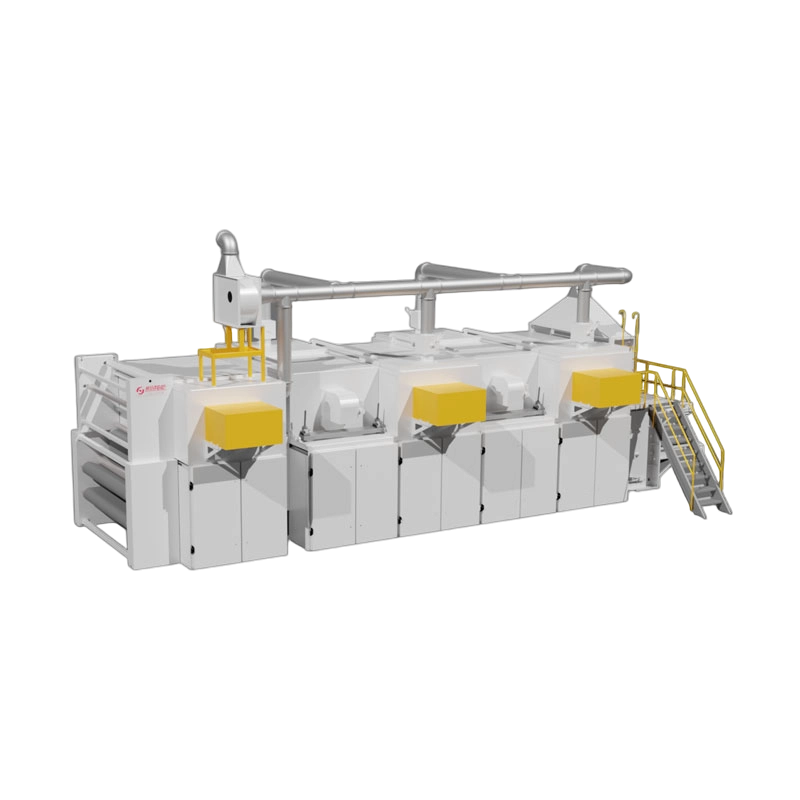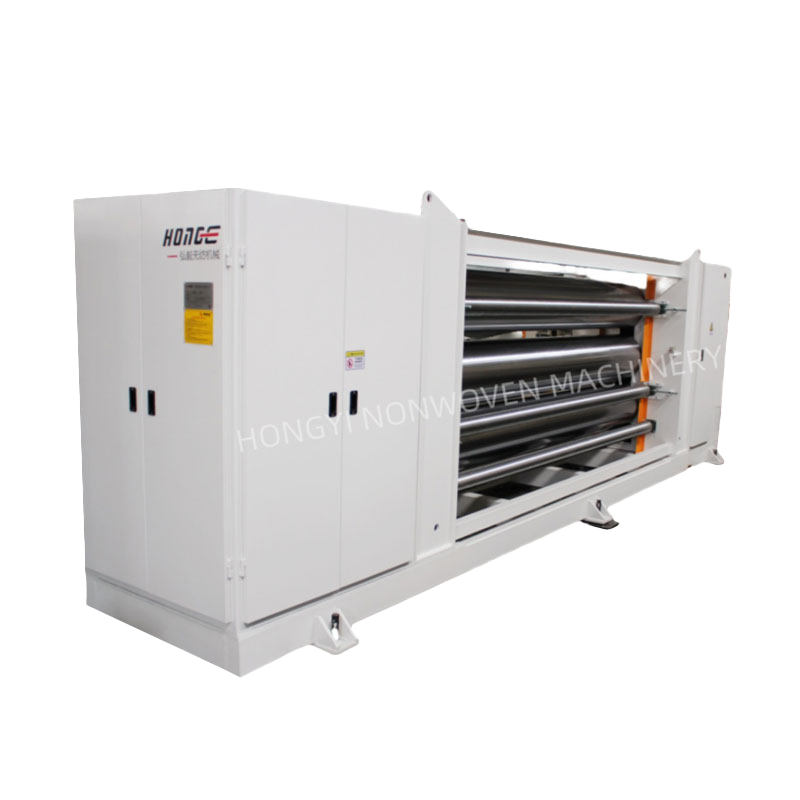


Content
- 1 The Core Answer: Four Stages, Not a Weaving Loom
- 2 Stage 1: Opening and Blending the Fiber Bales
- 3 Stage 2: Carding, Cross-Lapping, and Web Uniformity
- 4 Stage 3: Needle Punching: How the Fabric Gets Its Strength
- 5 Stage 4: Finishing, Heat Setting, and Winding
- 6 Quality Variables That Change the Finished Geotextile
- 7 How the Process Scales From Sample to Production Line
- 8 FAQ: How Nonwoven Geotextile Is Made
A 200 g/m² needle-punched polypropylene geotextile looks like a dense felt. It has no warp yarns and no weft yarns. Its strength comes from thousands of barbed needles pulling fibers through a batt until they entangle. The short answer to how nonwoven geotextile is made is this: staple fibers are opened, blended, carded into a web, cross-lapped into a batt, mechanically or thermally bonded, and wound into a roll. Needle-punched geotextiles, the workhorse for separation, filtration, and drainage, rely mainly on mechanical bonding.
That distinction matters at the purchasing stage. If you specify a nonwoven geotextile by mass per unit area alone, you may miss the variables that decide whether the roll performs in the field: fiber blend, web evenness, needle density, and heat-setting conditions. The manufacturing route explains why two rolls with the same 200 g/m² label can behave differently.
The Core Answer: Four Stages, Not a Weaving Loom
Nonwoven geotextile production follows four broad stages. Each stage can be run as a separate machine or linked into a continuous line.
- Web formation: fibers are opened, blended, carded, and cross-lapped into a uniform batt.
- Web bonding: the batt is needled, heat-bonded, or chemically bonded to lock fibers together.
- Finishing: the fabric may be heat-set, calendered, slit, or surface-treated.
- Winding and inspection: the finished geotextile is wound, tested, and packed.
Needle punching dominates many geotextile grades because it creates a thick, porous structure with good permittivity and puncture resistance. The process does not weave; it entangles.
Stage 1: Opening and Blending the Fiber Bales
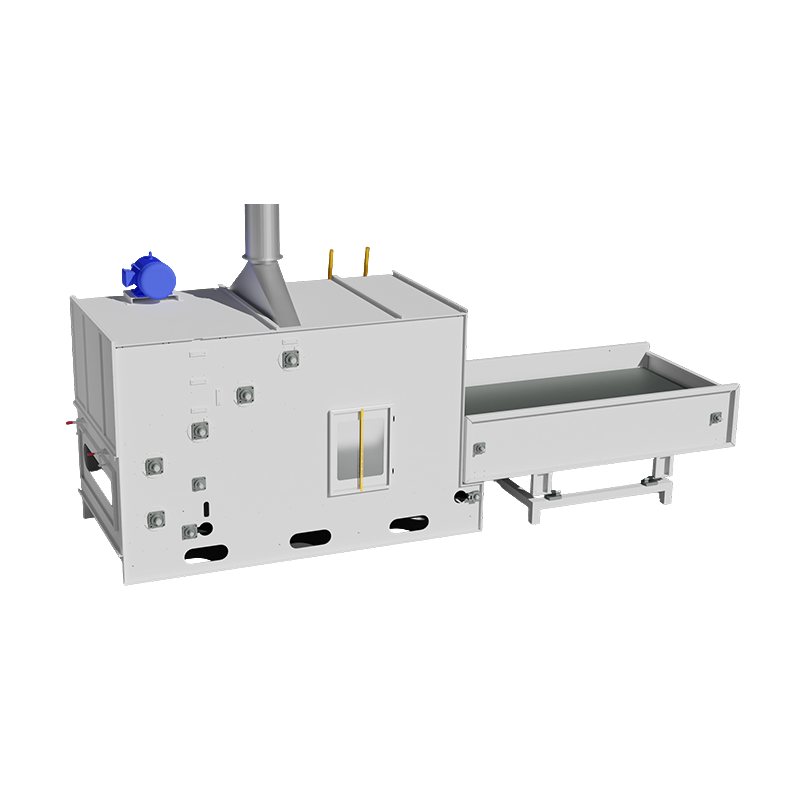
Most needle-punched geotextiles start with polypropylene or polyester staple fiber. The fiber arrives in compressed bales. A bale opener breaks the bales into tufts. Opening machines then separate those tufts so that the fibers can be mixed consistently with additives, colorants, or recycled fiber. Blending is where the recipe is set. A 70/30 virgin-to-recycled blend, for example, must be controlled by weight, not by eye, or the finished roll will vary in strength and pore size.
Large batch blenders are common on geotextile lines because they dampen small weighing errors. If your blend ratio drifts, you may see it later as weak spots, inconsistent thickness, or filtration holes. The article on how a fiber blending machine works explains the mechanical side in more detail.
Moisture also matters. Humid fiber can bridge in the chute, while overly dry fiber can generate static and fly. Operators usually balance opening intensity against fiber damage: too little opening leaves clumps, too much creates short fibers and dust.
Stage 2: Carding, Cross-Lapping, and Web Uniformity
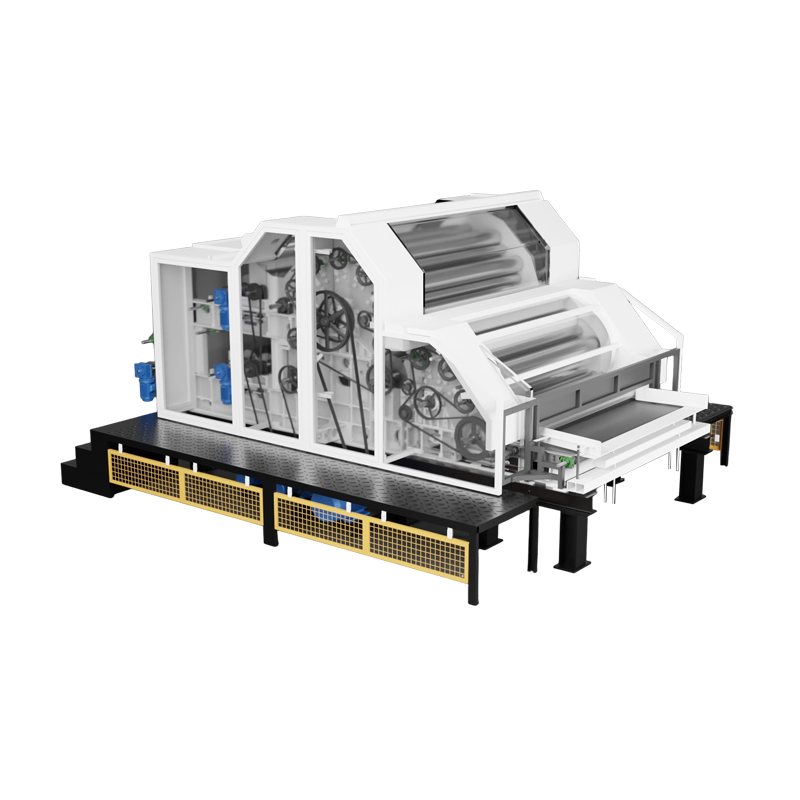
The opened blend is fed to a carding machine. Carding wire opens the tufts into individual fibers, aligns them somewhat in the machine direction, and forms a thin web. At this point the web is delicate. A cross-lapper then folds the web back and forth onto a conveyor to build a thicker batt. The number of folds, the delivery speed, and the draft ratio determine the batt weight and width.
This is where mass per unit area is really made. If the card feed varies, the cross-lapper cannot correct it. If the cross-lapper belt tension is uneven, the batt may be heavier on one edge. A 200 g/m² target with a ±5% tolerance allows a 10 g/m² swing across the roll; tighter projects may call for ±2% to ±3%. That difference is often visible in filtration performance and seam strength.
Illustrative application ranges. Final specification depends on fiber type, needle density, and project design.
Stage 3: Needle Punching: How the Fabric Gets Its Strength
The batt enters a needle punching machine. Thousands of barbed needles are mounted on needle boards. As the boards move up and down, the needles penetrate the batt and the barbs carry tufts of fiber from the top surface to the bottom, and vice versa. The result is a three-dimensional fiber entanglement rather than a woven structure. This is the step that gives nonwoven geotextile its tensile strength, puncture resistance, and dimensional stability.
Key settings include needle gauge, barb shape, penetration depth, needle density, and strokes per minute. A common adjustment is needle density: too few punches leave a loose, fuzzy fabric with low strength; too many punches can damage fibers, create holes, and reduce elongation. For a given geotextile grade, the needle pattern and line speed are usually set from a sample that has passed tensile, puncture, and permeability tests.
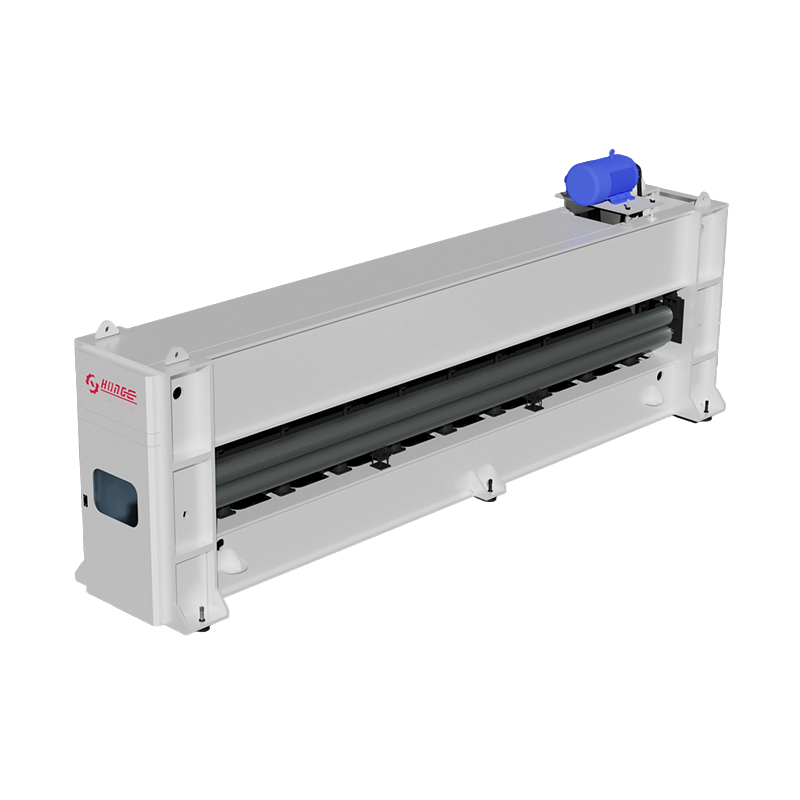
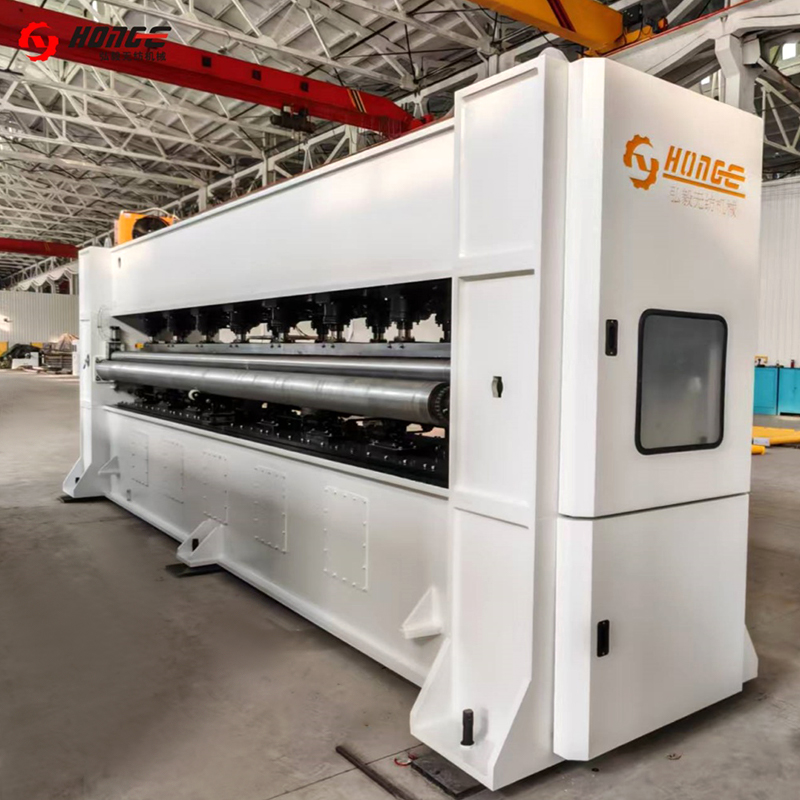 HYZC Needle Punching MachineThis nonwoven machine is used for reinforcing and surface finishing of the nonwoven fabrics. We can produce a complete range of needle looms to satisfy the requirement...View Product →
Needle punching also influences pore size. The more the fibers are entangled, the smaller the apparent opening size tends to become, although fiber fineness and batt weight still dominate. That is why two needled geotextiles with the same polymer can have different filtration behavior.
Stage 4: Finishing, Heat Setting, and Winding
After needling, the fabric may pass through a heat-setting oven or calender. Heat setting can stabilize dimensions, reduce shrinkage, and modify surface smoothness. For geotextiles used in exposed applications, UV stabilizers are usually added at the fiber or blending stage rather than sprayed on later. Slitting and edge trimming follow, then the fabric is wound into rolls with controlled tension.
Winding looks simple, but it creates its own quality risks. If tension is too low, the roll can telescope during transport. If tension is too high, the fabric can stretch and lose its specified elongation. Roll diameter, core size, and splicing method should be agreed before shipment, especially for projects that require continuous installation.
Quality Variables That Change the Finished Geotextile
The table below links each production stage to the variable that most often decides whether the finished roll meets specification.
| Stage | Main control | Typical target | Risk if ignored |
|---|---|---|---|
| Fiber opening and blending | Blend ratio, opening degree, moisture | ±1% to ±2% by weight for critical blends | Variable strength, color, and pore size |
| Carding | Web evenness, fiber orientation | ±3% to ±5% mass variation | Thin spots and filtration holes |
| Cross-lapping | Batt weight, width, fold count | ±2% to ±3% mass per unit area | Heavy edges and uneven rolls |
| Needle punching | Needle density, depth, needle type | Application-specific; confirm by sample | Low tensile strength or fiber damage |
| Heat setting and winding | Temperature, tension, roll diameter | ±2°C and ±2% tension where specified | Shrinkage, stretch, or telescoping rolls |
How the Process Scales From Sample to Production Line
A laboratory sample may be made on a small card and needle-punch unit, but production requires matched speeds and tensions across the line. The opening, blending, carding, cross-lapping, and needle punching stages must be sized so that the card can feed the cross-lapper without starving it and the needle loom can run at the required density without overloading the fibers.
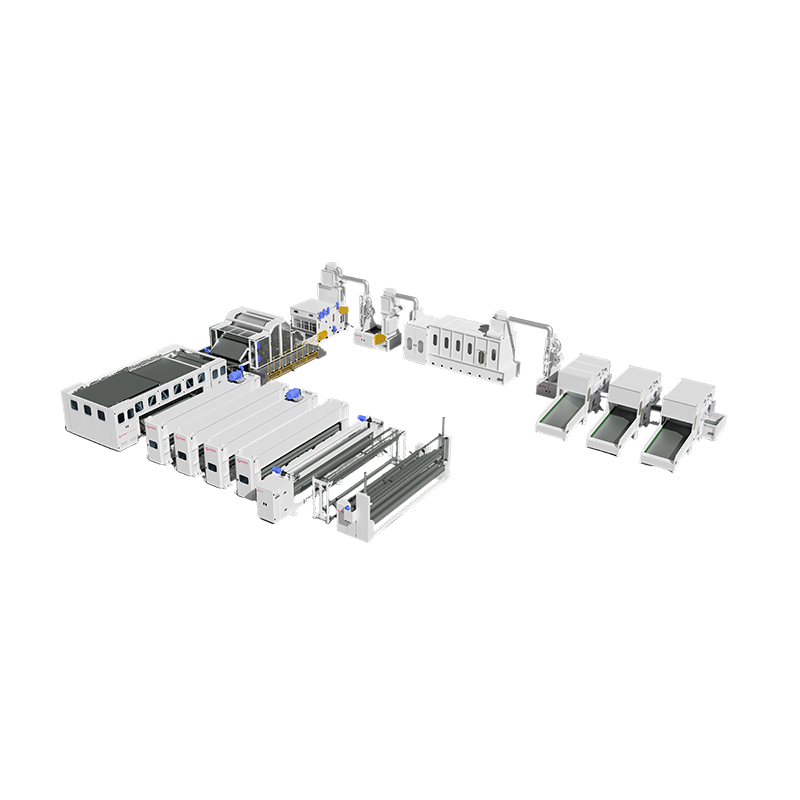
This is where equipment selection becomes a process question, not just a machine question. A 200 g/m² filtration geotextile may need tighter web evenness than a 500 g/m² reinforcement felt. A line that runs both grades needs adjustable draft ratios, needle board patterns, and winding tension. Changshu Hongyi Nonwoven Machinery has supplied nonwoven production equipment for more than 20 years, including opening and blending machines, carding machines, cross-lappers, needle punching machines, and complete needle-punched felt and geotextile lines. You can review the broader nonwoven production equipment range if you are comparing single machines with a full line.
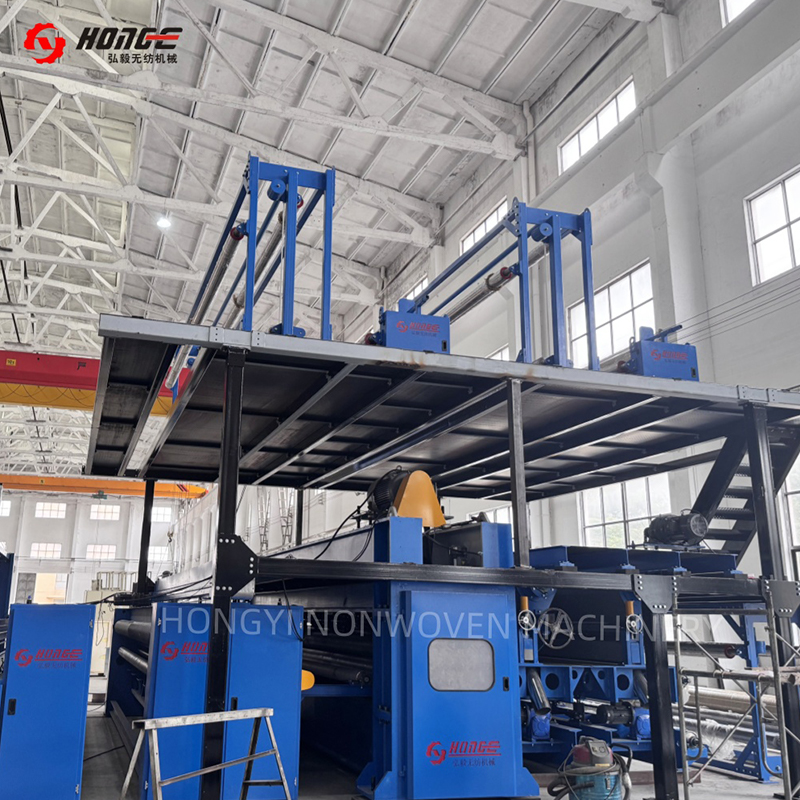 HYL Needle Punching Felt Production LineThis needle punching felt production line is used to manufacture durable and versatile nonwoven fabrics for applications in automotive, filtration, geotextiles, insula...View Product →
FAQ: How Nonwoven Geotextile Is Made
Is nonwoven geotextile made from recycled plastic?
Yes. Recycled polypropylene and polyester can be used, but the input must be sorted and consistent. Variation in melt flow or fiber length can change needling behavior and final strength.
What is the difference between needle-punched and heat-bonded geotextile?
Needle-punched geotextile is bonded by mechanical entanglement, so it is usually thicker and more porous. Heat-bonded geotextile uses thermal fusion, which can produce a thinner, stronger fabric with different filtration properties.
How many needles does a needle punching machine use?
A needle board can hold thousands of needles. The important number is not the total count alone but needle density per unit area, penetration depth, and strokes per minute.
Can the same line make different geotextile weights?
Yes. Operators change fiber feed rate, cross-lapper fold count, needle density, and line speed. Each change should be validated with mass per unit area, tensile, puncture, and permeability tests.
How nonwoven geotextile is made comes down to one principle: form a uniform fiber web, then entangle it into a stable fabric. Fiber selection sets the chemical and UV baseline. Carding and cross-lapping set the weight and evenness. Needle punching sets the strength and pore structure. Finishing and winding protect those properties through installation. If you are specifying a geotextile line, compare the process window at each stage, not just the machine nameplate.