

Content
- 1 Start With the Finished Fabric Specification
- 2 Compare the Main Nonwoven Process Routes
- 3 Match Fiber Preparation to the Process
- 4 Choose Web Formation and Bonding Together
- 5 Set Capacity, Width, and Speed Before Price
- 6 Review Quality Control and Acceptance Tests
- 7 Use a Simple Cost Check
- 8 Run a Small-Scale Trial Before Full Commitment
- 9 Common Mistakes When Choosing a Process
- 10 FAQ
If your target is a 500 g/m² needle-punched geotextile, a thermal-bonded line built for 80 g/m² wadding will not make it economically. Choose the nonwoven fabric production process from the finished product backward: fiber type, weight, width, bonding method, speed, and quality tolerance. Comparing machine prices first is the common mistake. A safer sequence is: define the fabric specification, match the process route, size the line, then request quotations.
This guide covers needle-punch, thermal-bonded, airlaid, and spunbond routes. It shows where cost and risk usually appear. If you already know your end use, start with the comparison table.
Start With the Finished Fabric Specification
Write down six numbers: fiber type, blend ratio, target weight (g/m²), width (mm), line speed (m/min), and bonding method. Add the critical tolerances: thickness, tensile strength in machine and cross directions, elongation, air permeability, and shrinkage. A geotextile may accept 10% weight variation; a medical wipe or automotive trim may not.
Conclusion: choose the process that meets the tightest critical specification. If cross-direction tensile is critical, cross lapping and needle density matter more than maximum speed. If softness and bulk are critical, thermal bonding may beat heavy needling.
Compare the Main Nonwoven Process Routes
Use this table to eliminate routes that cannot reach your product. It is a filter, not a machine quotation.
| Process route | Typical fibers | Web formation | Bonding method | Common products | Main limitation |
|---|---|---|---|---|---|
| Carded needle-punch | PET, PP, wool, jute, recycled fibers | Carding and cross lapping | Mechanical needle punching | Geotextiles, felt, carpet backing, automotive trim, cleaning cloth | Heavy needling can reduce softness and air permeability |
| Thermal bonded | Bi-component PET/PP, blended fibers | Carding and cross lapping | Hot air oven or calender | Wadding, padding, insulation, hygiene layers | Fiber must contain a thermal binder component |
| Airlaid | Pulp, short fibers, recycled waste | Air forming | Latex, thermal, or needle punch | Waste felt, absorbent pads, filtration | Airflow and dust control add complexity |
| Spunbond or meltblown | Polymer chips, mainly PP | Direct extrusion | Thermal calender or self-bonding | Medical fabric, hygiene, filtration | Polymer-grade dependence and high capital entry |
If your product is durable felt for roads, furniture, or cars, needle-punch is usually the first route to examine. If your product is soft wadding for bedding or apparel, thermal bonding deserves a close look. If you process recycled or waste fibers, airlaid may reduce fiber-length demands, but it requires strong dust and airflow control.
Match Fiber Preparation to the Process
Fiber choice decides what the line must do before web formation. Long staple fibers need gentle opening and blending to avoid breakage. Short and recycled fibers need more aggressive opening. If blend ratio varies by more than 2-3%, weight and strength drift. Fiber preparation sets the stability of the whole process.
A big chamber blender mixes multiple fibers in batches; a fiber mixing machine smooths the ratio before carding. For background, read this guide to the nonwoven big chamber blender machine.
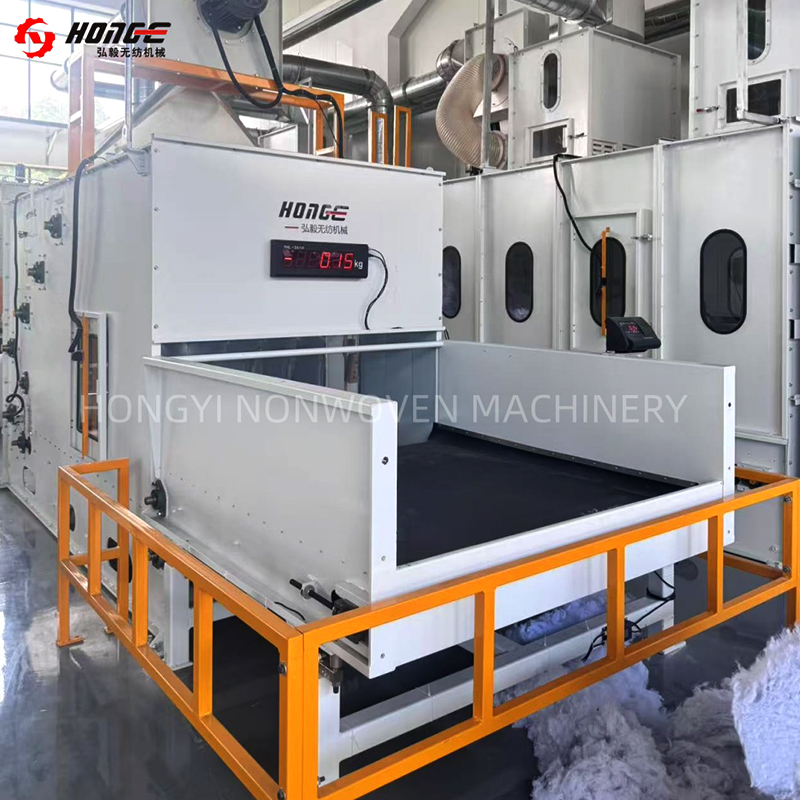 HYHM Fiber Mixing Machine for Nonwoven Opening and BlendingIt pre-opens baled fibers and proportionally weighs them before carding, helping smooth blend ratios after chamber blending.View Product →
Ask the supplier to trial your actual bale mix, not a standard virgin-fiber sample. Fiber length distribution, moisture, and oil finish change card behavior.
Choose Web Formation and Bonding Together
Carding produces a thin web with fibers mostly aligned in the machine direction. Cross lapping folds the web to build weight and cross-direction strength. Needle punching entangles fibers mechanically. Higher needle density raises strength but usually lowers air permeability and softness. The right balance comes from a trial matrix.
For needle-punch lines, control web weight per layer, number of laps, and punching frequency. Poor lap control creates thick and thin bands that become weak spots. For thermal bonded lines, oven temperature, air velocity, and dwell time control the bond.
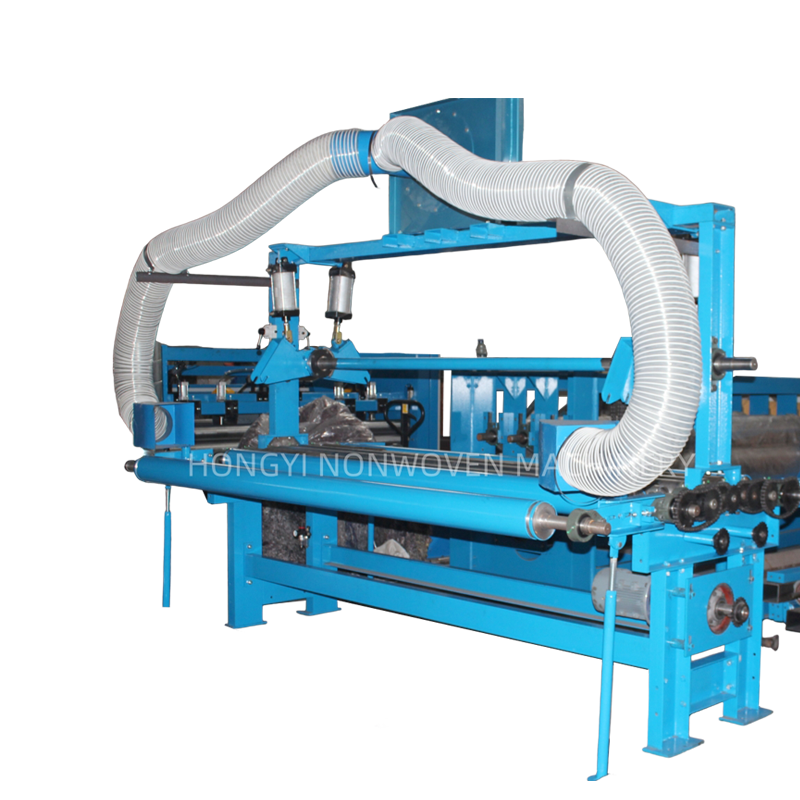
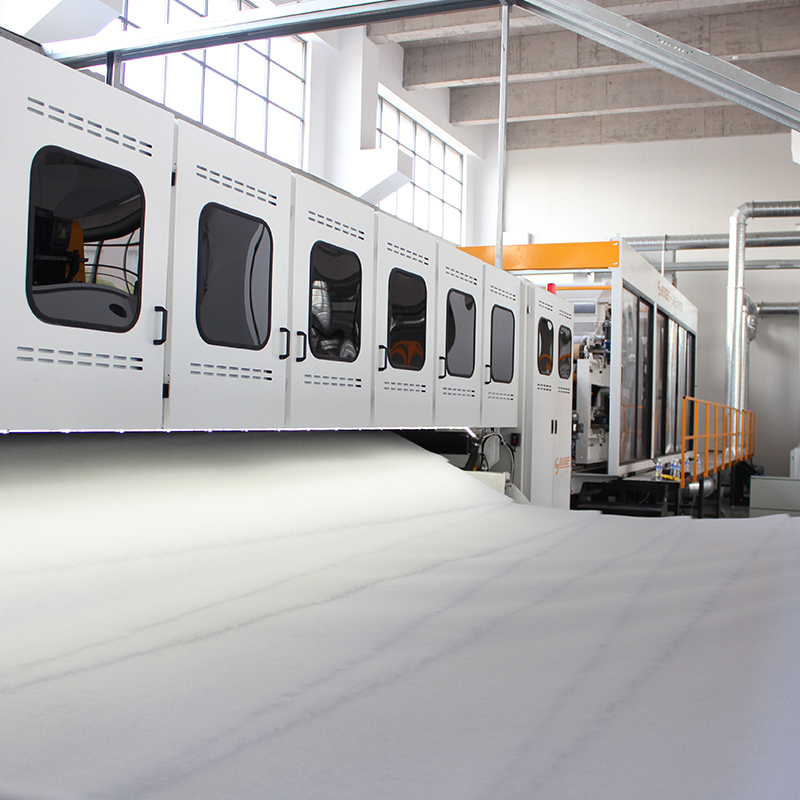 HYPW Cross Lapper for Even Nonwoven Web FormationIt folds and lays carded webs evenly to target weight and thickness before needle punching or thermal bonding, supporting uniform lap control.View Product →
Ask for a process window, not one setting. For example, 200-600 g/m² at 2-8 m/min with 80-250 punches/cm². A narrow window means less flexibility; a wide window requires quality checks at both ends.
Set Capacity, Width, and Speed Before Price
Capacity is not line speed alone. Use this rough formula:
- Annual output (kg) = weight (g/m²) × width (m) × speed (m/min) × 60 × operating hours × efficiency.
- Divide grams by 1,000 to get kilograms.
- Use 70-85% efficiency for a new line, not the theoretical maximum.
For 1,200 tonnes per year of 300 g/m² felt at 2.5 m width, 6,000 hours at 80% efficiency requires about 5.6 m/min. A machine that reaches speed only on light fabric will not meet the target on heavy fabric. Width also matters: if the final product needs 3.2 m after shrinkage, a 2.5 m line cannot deliver.
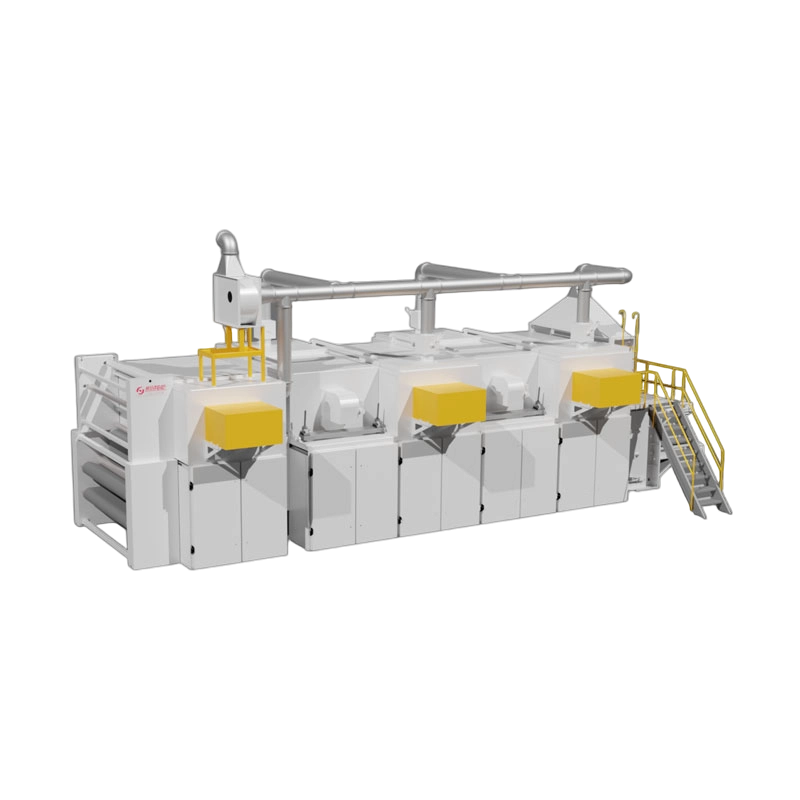
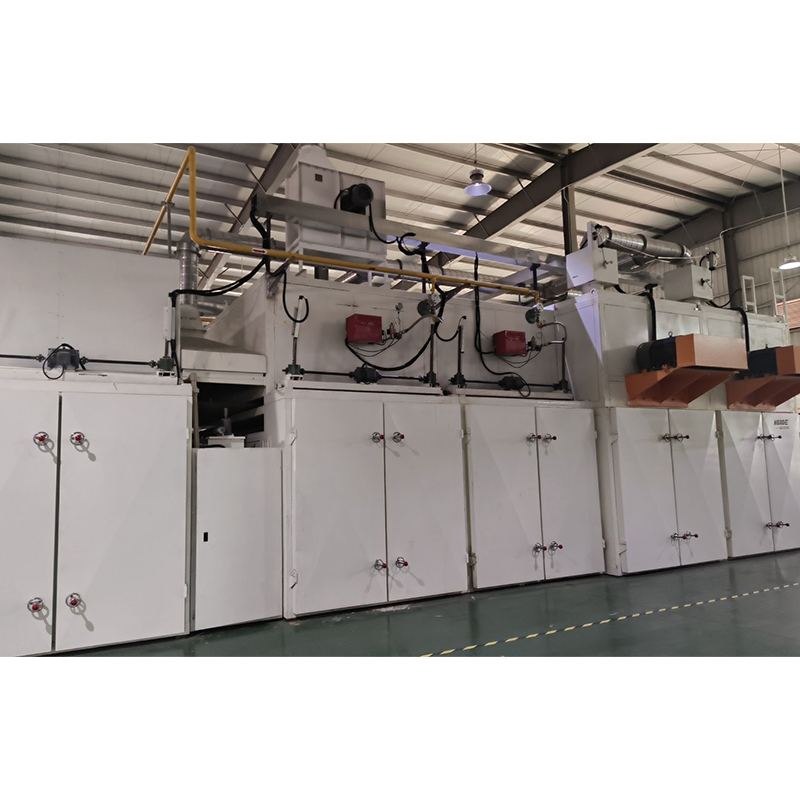 HYHX Nonwoven Fabric Oven for Thermal Bonding and Heat SettingThermally bonds cross-lapped webs by hot-air penetration, producing thick thermal-bonding wadding; working width up to 5000 mm and heat setting up to 220°C.View Product →
Trim waste and edge quality belong in the calculation. Pre-edge cutting and reliable winding can recover some loss, especially on thick felt.
Review Quality Control and Acceptance Tests
Agree on acceptance tests before signing. For needle-punch fabric, test weight, thickness, tensile strength in both directions, elongation, and air permeability. For thermal bonded fabric, add shrinkage, delamination, and surface uniformity. For airlaid waste felt, check density variation and dust.
Use a sampling plan, not one final sample. Take three samples per shift for the first 72 hours, then one per shift after stable production. If the contract says ±5% weight, ask how the line holds that target when fiber moisture changes.
Use a Simple Cost Check
Purchase price is only part of lifetime cost. The chart below is illustrative, but fiber and energy usually dominate. Labor and maintenance depend on automation and local wages.
When comparing quotations, ask for connected load, compressed air demand, and spare parts consumption. A line with lower energy per kilogram may cost more upfront and less over three years. Also ask for automation scope: auto dosing, tension control, and recipe storage reduce waste and operator error.
Run a Small-Scale Trial Before Full Commitment
A trial is the cheapest way to reduce risk. Run your fiber, target weight, and width at low, middle, and high speed. Record settings and test results. The goal is to find the stable window, not to prove the machine can run.
Typical result: middle speeds hold weight and tensile best. Top speed may give good weight but weak cross-direction strength. Lowest speed may over-needle the web. Use trial data to set guaranteed performance, not the maximum speed in the brochure.
Common Mistakes When Choosing a Process
- Choosing by price before defining the fabric specification.
- Using virgin-fiber test data for a recycled-fiber project.
- Ignoring cross-direction strength when balanced tensile is required.
- Accepting one speed number without weight and width.
- Forgetting energy, compressed air, and spare parts in lifetime cost.
- Leaving acceptance tests out of the contract.
FAQ
What is the best nonwoven production process for felt?
For durable felt, carded needle-punch is usually the best starting point. It handles PET, wool, jute, and recycled blends and can reach heavy weights. Thermal bonding is better when softness and bulk matter more than mechanical strength.
How do I choose between needle-punch and thermal bonding?
Ask whether the fiber can be bonded by heat and whether the product needs high tensile strength or high loft. Needle-punch gives mechanical strength and durability. Thermal bonding gives softness and stable thickness but needs a thermal binder fiber.
Can one line produce several nonwoven products?
Yes, within limits. A line can run a range of weights and blends if the card, cross lapper, and bonding section are sized for the heaviest and lightest products. Test the process window; do not assume it.
What should I include in a supplier trial request?
Provide fiber type, blend ratio, target weight, width, required tensile and elongation, and final application. Ask for test results at three speeds and a written process window.
The reliable way to choose a nonwoven fabric production process is to start with the fabric, filter the process route, size the line with real capacity math, and verify with a trial. Price comes after those steps.
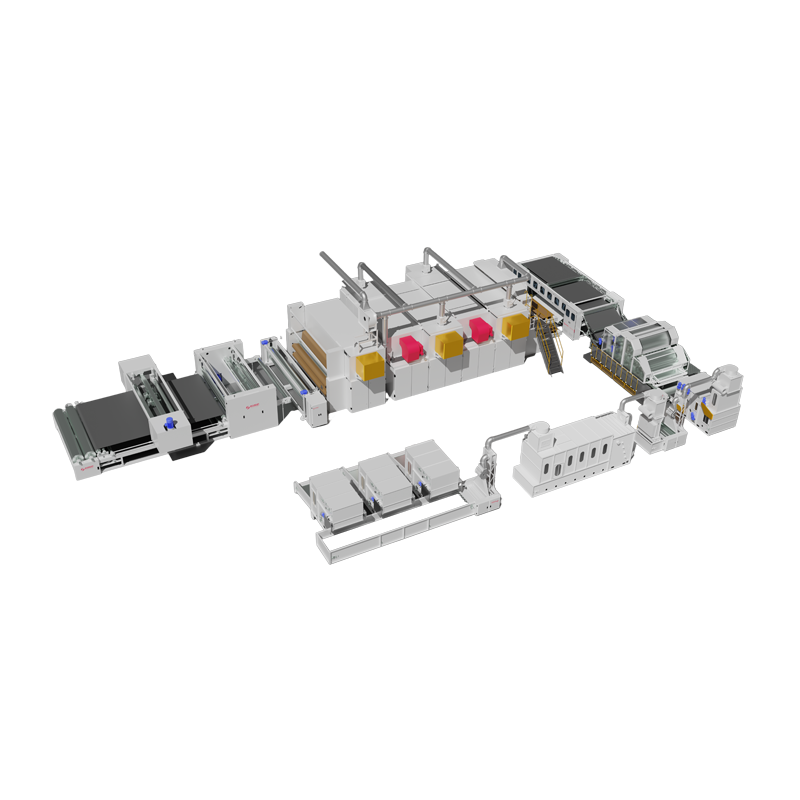
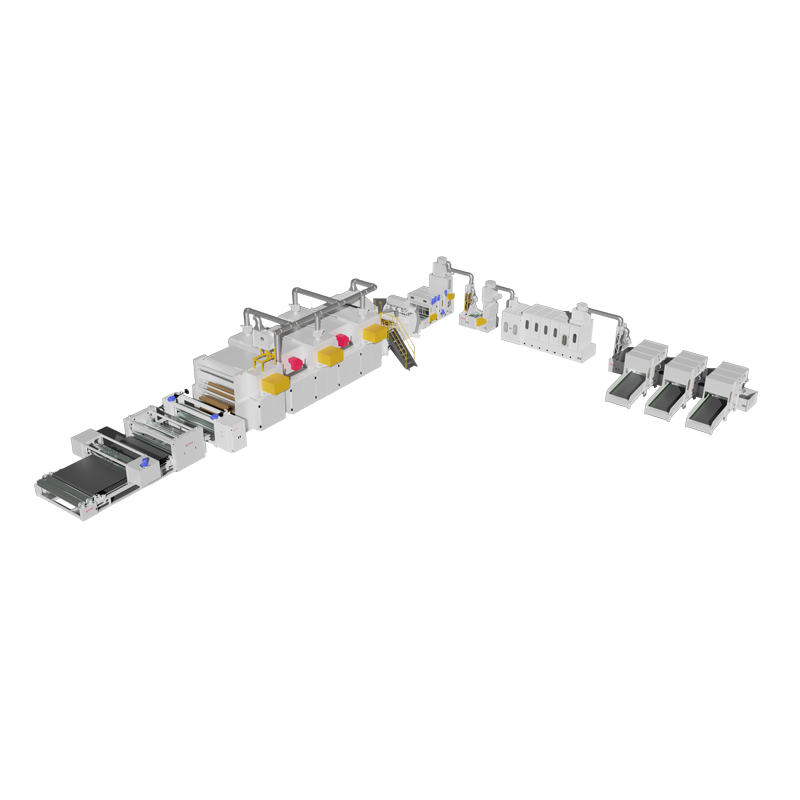
For needle-punch, thermal bonding, or airlaid waste felt, compare the full equipment chain from opening and blending to winding and cutting. Learn more about nonwoven machinery solutions and define the specification before requesting a final quotation.