

Content
- 1 Separate Mixing Defects From Carding Defects First
- 2 A Quick Map of Symptoms and Corrections
- 3 Step 1: Fix Bale Opening and Pre-Opening
- 4 Step 2: Control Blend Ratio by Weight, Not Belt Speed
- 5 Step 3: Use Chamber Blending to Average Bale Variation
- 6 Step 4: Stop Over-Mixing
- 7 Step 5: Feed the Card Without Surging
- 8 Step 6: Return Edge Trim Through a Controlled Loop
- 9 Humidity, Static, and Housekeeping
- 10 What to Measure to Prove the Fix Worked
- 11 Frequently Asked Questions
- 12 Fix the Chain, Not One Machine
A line running a 45/55 polyester-viscose blend at 600 kg/h shipped striped felt for three weeks. Grammage CV sat at 4.8%, tensile fell 0.6%, and the carding team took the blame. The cause was two machines upstream: unmetered bale take-off feeding a chamber blender that never ran above half full. Nearly every fiber-mixing defect is formed before the fiber reaches the card, which is also the cheapest place to fix it.
The order below is the one that holds in production, not on paper.
Separate Mixing Defects From Carding Defects First
Mixing and carding faults look alike on the finished roll but are diagnosed differently. Periodicity is the fastest test.
- Marks repeating at a fixed interval, such as needle board spacing or roller circumference, are mechanical and downstream.
- Streaks, brightness bands, and clumps that change with the bale lot are upstream: opening, weighing, blending, or feeding.
- Ratio drift across a shift usually points to a scale, a belt, or humidity rather than the beater.
Log the defect class before changing any setpoint. Mixing corrections applied to a carding fault rarely survive one shift.
A Quick Map of Symptoms and Corrections
Use the table to narrow the search before opening a machine.
| Symptom | Stage where it forms | Check first | Correction |
|---|---|---|---|
| Wide streaks or brightness bands | Chamber blender discharge | Fill level, discharge speed | Hold chamber 60-75% full, slow the discharge |
| Clumps, neps, unopened tufts | Bale opening and pre-opening | Beater speed, pin condition | Sharpen or replace pins, reduce take-off rate |
| Blend ratio drifts over a shift | Weighing belt | Scale accuracy, belt tracking | Calibrate each shift, hold RH at 55-65% |
| Short fiber, low tensile, heavy dust | Mixing machine | Dwell time, beater tip speed | Cut dwell to 30-60 seconds, reduce speed |
| Foreign fiber and film specks | Bale intake and reclaim | Trim handling, wrap removal | Run reclaim through a dedicated edgetrim opener |
Step 1: Fix Bale Opening and Pre-Opening
Blending cannot average out variation that arrives in lumps, so fix opening first.
- Lay-down pattern: place bales so the plucker cannot pull from one lot for more than a short pass. Five to seven bales is typical for geotextile and carpet blends.
- Two opening stages: a pre-opener plus a fine opener gives steadier tuft size than one aggressive beater.
- Pin condition: worn pins tear rather than open fiber. Inspect beaters and grid bars every 1,500 running hours, and sooner on recycled fiber.
- Take-off rate: match the plucker to the hardest bale in the lay-down, not the softest.
Step 2: Control Blend Ratio by Weight, Not Belt Speed
Most ratio drift is created at the weighing belt, long before the mixer sees the fiber.
- Accuracy: on a 600 kg/h line, a 3% black fiber addition is about 18 kg/h, so a scale drifting 0.5% of full scale moves the ratio by several points.
- Density: polyester and viscose arrive at different bulk densities, and reclaimed fiber changes with moisture. Blend on weight only.
- Calibration: verify the weighing belt with test weights each shift and confirm the real ratio by separating components weekly.
If the scale is right and the web is wrong, the loss happens after weighing, usually through a duct leak or an uncontrolled trim return.
Step 3: Use Chamber Blending to Average Bale Variation
A chamber blender averages batches; it does not fine-mix. Asking it to do both is a common source of disappointment. If the division of labor along the line is still unclear, this overview of how a fiber blending machine works explains what belongs at each stage.
Fill level and residence time decide whether the chamber helps. Below about 60% full, fresh fiber passes through in a thin stream and nothing is averaged. Above 75%, material compacts, rat-holing starts, and the streaks come back. Eight to fifteen minutes across three to six batches is the usual working range.
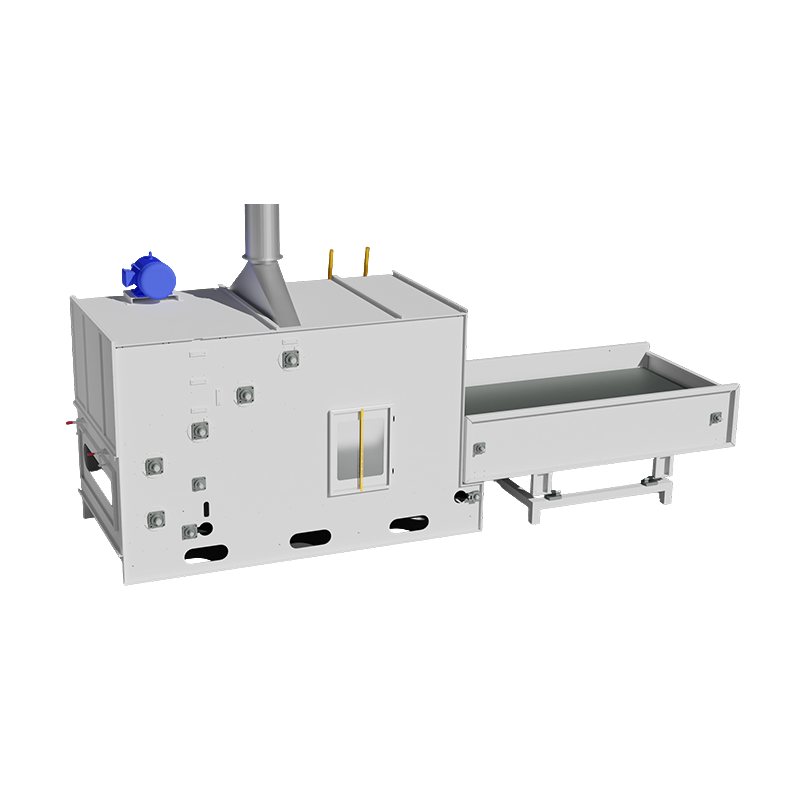
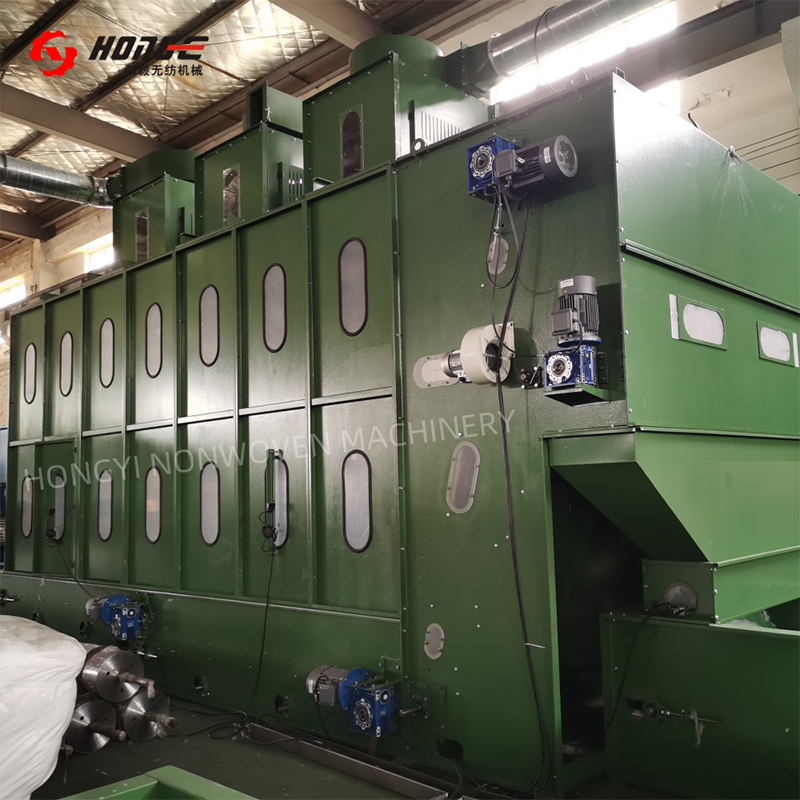 HYDC-170 Big Chamber Blender for Nonwoven Fiber MixingLarge-chamber blender for opened fiber storage and even feed to downstream processing; suited to controlled fill levels and residence times for consistent blends.View Product →
Step 4: Stop Over-Mixing
Over-mixing is expensive because the machine looks like it is working: fiber shortens, dust rises, neps increase, and tensile falls.
The useful distinction is distribution versus refining. A mixer that distributes fiber keeps tuft size stable and spreads components evenly. A machine running too long or too fast begins refining, which is the card's job. For most staple blends, hold dwell time at 30 to 60 seconds and set beater speed by fiber denier rather than habit.
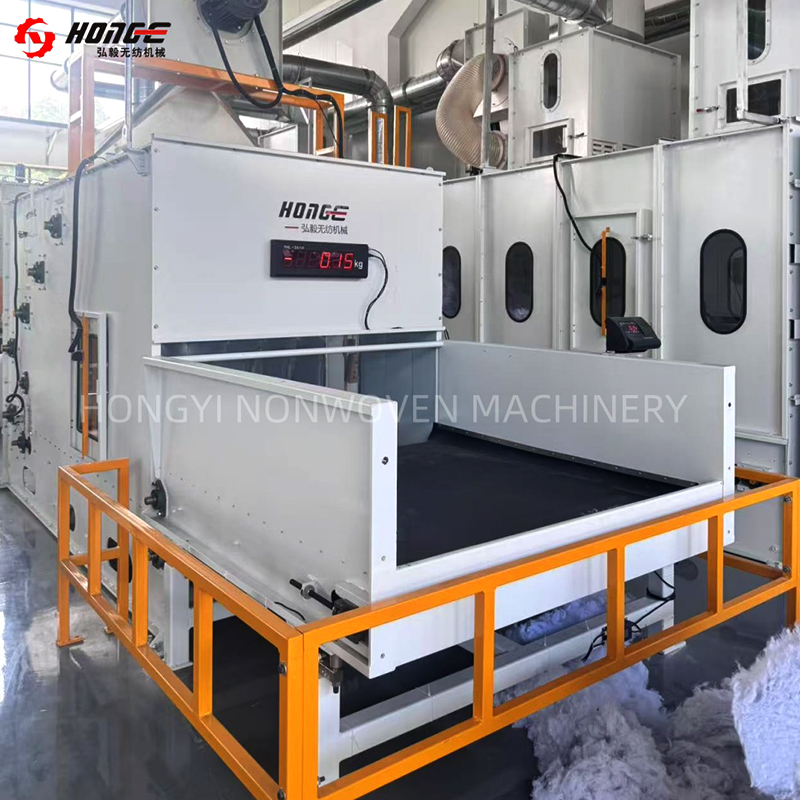 HYHM Fiber Mixing Machine with Proportional WeighingWeighing and blending unit for pre-opened fibers; helps distribute components evenly while avoiding over-refining through controlled dwell time and beater speed.View Product →
Two signs the mixer is too aggressive: dust collector loading rises at unchanged throughput, and mean fiber length after blending is more than about 5% below the value measured after opening.
Step 5: Feed the Card Without Surging
A well-blended batch still makes a variable web if feed into carding surges, because feed variation changes card loading, and card loading changes web weight.
- Hold hopper mat height within about 20 mm of target; a mat that rises and falls with each cycle gives the card a new load every few minutes.
- Avoid slug feeding. If the feeder runs only when a level sensor trips, it is delivering batches, not a stream.
- Check pneumatic transport weekly. Excessive air speed strips fine fiber to the filter; too little causes settling and blockages.
 HYGM Vibrating Feeder for Even Nonwoven Fiber FeedVibrating feeder that stores opened fiber and delivers an even layer downstream, helping prevent feed surges that create web-weight variation.View Product →
Step 6: Return Edge Trim Through a Controlled Loop
Trim is already opened, often finer, and carries a different bulk density than virgin fiber. Dumping it back into the card feed reintroduces the segregation you removed upstream.
- Open trim before returning it, using a dedicated edgetrim opener instead of feeding compacted rope.
- Meter the return at a fixed share of the blend, typically 10 to 15%, rather than letting it accumulate and dump.
- Send it back to the mixing stage, where it can be averaged, not straight to the feed hopper.
Humidity, Static, and Housekeeping
Two rooms with identical machines and identical blends produce different defect rates when their air differs. Relative humidity of 55% to 65% at 20 to 26 C is the normal band for staple blends. Below it, static lifts fine fiber and tufts stick to ducts and screens; above it, fiber mats and clumps form in hoppers and opening slows down.
Cleanliness matters too. After a color change on wadding lines, waste fiber sitting in return air ducts and cyclone bottoms can feed contamination back into the blend for a full hour. Clean the ducts, not only the machine housings.
What to Measure to Prove the Fix Worked
- Blend ratio by weight: three samples per shift with components separated. A controlled line holds within plus or minus 2% on the main component.
- Grammage CV: track the shift average, not the roll. Moving from 4.5% to 2.5% reflects real change in mixing and feeding.
- Mean fiber length after blending, compared with the value after opening, catches over-mixing early.
- Nep and tuft count on a fixed sample area at each shift start, recorded as a trend rather than a single number.
- A machine log of fill level, residence time, and dwell time, so a good setting can be found again next month.
Frequently Asked Questions
How many opening stages does a nonwoven line need?
Two stages suit most staple blends, and three are common with recycled or heavily crimped fiber. The right number gives consistent tuft size without shortening fiber, not the highest number available.
Can slowing the line reduce fiber-mixing defects?
It hides them. Lower throughput adds residence time and lightens card loading, so symptoms soften while the cause stays. Diagnose at design speed, or you accept a permanent capacity penalty.
Does humidity really affect blend uniformity?
Yes. At low humidity, static separates fine fiber from coarser fiber and it sticks to metal surfaces, which changes the ratio that actually reaches the card.
Is a big chamber blender always necessary?
No. Short runs of a single fiber type can skip it. It earns its place when two or more components must be averaged, or when bale lots vary in density and lot quality.
How soon do corrections show up?
Setpoint changes appear in the web within one residence time of the line, often 10 to 20 minutes. Blend ratio sampling confirms them within a shift; grammage CV takes a few shifts.
Fix the Chain, Not One Machine
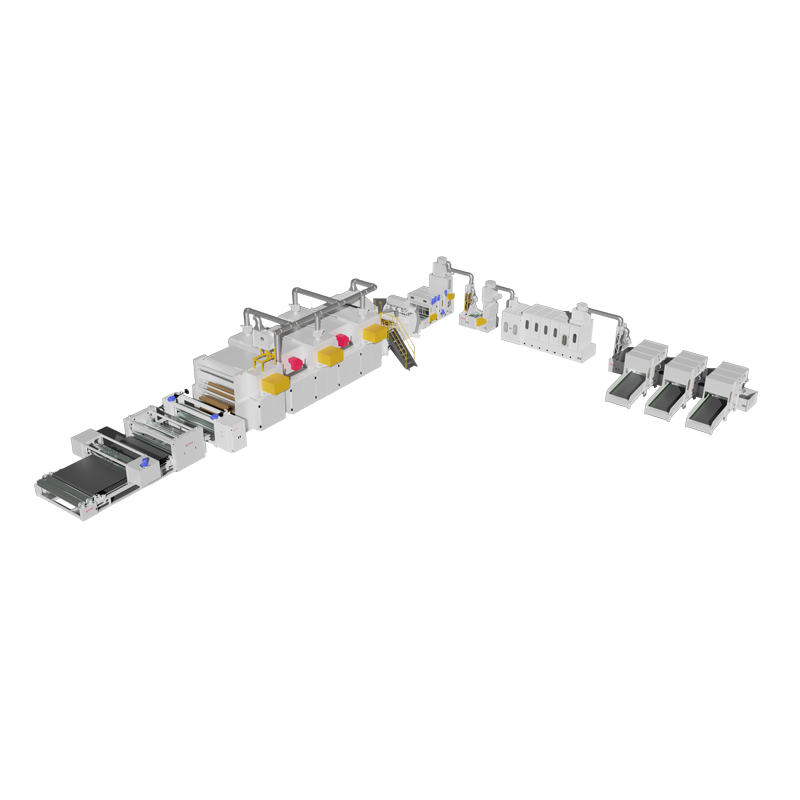
Fiber-mixing defects are usually a chain: uneven bales, wrong opening intensity, a drifted scale, a half-empty chamber, and a mixer running longer than it should. Work from the bale opener toward carding, one stage at a time, and confirm every change with a measurement.
Lines built as a coordinated opening-to-carding system are easier to tune this way, which is the approach behind the mixing, feeding, and carding equipment supplied by HONGYI Nonwoven Machinery to producers in more than 20 countries.