

Content
- 1 Special Process Requirements of Airlaid Materials for Winding and Cutting
- 2 Core Cutting Technologies: Differences Between Slitting and Cross-Cutting
- 3 Comparison of Mainstream Equipment Types: Functional Positioning Determines Selection
- 4 Automation and Energy-Saving Technologies: Dual Paths to Reducing Operating Costs
- 5 Global Application Landscape: Regional Demand Variations Drive Equipment Customization
- 6 Maintenance Strategies: Preventive Care Determines Equipment Lifecycle
- 7 Future Trends: Digitalization and Flexible Manufacturing Reshape Equipment Form
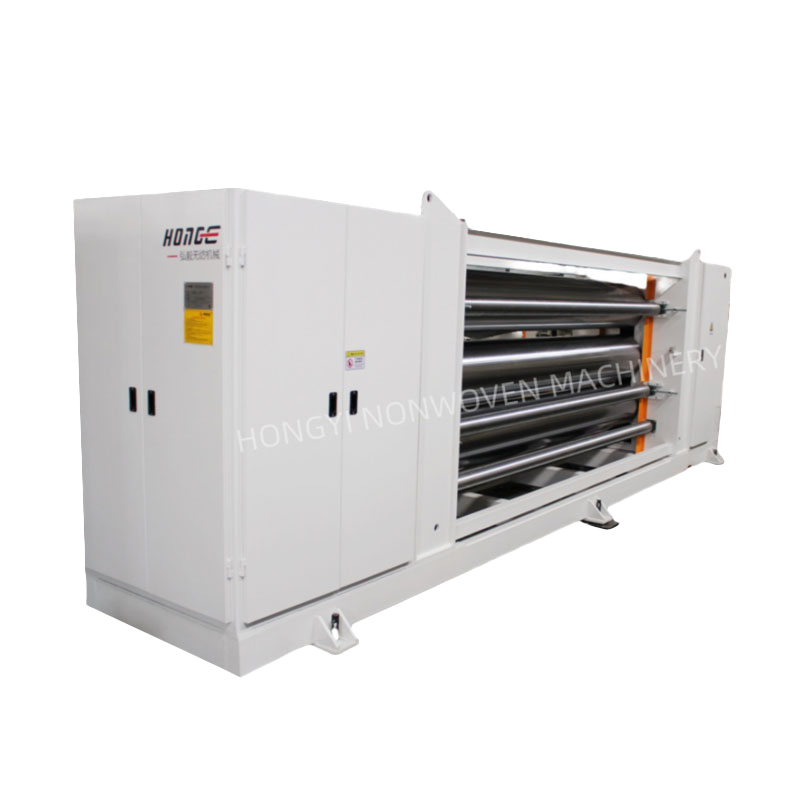
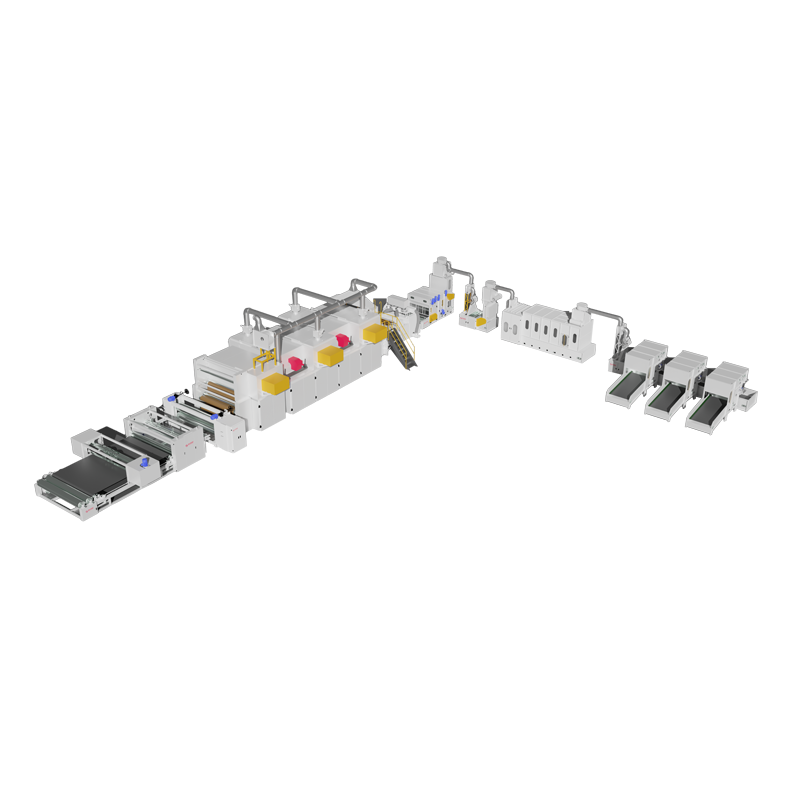
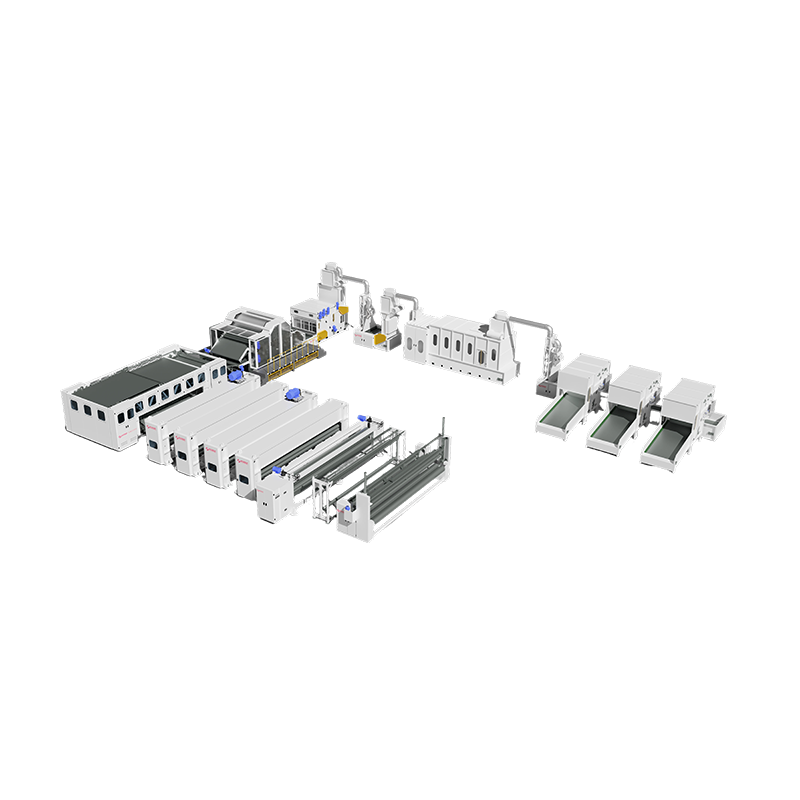
Airlaid winding and cutting equipment serves as the core terminal machinery at the end of nonwoven production lines, directly determining the density uniformity, edge neatness, and downstream processing compatibility of finished rolls. In the manufacturing of automotive insulation, mattress wadding, and geotextiles—materials characterized by high loft or high density—the process precision of winding and cutting stages can impact finished product yield by 15% to 25%. Current industry trends indicate that automated winding and cutting systems integrating precise tension control with high-speed longitudinal and transverse cutting have become the primary investment focus for nonwoven manufacturers seeking to enhance product consistency and reduce scrap rates.
Special Process Requirements of Airlaid Materials for Winding and Cutting
Unlike traditional spunbond or hydroentangled nonwovens, airlaid materials typically exhibit high loft and low-density structures, with thickness ranging from 5mm to 150mm. These structural characteristics present three critical challenges for winding and cutting equipment:
- Tension control must be extremely precise; excessive stretching compresses the fiber structure, causing thickness loss exceeding 10% in finished products;
- Cut edges must remain clean and free of fiber fly, otherwise affecting the appearance of downstream lamination or sewing processes;
- The winding process must prevent "telescoping"—uneven roll ends leading to storage and transportation losses.
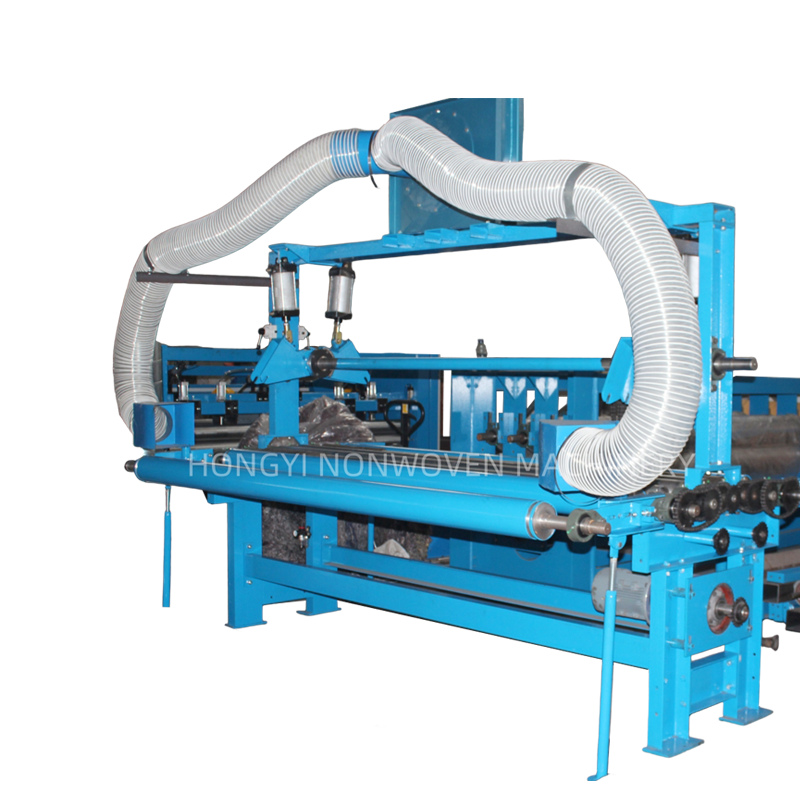
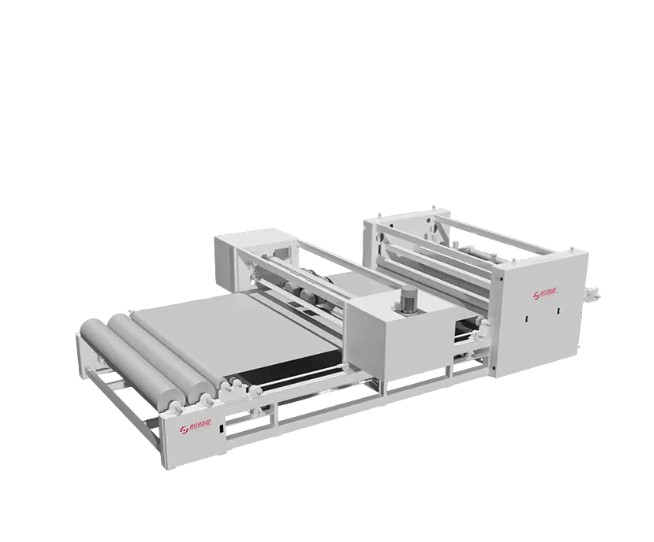
To address these challenges, modern Airlaid winding and cutting equipment commonly adopts a flexible switching mechanism between surface winding and center winding principles. Surface winding suits high-loft, easily deformable materials through contact roller pressure; center winding is better suited for high-density, structurally stable webs, relying on mandrel torque for tight winding.
Core Cutting Technologies: Differences Between Slitting and Cross-Cutting
Longitudinal Slitting: Modular Multi-Knife Design Enhances Line Flexibility
Longitudinal slitting typically employs circular knives or pneumatic blades mounted on modular rail systems. The core advantage of this design lies in rapid adjustment of knife spacing according to order requirements, with working widths covering 2000mm to 6000mm. For automotive interior acoustic felts and hood insulation panels, typical slitting widths are 1200mm or 1500mm; mattress wadding is commonly slit into 900mm or 1800mm specifications. Modular rails allow manufacturers to adapt to different width requirements by adding or repositioning knife holders without replacing the entire machine, reducing retrofit cycles to 2 to 4 hours.
Cross-Cutting: Speed Synchronization Challenges for Flying Shears vs. Guillotine Blades
Cross-cutting must resolve the core issue of synchronizing cutting action with line speed. Flying shear systems track web position in real-time via encoders, completing the cut during blade movement to ensure perfectly square 90-degree edges without stopping production. For fixed-length sheet products such as mattress core materials, cross-cutting precision is typically controlled within ±2mm. In contrast, guillotine-style cross-cutting suits low-speed, thick materials; while structurally simpler, cutting frequency typically does not exceed 30 cycles per minute, whereas flying shear systems on high-speed lines can achieve 60 to 80 cycles per minute.
Comparison of Mainstream Equipment Types: Functional Positioning Determines Selection
| Comparison Dimension | Standard Automatic Winder | Heavy-Duty Slitting & Winding Unit | Precision Cross-Cut System |
|---|---|---|---|
| Primary Function | Continuous roll formation | Multi-lane longitudinal slitting | Fixed-length sheet production |
| Material Compatibility | Light to medium loft webs | High-density needle-punched felt | Rigid or semi-rigid airlaid batts |
| Max Line Speed | 50m/min | 30m/min | Variable based on sheet length |
| Control System | PLC with tension sensors | Manual or pneumatic blade set | Encoder-linked synchronous control |
| Typical Application | Geotextile large-roll winding | Automotive insulation multi-slitting | Mattress core fixed-length cutting |
As shown above, these three equipment types do not represent a simple performance progression but rather specialized divisions targeting different end-product forms. Automotive interior suppliers typically require heavy-duty slitting and winding units due to high material density, large widths, and the need to simultaneously produce multiple narrow rolls; mattress manufacturers, conversely, tend to invest in precision cross-cut systems to achieve one-step conversion from rolls to core sheets, reducing intermediate handling.
Automation and Energy-Saving Technologies: Dual Paths to Reducing Operating Costs
Modern Airlaid winding and cutting automation upgrades focus on two dimensions: intelligent process control and refined energy management. In process control, PLC systems paired with tension sensors enable real-time closed-loop regulation of winding pressure, controlling density fluctuations caused by human intervention within ±3%. Some advanced systems integrate edge-detection cameras that automatically trigger correction rollers when web deviation exceeds 5mm, preventing entire roll rejection.
Variable Frequency Drive Technology Significantly Reduces Energy Peaks
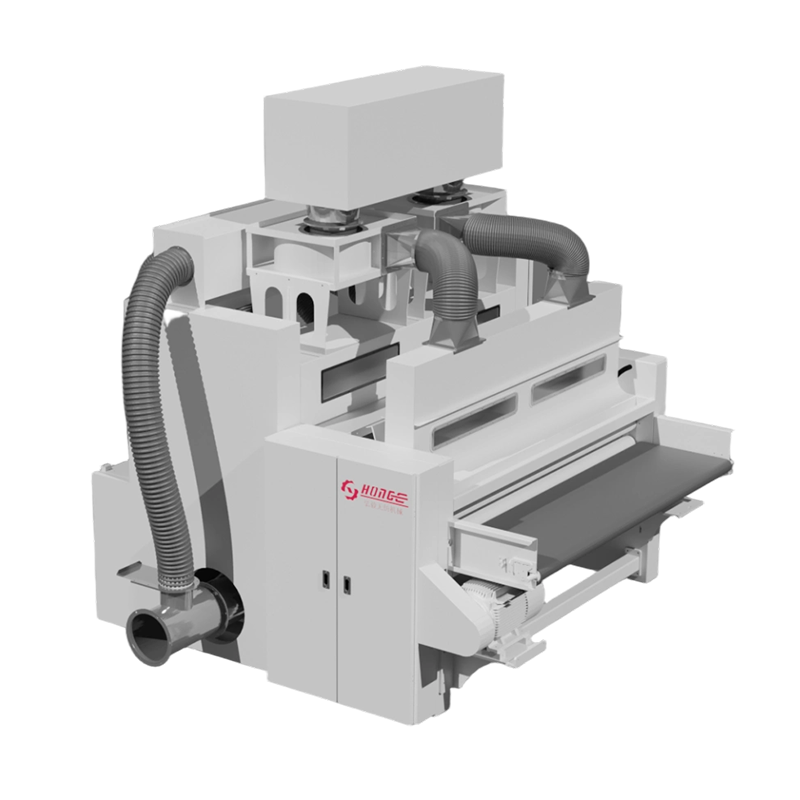
In energy management, Variable Frequency Drive (VFD) technology has become an industry standard. Traditional fixed-speed motors generate current surges 3 to 5 times rated power during start-stop phases, while VFD systems reduce these peaks by over 60% through smooth motor speed adjustment. For a 3,000-ton annual capacity airlaid production line, winding and cutting power consumption accounts for approximately 12% to 18% of total line energy; with VFD adoption, annual electricity use in this segment can be reduced by approximately 8% to 12%. Additionally, some equipment integrates edge-trim recovery suction systems that directly convey slit fiber waste to recycling units, achieving immediate circular reuse with edge material recovery rates exceeding 95%.
Global Application Landscape: Regional Demand Variations Drive Equipment Customization
Global demand for Airlaid winding and cutting equipment exhibits distinct regional characteristics, directly driving customized development in width, knife configuration, and control systems:
- Turkey and Brazil: As major automotive manufacturing bases, these regions demand extremely high slitting precision for acoustic felts and hood insulation panels, with typical orders requiring longitudinal cutting tolerances within ±1mm and compatibility with multiple width changes;
- Egypt and Thailand: Booming home furnishing mattress industries drive demand for fixed-length cross-cutting of high-loft thermal-bonded wadding, with common sheet lengths of 1900mm and 2000mm, thickness range 20mm to 80mm;
- Bangladesh and Vietnam: Infrastructure investment has surged geotextile demand, with such applications favoring large-diameter winding (maximum roll diameter reaching 1500mm), to reduce on-site roll change frequency;
- Mexico and Algeria: Circular economy policies have increased waste recycling lines, which typically re-wind airlaid trim into secondary industrial felts; these lines demand lower speeds but higher durability and maintenance accessibility.
Maintenance Strategies: Preventive Care Determines Equipment Lifecycle
Airlaid winding and cutting equipment operates as high-load continuous machinery; under 24/7 production, lack of preventive maintenance can increase unplanned downtime by 20% to 30%. Industry best practices divide maintenance into two tiers:
Daily Inspection: Focus on Blade Condition and Air Pressure Stability
During daily shift handovers, longitudinal knife sharpness should be checked; dull blades not only produce frayed edges but also increase motor load due to higher cutting resistance. Winding roller pneumatic pressure must be maintained within the 4 to 6 bar set range—insufficient pressure causes loose core winding, while excessive pressure may crush high-loft materials. Additionally, fiber accumulation on tension sensor surfaces is a common cause of false readings and should be cleaned daily with soft brushes or low-pressure air guns.
Monthly Calibration: Knife Alignment and Drive System Tension
Monthly verification of longitudinal knife parallelism should be performed using laser alignment tools or dedicated gauges. Even a 0.5mm deviation can cause uneven roll ends after thousands of meters of winding, creating "telescoping." Synchronous drive belt tension also requires monthly inspection; loose belts cause microsecond-level desynchronization between winding and cutting speeds, which is amplified into sheet length errors during cross-cutting. Drive chain lubrication cycles typically require high-temperature grease replenishment every 500 operating hours.
Future Trends: Digitalization and Flexible Manufacturing Reshape Equipment Form
Looking ahead three to five years, Airlaid winding and cutting technology evolution will center on two axes. First is the introduction of Digital Twin technology, simulating winding tension curves and knife wear rates under different material parameters in virtual environments, allowing equipment manufacturers to optimize control algorithms before delivery and compress on-site commissioning from the traditional 2 to 3 weeks down to 3 to 5 days. Second is the strengthening of flexible manufacturing capabilities—enabling a single machine to rapidly switch between producing automotive insulation felts, mattress core materials, and geotextiles within the same day. Achieving this requires software-based restructuring of knife systems, tension control logic, and winding modes rather than simple mechanical adjustments. Industry forecasts predict that fully flexible switching-capable winding and cutting equipment will capture over 35% of new installations by 2028, becoming the core asset for nonwoven manufacturers responding to multi-variety, small-batch orders.