

Content
- 1 What Assistant Equipment Actually Does in a Nonwoven Line
- 2 Why Sourcing from a Dedicated Nonwoven Machinery Factory Matters
- 3 Core Categories of Assistant Equipment: Detailed Breakdown
- 4 Matching Assistant Equipment to Production Line Type
- 5 Key Selection Criteria When Evaluating Suppliers
- 6 Common Problems Caused by Mismatched or Low-Quality Assistant Equipment
- 7 Industry Trend: Automation and Smart Integration
Assistant equipment is the operational backbone of any nonwoven fabric production line. Without properly matched auxiliary systems, even the most advanced will underperform. From raw material handling to finished roll packaging, each auxiliary component directly determines line efficiency, product consistency, and total cost of ownership.
What Assistant Equipment Actually Does in a Nonwoven Line
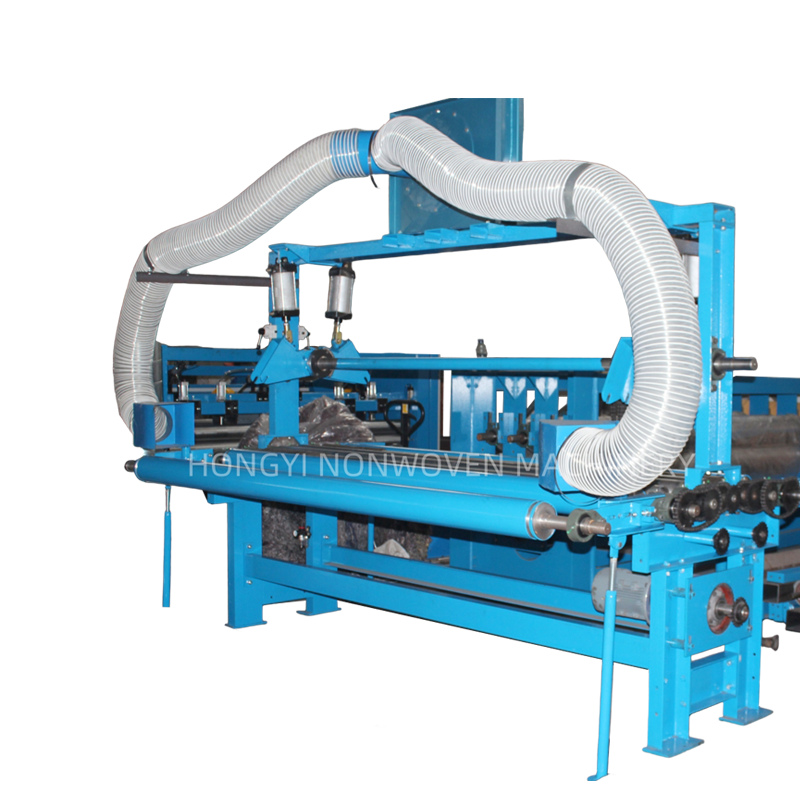
The term "assistant equipment" covers every machine and system that supports the core forming process but does not itself produce the web. In practice, this includes material opening and blending systems, web feeding conveyors, tension control units, edge trimming devices, winding and slitting machines, packaging systems, and waste recovery units.
A typical spunbond or meltblown production line from a reputable Nonwoven Fabric Machinery Manufacturer will integrate 8 to 14 categories of assistant equipment. Each category must be matched in speed, tension tolerance, and material compatibility to the central forming unit.
| Equipment Category | Function | Critical Parameter |
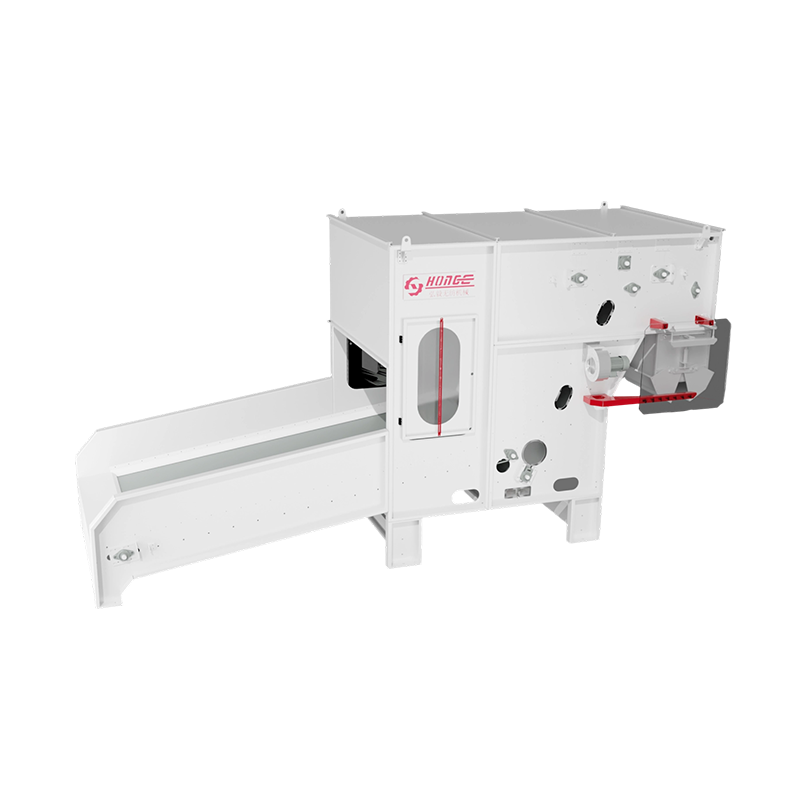
| Bale Opener / Fiber Opener | Loosens compressed raw fiber bales for uniform feeding | Opening rate (kg/h), fiber damage rate below 0.5% |
| Blending Conveyor | Mixes multiple fiber types at set ratios | Blending uniformity deviation less than +/-2% |
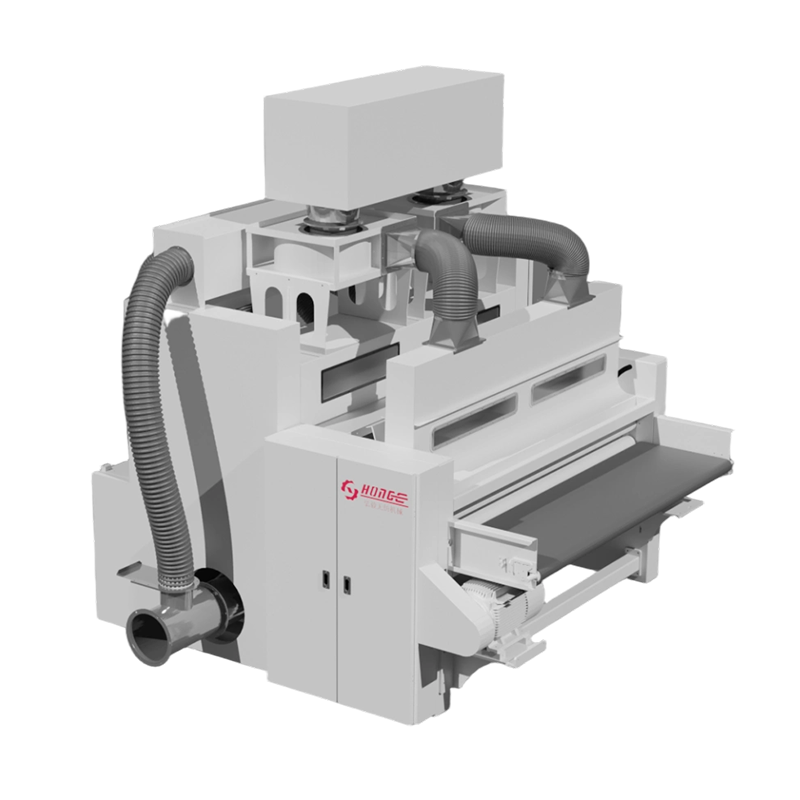
| Web Former / Lap Feeder | Feeds carded or airlaid web to bonding section | Tension consistency, web weight CV below 3% |
| Tension Control Unit | Maintains constant fabric tension during processing | Tension variation under 1 N/m across full width |
| Edge Trimmer | Trims selvage to achieve uniform product width | Width tolerance +/-1 mm |
| Slitting Machine | Cuts master roll into specified narrower widths | Blade alignment accuracy within 0.2 mm |
| Automatic Winder | Winds finished fabric into rolls at controlled tension | Roll hardness consistency, core centering |
| Packaging System | Wraps, labels, and palletizes finished rolls | Throughput (rolls/hour), wrapping tightness |
| Waste Recovery Unit | Collects edge trim and off-spec material for reuse | Recovery rate above 95% of trimmed waste |
Why Sourcing from a Dedicated Nonwoven Machinery Factory Matters
Many buyers make the mistake of purchasing core forming equipment from one supplier and assistant equipment from generic industrial suppliers. This creates integration gaps. A Nonwoven Machinery Factory that manufactures both the forming line and auxiliary systems guarantees electrical signal compatibility, mechanical interfacing dimensions, and synchronized PLC communication across all units.
For example, an automatic winder sourced separately may operate at a maximum line speed of 180 m/min, while a modern spunbond forming line from a leading Nonwoven Fabric Machinery supplier runs at 220 to 300 m/min. This 20-40% speed mismatch creates bottlenecks that reduce annual production capacity by hundreds of tonnes.
A 3.2-metre-wide spunbond line running 260 m/min with a mismatched winder limited to 180 m/min loses approximately 27,000 metres of production time per 8-hour shift. At 20 gsm and a market rate of USD 1.20 per kg, this equals roughly USD 3,370 in lost output per shift.
Core Categories of Assistant Equipment: Detailed Breakdown
Fiber Opening and Blending Systems
Modern fiber openers use multi-stage beater rollers rotating at 600-1,200 RPM to separate compressed fibers with minimal breakage. High-performance bale openers from specialized Nonwoven Fabric Machinery Manufacturers achieve throughputs of 500-1,200 kg/h while maintaining fiber length retention above 98%. Blending conveyors immediately downstream mix different fiber grades—such as 70% polypropylene with 30% polyester—within a ratio deviation of less than 2%.
Web Feeding and Transport Equipment
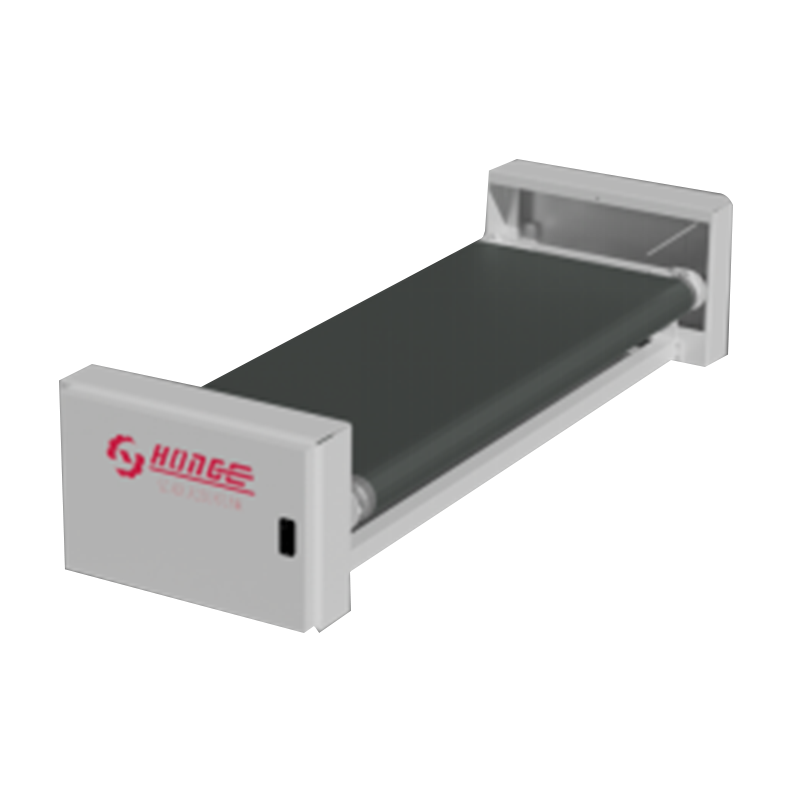
Lattice apron conveyors, pin apron feeders, and servo-driven feed rollers form the web transport chain between the carding or airlaying section and the bonding unit. Servo-driven systems offer positioning accuracy within 0.1 mm per revolution and can handle fabric widths from 1.6 m up to 5.2 m. Speed synchronization between the feeder and the bonding oven or calender must be maintained within 0.5% to prevent web stretching or bunching.
Tension Control and Guiding Systems
Constant tension throughout the line prevents dimensional variation. Pneumatic dancer roll systems paired with closed-loop PLC feedback can maintain fabric tension within 0.5 N/m across the full production width. Edge guiding sensors—typically ultrasonic or photoelectric—detect fabric position and correct via servo-actuated steering rollers within 50 milliseconds, ensuring winding alignment within 1 mm over an entire production roll.
Slitting and Winding Equipment
Slitting-rewinding machines are among the highest-precision assistant equipment in a nonwoven line. Rotary blade slit-winders for nonwovens must achieve blade positioning within 0.2 mm and maintain consistent roll hardness across a Shore A hardness range of 55-75, depending on fabric weight and end use. Machines from experienced Nonwoven Machine Manufacturers include automatic knife positioning, roll diameter measurement, and core detection to handle rolls from 50 mm to 1,500 mm diameter.
Packaging and Palletizing Systems
Finished roll packaging lines can be semi-automatic or fully robotic. A fully automated system can handle 12-18 rolls per hour without manual intervention, reducing labour costs by 60-75% compared to manual wrapping operations. Stretch film wrapping combined with heat-shrink bagging protects rolls from moisture and contamination during transport—critical for medical-grade or hygiene nonwovens where surface contamination is a rejection criterion.
Matching Assistant Equipment to Production Line Type
Different nonwoven production processes demand different assistant equipment configurations. The table below maps the most common production technologies to their required auxiliary systems.
| Production Technology | Key Assistant Equipment Required | Special Considerations |
| Spunbond (PP/PET) | Pellet dryer, melt filter, edge trimmer, auto winder, slitter | High-speed tension control (up to 300 m/min) |
| Meltblown | Die cleaning system, air filtration unit, static eliminator, precision winder | Ultra-fine web (0.1-10 micron fiber); fragile—low tension winding essential |
| Needle Punch | Bale opener, blending conveyor, lap feeder, take-up conveyor, roll cutter | Heavy fabric weights (100-3000 gsm); robust take-up units needed |
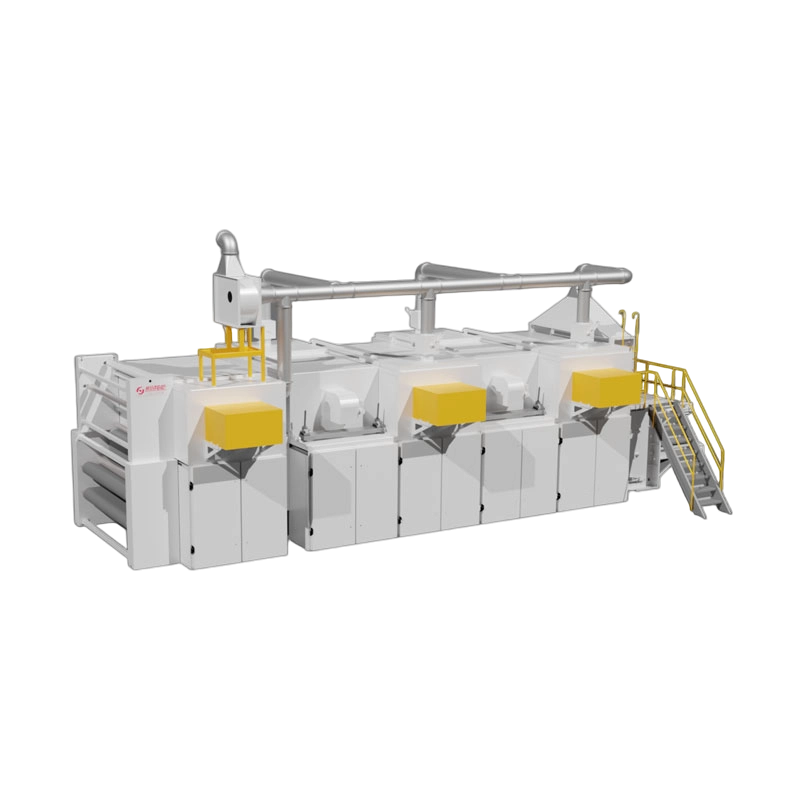
| Thermal Bond | Fiber opener, cross-lapper, oven exhaust system, winder, packaging line | Temperature-sensitive web; cooling conveyor before winding mandatory |
| Hydroentanglement (Spunlace) | Water treatment system, dryer, tension unit, slitter-rewinder | High water consumption; wastewater treatment auxiliary unit required |
| Chemical Bond | Binder application unit, drying oven exhaust, edge trimmer, winder | Binder residue management; fume extraction system critical |
Key Selection Criteria When Evaluating Suppliers
When evaluating a Nonwoven Machine Manufacturer for auxiliary systems, the following technical and commercial criteria should be assessed systematically:
Confirm whether the supplier uses open PLC communication standards (Profibus, EtherNet/IP) or proprietary protocols that lock you into one ecosystem.
Assistant equipment should cover a speed range at least 20% above the maximum rated speed of the core forming line to provide headroom for future upgrades.
Confirm adjustable-width capability. Leading nonwoven machinery factories offer auxiliary systems adjustable from 1.0 m to 5.0 m without requiring structural modification.
Critical wear parts—blades, bearings, seal rings—should have a guaranteed lead time of under 72 hours from the manufacturer or regional warehouse.
Remote diagnostics capability, on-site response within 48 hours, and minimum 2-year warranty on key mechanical and electrical components are industry-standard expectations.
IE3 or IE4 motor efficiency ratings on all driven components can reduce auxiliary equipment energy consumption by 8-15% versus IE1-rated alternatives.
Common Problems Caused by Mismatched or Low-Quality Assistant Equipment
Poor tension control leads to basis weight variation of 5-15% across roll width, causing product rejection rates above 8% in hygiene and medical nonwoven applications where weight uniformity tolerances are typically +/-3%.
Worn or improperly set edge trimmers produce irregular selvages with width variation exceeding 3 mm. This directly disqualifies fabric for automotive interior or filtration applications where cut edge precision is specified.
Inconsistent winding tension causes telescoping rolls—where individual layers shift axially—making the roll unusable on downstream converting equipment. Repair or rejection of telescoped rolls adds an estimated USD 80-150 per tonne in handling costs.
Generic industrial auxiliary equipment not designed for continuous nonwoven production cycles (22-24 hours/day, 330 days/year) experiences 3-5 times higher unplanned breakdown frequency, contributing to OEE losses of 12-18% annually.
Industry Trend: Automation and Smart Integration
The most competitive Nonwoven Fabric Machinery Manufacturers now offer Industry 4.0-ready auxiliary systems. Key developments include:
- Real-time basis weight monitoring integrated with the feeding system, enabling closed-loop weight correction within 2-second response cycles
- Automatic knife positioning in slitter-rewinders, reducing changeover time from 45 minutes to under 8 minutes per job
- OPC-UA communication standards connecting all auxiliary units to a central SCADA system for line-wide OEE monitoring
- Predictive maintenance algorithms analysing vibration and temperature data from winder drives, reducing bearing failure events by up to 70%
- Robotic roll handling systems that integrate packaging, labelling, and palletising in a single automated cell, achieving cycle times of 90-120 seconds per roll
These advances are available from established nonwoven machinery factories that have invested in dedicated R&D for auxiliary systems—not just core forming technology. When specifying a new production line or upgrading an existing one, treating assistant equipment as a strategic capital investment rather than a commodity purchase produces measurable returns in quality, yield, and uptime.