

Content
- 1 Technical Principles and Differentiated Positioning of Three Core Equipment Types
- 2 Critical Impact of Thermal Bonding Processes on Nonwoven Performance
- 3 Practical Maintenance and Operational Optimization Guidelines
- 4 Industry Application Trends: From Standardization to Customization and Intelligence
- 4.1 Material Adaptability Expansion: From Synthetic to Natural and Recycled Fibers
- 4.2 Waste Heat Recovery and Energy-Efficient Design: Key Pathways for Reducing Unit Energy Consumption
- 4.3 Intelligent Monitoring: From Experience-Driven to Data-Driven Process Management
- 4.4 Emerging Market Rise: Reshaping Global Demand Patterns
- 5 Conclusion: Technical Precision Determines Product Excellence
Thermal Bonded & Heat Setting Equipment transforms loose fiber webs into structurally stable, high-performance nonwoven materials through precise temperature and pressure control. This technology not only determines the final product's dimensional stability, uniform thickness, and mechanical strength, but also directly impacts production line energy consumption and operational efficiency. As the global nonwoven industry transitions toward high value-added, low-energy, and intelligent manufacturing, technological upgrades in thermal bonding and heat setting processes have become the critical breakthrough point for manufacturers seeking to enhance product competitiveness. According to industry statistics, nonwoven products utilizing advanced heat setting processes can command a market premium of 12% to 18%, while energy consumption is reduced by 20% to 30% compared to traditional equipment, delivering significantly superior return on investment compared to other finishing technology routes.
Technical Principles and Differentiated Positioning of Three Core Equipment Types
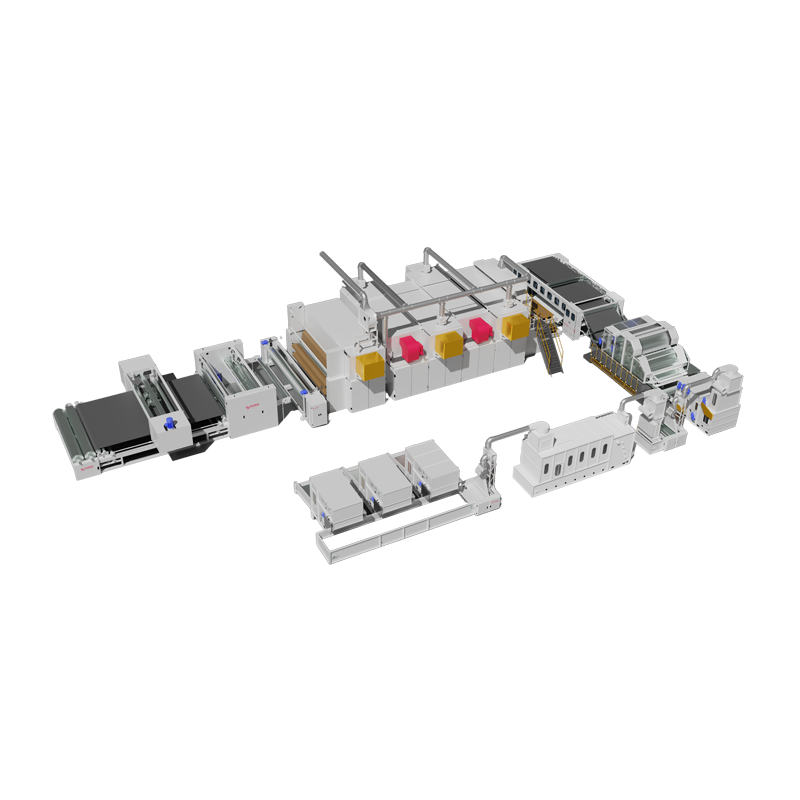
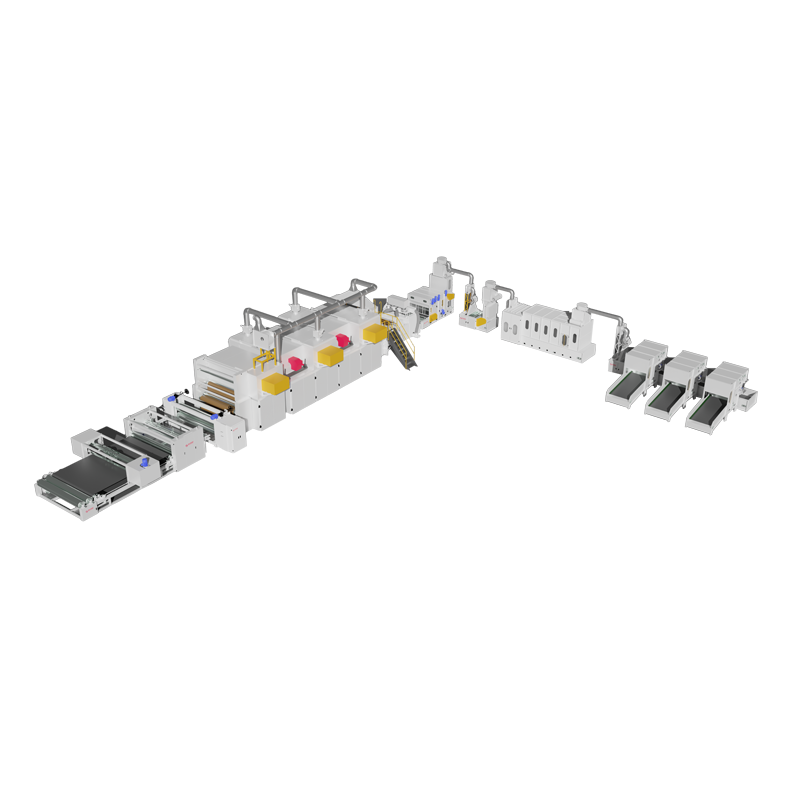
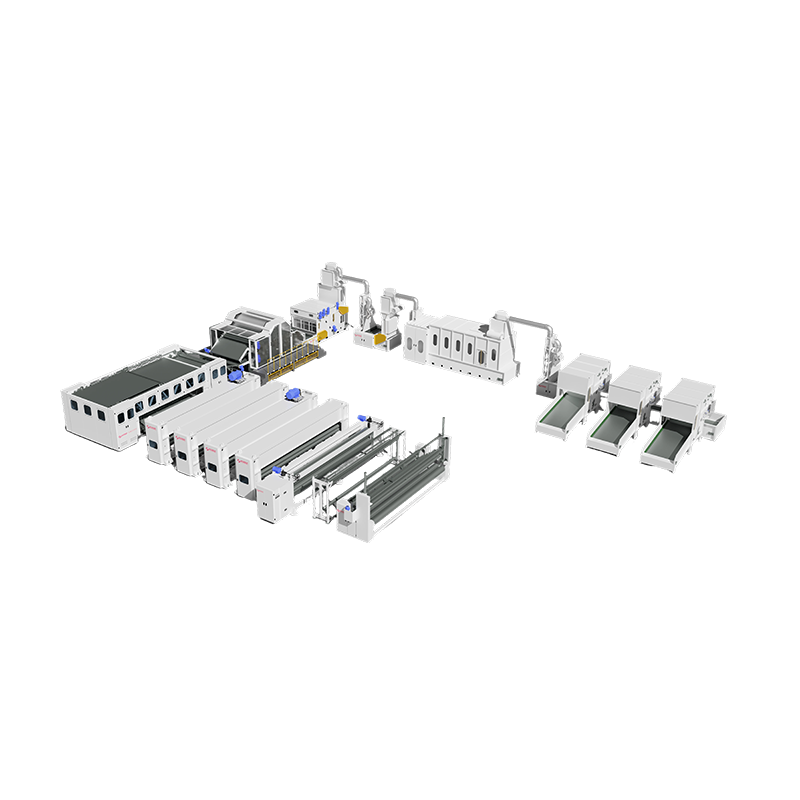
Thermal bonding and heat setting production lines are primarily composed of three categories of core equipment, each serving distinct process objectives. Understanding their technical differences is essential for optimizing line configuration and avoiding equipment investment misalignment.
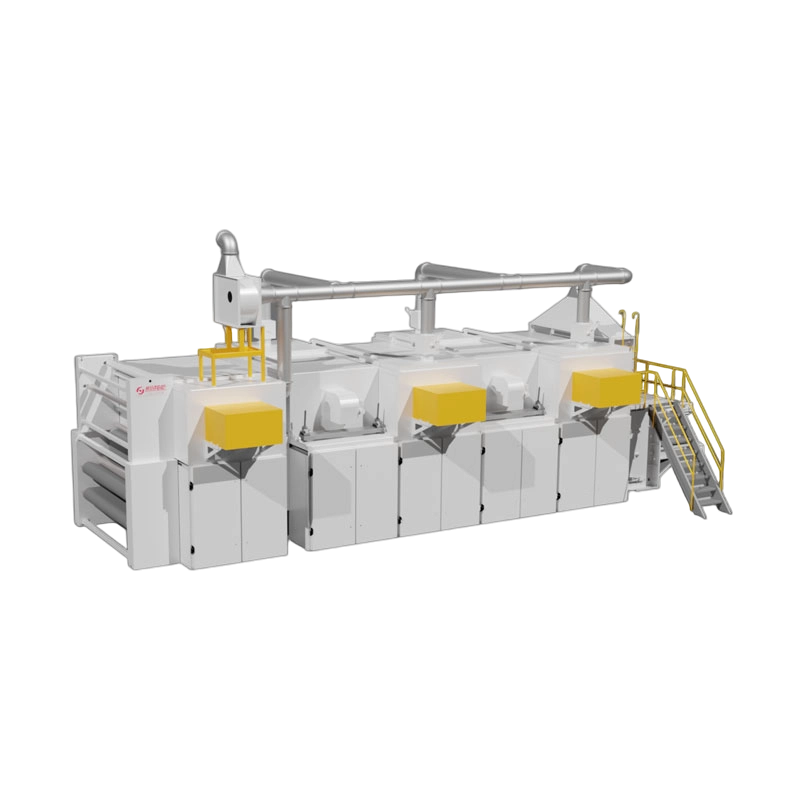
Hot Air Circulation Thermal Bonding Oven: The Core Builder of Bulky Structures
This equipment utilizes high-velocity hot air penetrating the fiber web, causing low-melt bonding fibers to melt at intersection points with carrier fibers and solidify upon cooling, forming a three-dimensional bonded structure. Its advantage lies in the ability to process fiber webs up to 200mm in thickness, while the finished product maintains high loft and soft hand feel. Typical applications include mattress padding, furniture cushioning, and thermal insulation materials. With dual-sided adjustable damper design, temperature variance across a 6-meter width can be controlled within ±2°C, effectively preventing "soft spot" defects. In terms of operating parameters, the typical working temperature range is 140°C to 220°C, with hot air circulation velocity reaching 8 to 15 m/s; specific values require dynamic adjustment based on fiber blend ratios and target loft. For mixed fiber webs containing 20% to 40% low-melt fibers, bonding strength can reach 8 to 15 N/5cm, satisfying the requirements of most household and industrial filling applications.
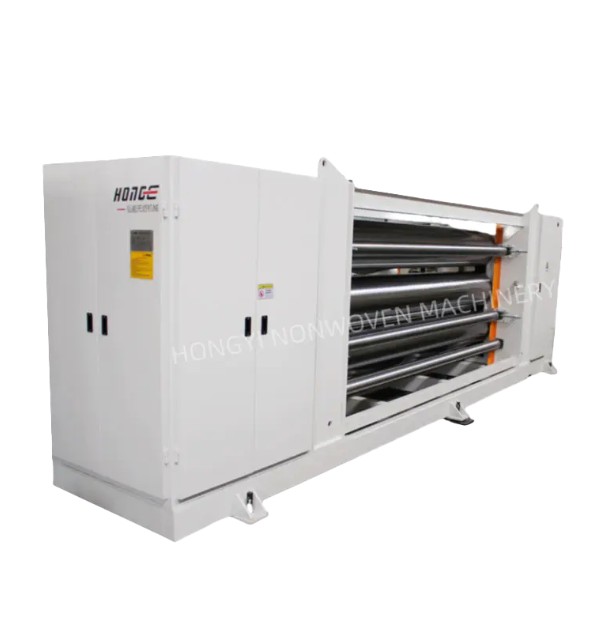
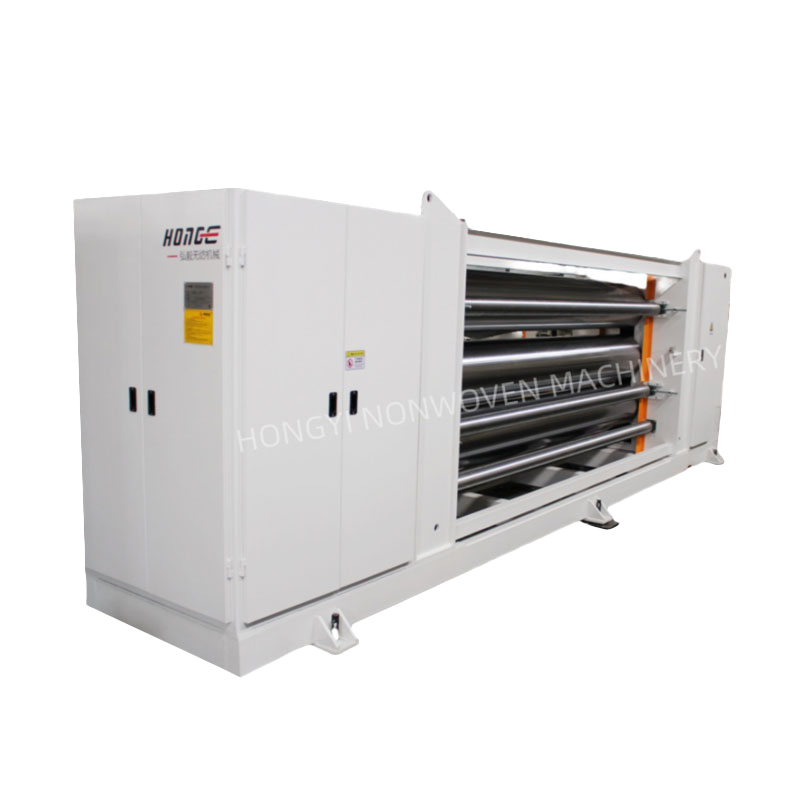
Calender / Ironing Machine: The Precision Tool for Surface Densification
Through heated polished rollers applying conductive heat and mechanical pressure to the fiber web, surface flattening and density enhancement are achieved. This process can compress material thickness to less than 10mm, imparting a smooth, "ironed" finish. In automotive interior linings, synthetic leather substrates, and geotextiles requiring smooth surfaces, the calender is an indispensable finishing device. Uniform roller heating and zero scratch conditions directly determine the appearance quality of the finished product. Typical calendering temperatures range from 120°C to 200°C, with line pressure reaching 50 to 200 N/mm, and roller surface roughness controlled below Ra 0.4μm. After calendering, material surface density can increase to 0.15 to 0.35 g/cm³, while thickness uniformity deviation can be reduced to within ±3%, laying a solid foundation for subsequent lamination, coating, and other deep processing operations.
Heat Setting Stenter: The Ultimate Guarantee of Dimensional Stability
Using pins or clips to hold the fabric at constant width while applying heat, this equipment releases internal fiber stresses, ensuring no shrinkage or deformation occurs during subsequent processing or end-use. For high-end garment interlinings, precision filter media, and specialized industrial felts, the heat setting process directly determines product reliability. This equipment integrates hot air circulation with tension control mechanisms, demanding the most stringent precision in process parameters. Typical heat setting temperatures range from 180°C to 230°C, with processing times of 30 to 90 seconds and overfeed rates controlled at 0% to 5%. After thorough heat setting, polyester nonwoven fabrics subjected to 180°C dry heat for 30 minutes exhibit shrinkage rates below 1.5% in both warp and weft directions, compared to 10% to 15% for unset products. This performance differential is decisive for medical and industrial textiles requiring high-temperature sterilization or ironing.
| Comparison Dimension | Hot Air Circulation Thermal Bonding Oven | Calender / Ironing Machine | Heat Setting Stenter |
|---|---|---|---|
| Heat Transfer Method | Convection (Hot Air Penetration) | Conduction (Heated Rollers) | Convection + Tension Control |
| Product Effect | High Loft / Soft Hand Feel | High Density / Smooth Surface | Dimensional Stability / Anti-Shrinkage |
| Processable Thickness | Up to 200mm | Typically <10mm | Variable Range |
| Core Process Objective | Structural Bonding | Surface Finishing | Shrinkage Control |
| Typical Operating Temperature | 140°C - 220°C | 120°C - 200°C | 180°C - 230°C |
| Key Performance Indicator | Bonding Strength 8-15N/5cm | Thickness Deviation ±3% | Shrinkage Rate <1.5% |
Critical Impact of Thermal Bonding Processes on Nonwoven Performance
Thermal bonding and heat setting processes directly determine multiple key performance indicators of nonwoven fabrics, affecting not only end-user experience but also whether manufacturers can enter high-end supply chains. Taking automotive interior nonwovens as an example, after calendering treatment improves surface flatness, subsequent lamination bonding strength increases by 15% to 25%; while filter media after heat setting exhibits dimensional shrinkage controlled within 2% after continuous use at 150°C, far superior to the 8% to 12% shrinkage of unset products. For automotive OEMs, the thermal shrinkage performance of interior materials directly relates to assembly gap stability; a 0.5mm shrinkage difference can result in entire batch rejection.
In the mattress and furniture filling sector, hot air bonding processes impart three-dimensional structures that maintain over 85% thickness retention after 100,000 compression cycles. This data provides crucial reference for evaluating long-term durability. According to ASTM D3574 standard testing, quality hot-bonded filling materials should exhibit indentation hardness loss below 20%, while inferior products may show significant collapse and hardening early in use. Furthermore, precise temperature control prevents excessive thermal damage causing fiber embrittlement, maintaining tensile strength and tear strength within acceptable ranges. Experimental data indicates that when thermal bonding temperature exceeds fiber melting point by over 30°C, fiber breaking strength may decrease by 25% to 40%, severely impacting finished product service life.
Practical Maintenance and Operational Optimization Guidelines
Thermal bonding and heat setting equipment operate continuously at high temperatures; scientific maintenance strategies are fundamental to ensuring production stability and product consistency. The following maintenance points should be incorporated into standardized operating procedures with traceable maintenance records:
- Temperature Calibration: Monthly verification of sensors and PID controllers to ensure temperature control precision of ±1°C. Temperature deviation is the primary cause of batch quality fluctuations; a 3°C drift can cause bonding strength variations exceeding 10%. Use certified standard thermometers for comparison calibration and retain certificates for audit.
- Filter Cleaning: Weekly cleaning of oven air filtration systems to maintain airflow efficiency and eliminate fire hazards. Excessive dust accumulation can reduce hot air circulation efficiency by over 20% while increasing combustion risk. For production lines with high fiber oil content, cleaning frequency should be shortened to every 3 to 5 days.
- Bearing Lubrication: High-temperature zone bearings require heat-resistant grease (drop point not lower than 250°C), with lubrication intervals typically every 500 operating hours. Avoid unplanned shutdowns caused by lubrication failure; a single unexpected stoppage can result in tens of thousands of dollars in lost production capacity.
- Roller Inspection: Regularly check calender roller surfaces for scratches or uneven heating; roller defects directly replicate onto finished product surfaces. Quantitative surface roughness measurements are recommended every two weeks; when Ra values exceed 0.8μm, immediate grinding repair should be scheduled.
- Chain and Rail Maintenance: Pin plate chains on heat setting stenters operate long-term in high-temperature environments; chain elongation exceeding 1.5% requires timely replacement, otherwise fabric edge gripping becomes unstable and width control fails.
Industry Application Trends: From Standardization to Customization and Intelligence
Currently, thermal bonding and heat setting equipment technology evolution presents three major trends, profoundly influencing the competitive landscape and value chain distribution of the nonwoven industry.
Material Adaptability Expansion: From Synthetic to Natural and Recycled Fibers
Beyond conventional polyester low-melt copolymer fibers, equipment is expanding compatibility toward natural fibers (jute, wool) and recycled waste blended fibers. Natural fibers exhibit higher thermal sensitivity, with glass transition temperatures typically 20°C to 40°C lower than synthetic fibers, requiring tension control systems and temperature curves with broader adjustment ranges. Taking wool-blend nonwovens as an example, thermal bonding temperature must be strictly controlled between 130°C and 150°C; exceeding 160°C causes protein fiber denaturation and hand feel hardening. Recycled polyester fibers, due to broader molecular weight distribution and more complex melting behavior, require control strategies combining segmented temperature ramping with variable frequency air velocity.
Waste Heat Recovery and Energy-Efficient Design: Key Pathways for Reducing Unit Energy Consumption
With circulating hot air systems, production line heat losses can be significantly reduced. Typical thermal bonding oven exhaust temperatures are approximately 120°C to 160°C; installing heat exchangers to utilize this waste heat for fresh air preheating achieves 15% to 25% energy savings. Combined with PLC-integrated control systems enabling recipe storage and speed synchronization, unit product energy consumption decreases further. For a thermal bonding production line with 3.5-meter width operating at 15 m/min for 7,200 hours annually, waste heat recovery systems can save approximately 80,000 to 120,000 cubic meters of natural gas per year, with investment payback periods typically between 18 to 24 months.
Intelligent Monitoring: From Experience-Driven to Data-Driven Process Management
Through online temperature, tension, and thickness monitoring, real-time feedback adjustment of process parameters reduces fluctuations caused by manual intervention. Modern heat setting stenters are commonly equipped with infrared temperature arrays and laser thickness gauges, with sampling frequencies up to 100 times per second, capable of capturing transient anomalies undetectable by traditional manual inspection. When thickness deviations exceed the set threshold of ±5%, the system automatically adjusts overfeed rates and hot air volume, containing quality fluctuations at their inception. This closed-loop control mode improves first-pass yield from traditional 85% to 90% to over 95%, with annual scrap rate reduction savings reaching hundreds of thousands of dollars.
Emerging Market Rise: Reshaping Global Demand Patterns
From a geographic distribution perspective, demand for thermal bonding and heat setting equipment is shifting from traditional European and American markets toward emerging markets such as Mexico, Turkey, and Vietnam. Mexico benefits from nearshoring trends with automotive manufacturing growth maintained at 6% to 8% annually, directly driving demand for automotive interior nonwovens; Turkey, as a Eurasian bridge, has seen geotextile and home textile exports grow by over 35% in the past five years; Vietnam leverages labor cost advantages to attract substantial mattress and furniture manufacturing capacity transfers. These regions share the characteristic of continuously growing demand for high-performance nonwovens, yet relatively weak local equipment supporting capabilities, providing broad market space for equipment manufacturers with complete line delivery capabilities. The ability to deliver single machines within 45 to 60 days and complete lines within 90 to 120 days has become the basic threshold for international competition. Meanwhile, the construction of localized service networks—including spare parts warehousing, technical training, and remote diagnostic capabilities—is becoming an important factor in customer supplier selection.
Conclusion: Technical Precision Determines Product Excellence
Thermal bonding and heat setting equipment serve as the pivotal link connecting upstream and downstream processes in nonwoven production chains. Whether pursuing high-loft filling materials, high-flatness automotive interior substrates, or high-stability industrial filter media, the outcome ultimately depends on the precision of thermal processing. For nonwoven manufacturers, investing in advanced thermal bonding and heat setting technology is not only the necessary path to enhancing product quality, but also a strategic choice for responding to global market competition and meeting increasingly stringent end-use application requirements. Driven by the dual forces of sustainable development and intelligent manufacturing, thermal bonding and heat setting technology will continue to evolve, opening higher value-added application scenarios and growth spaces for the nonwoven industry.