

Content
- 1 Working Principles and Technical Features of Cross Lappers
- 2 Process Principles and Classification of Needle Punching Machines
- 3 Synergistic Optimization of Web Forming and Needle Punching Processes
- 4 Key Points for Equipment Selection and Maintenance
- 5 Industry Development Trends and Technology Upgrade Directions
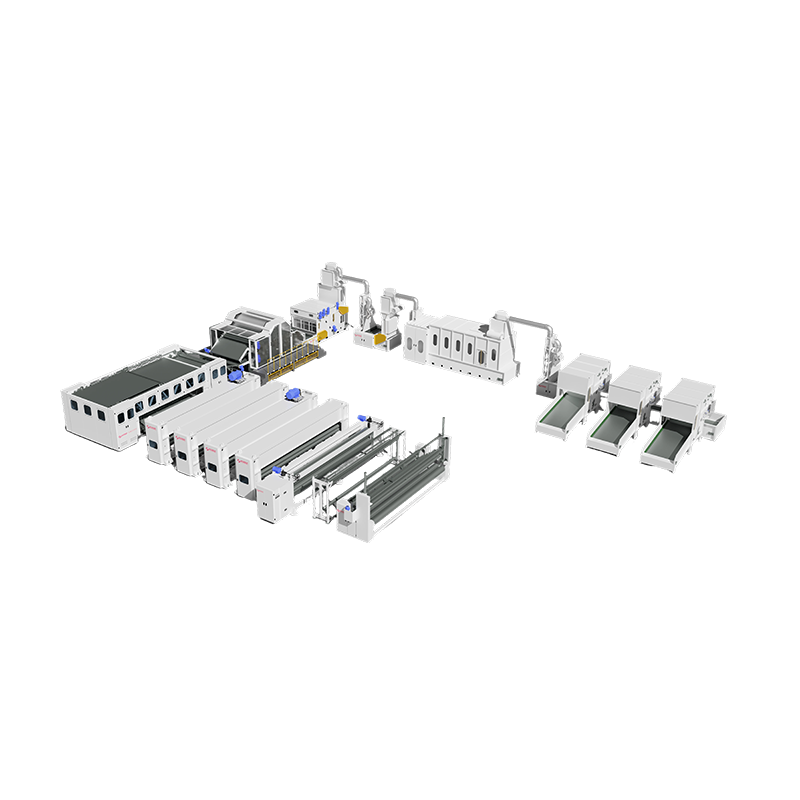
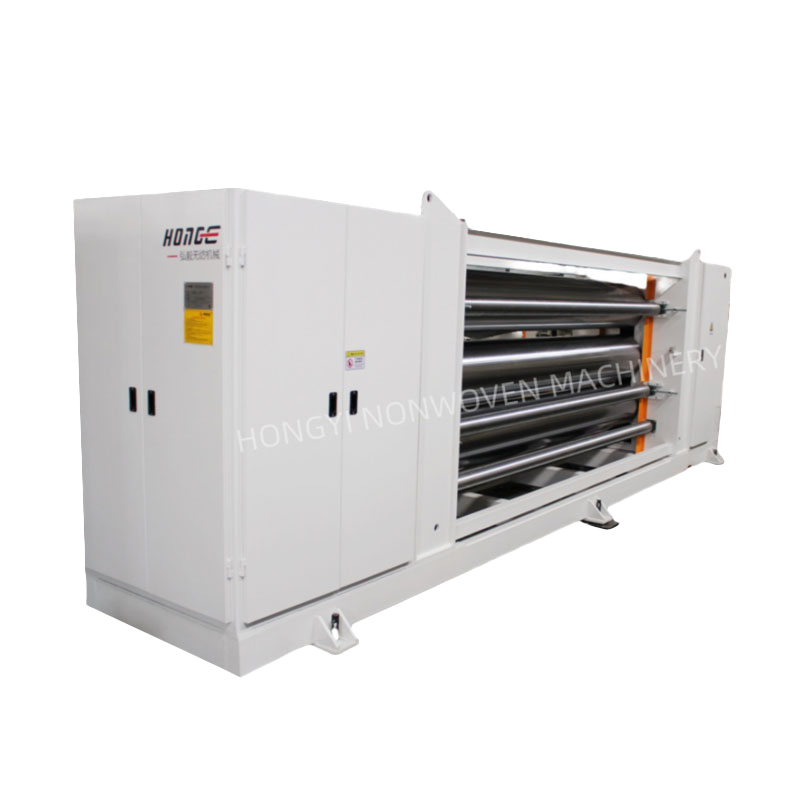
Web Forming & Needle Punching Equipment serves as the core processing unit in nonwoven fabric production lines, directly determining the structural stability, mechanical performance, and density uniformity of the final product. The cross lapper evenly spreads carded fibers into a thin web to form the initial structure of the nonwoven fabric, while the needle punching machine further penetrates and interweaves fibers through medium-speed or high-speed needle punching processes, significantly enhancing tensile strength and structural integrity. For enterprises pursuing high-quality nonwoven fabrics, precise matching of equipment selection with process parameters is the key to improving product competitiveness.
Working Principles and Technical Features of Cross Lappers
Key Role of Uniform Fiber Spreading
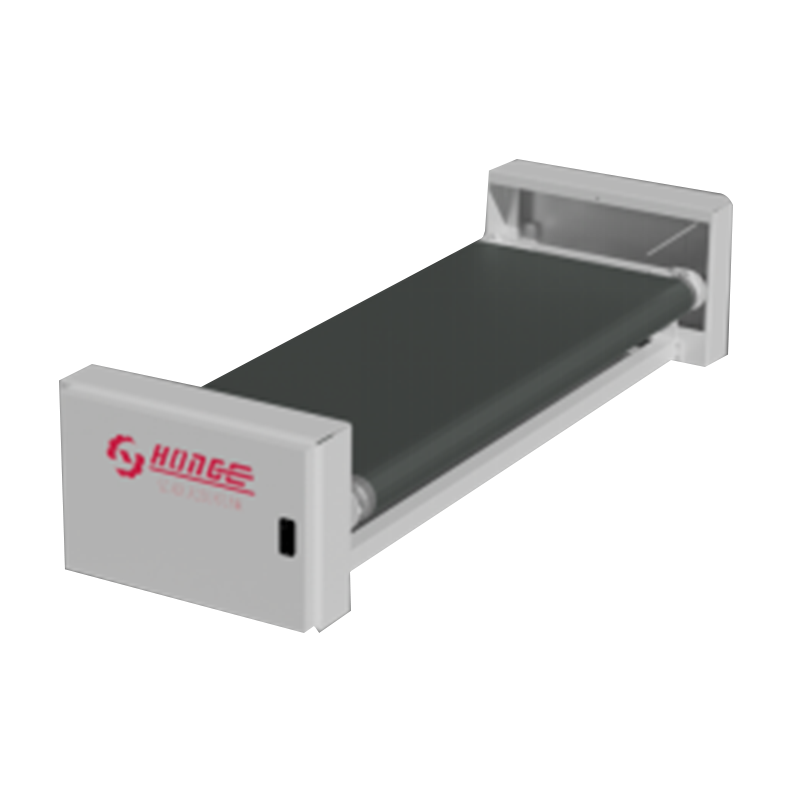
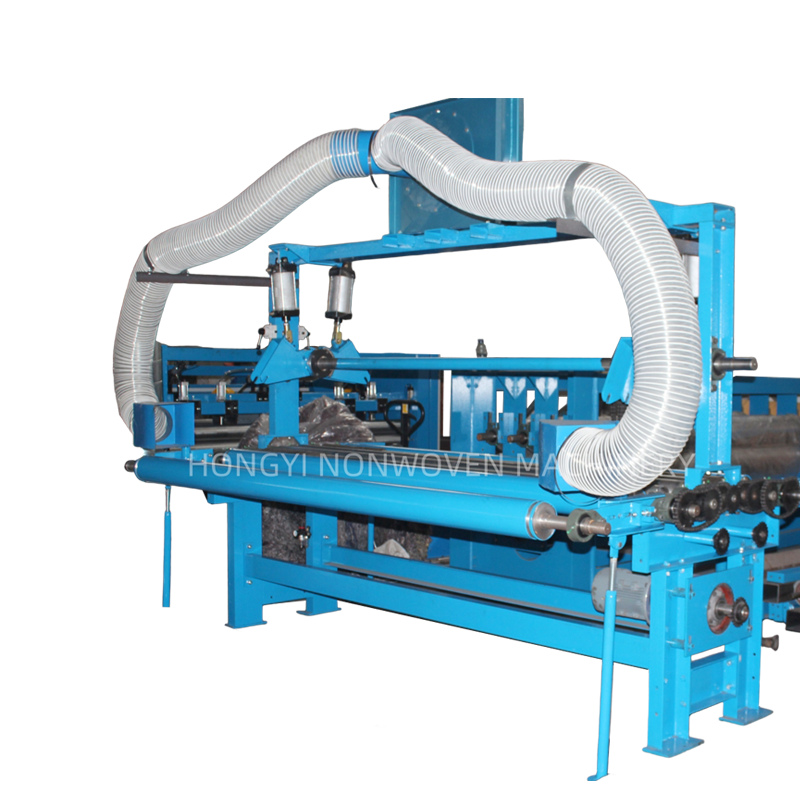
The core function of a cross lapper is to fold and stack the fiber web output from the carding machine in a crosswise manner, forming a multi-layer composite fiber web structure. Through reciprocating motion mechanisms, the device stacks single-layer fiber webs at cross angles layer by layer, ultimately producing a uniform fiber web with specific width and basis weight. This process directly affects the quality foundation for subsequent needle punching operations.
Main Technical Parameters and Performance Indicators
Typical operating parameters of modern cross lappers are as follows:
| Parameter | Standard Type | High-Speed Type | Wide-Width Type |
|---|---|---|---|
| Working Width | 2.0 - 3.5 m | 2.5 - 4.0 m | 4.0 - 7.0 m |
| Laying Speed | ≤ 80 m/min | 80 - 150 m/min | 60 - 120 m/min |
| Layer Count | 2 - 8 layers | 4 - 12 layers | 3 - 10 layers |
| Basis Weight Range | 80 - 800 g/m² | 100 - 1000 g/m² | 150 - 1200 g/m² |
Key Factors Affecting Laying Quality
Laying uniformity is influenced by multiple factors, primarily including:
- Fiber Characteristics: Fiber length (typically 38 - 76 mm is optimal), fineness, and crimp directly affect fiber distribution uniformity during the laying process
- Feed Speed: The matching degree between carding machine output speed and lapper reciprocating speed; speed deviations exceeding ±5% can easily cause uneven thickness
- Tension Control: Tension stability during fiber web transmission; fluctuation range should be controlled within ±3%
- Environmental Conditions: Workshop temperature and humidity (recommended temperature 22 - 26°C, relative humidity 55% - 65%) affect fiber static electricity and fly
Process Principles and Classification of Needle Punching Machines
Physical Mechanism of Needle Punching Reinforcement
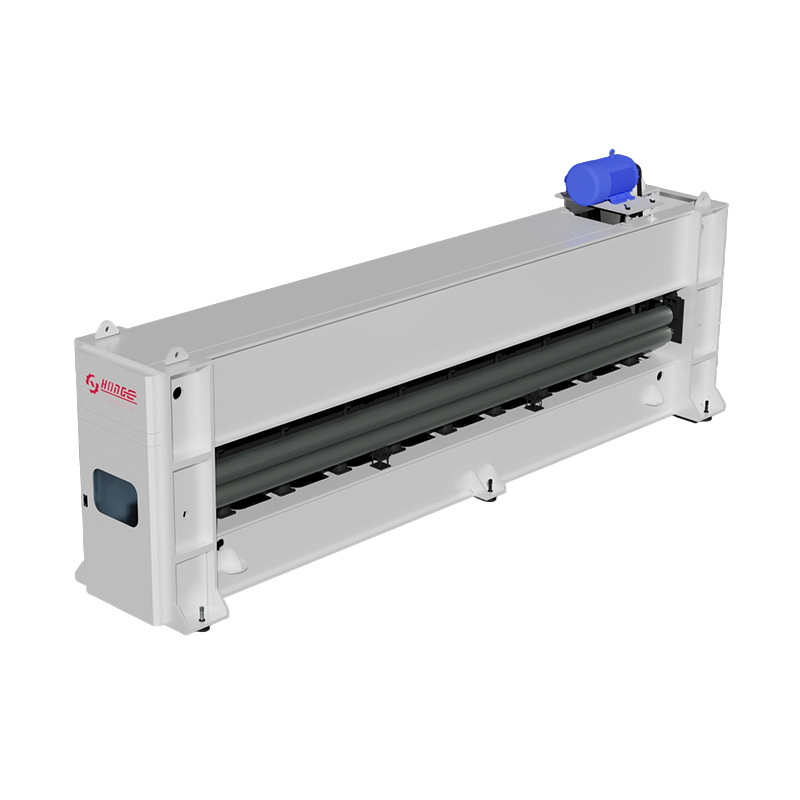
Needle punching machines use barbed needles to repeatedly pierce the fiber web, causing fibers to displace and entangle in the thickness direction. The barbs on the needles carry fibers downward during penetration and release them on the return stroke, forming a three-dimensional entangled structure. This mechanical entanglement method requires no chemical binders to achieve nonwoven products with high strength and stability.
Main Types and Application Scenarios
Based on punching frequency and process characteristics, needle punching machines can be classified into the following types:
| Type | Punching Frequency | Applicable Basis Weight | Typical Applications |
|---|---|---|---|
| Medium-Speed Needle Loom | 800 - 1500 strokes/min | 100 - 500 g/m² | Filtration Media, Geotextiles |
| High-Speed Needle Loom | 1500 - 2500 strokes/min | 80 - 400 g/m² | Automotive Interiors, Home Textiles |
| Double-Board Needle Loom | 1000 - 2000 strokes/min | 200 - 1000 g/m² | Carpet Backing, Synthetic Leather Base |
| Velour Needle Loom | 600 - 1200 strokes/min | 150 - 600 g/m² | Artificial Leather, Wiping Materials |
Process Impact of Needle Punching Density
Needle punching density (the number of punches per unit area) is the core parameter determining nonwoven fabric performance. Taking geotextiles as an example, when punching density increases from 200 punches/cm² to 400 punches/cm², longitudinal tensile strength can rise from approximately 8 kN/m to 15 kN/m, an increase of nearly 90%. However, excessive punching (exceeding 600 punches/cm²) leads to increased fiber breakage rates, which in turn reduces product strength. Therefore, optimization based on fiber type and product application is essential.
Synergistic Optimization of Web Forming and Needle Punching Processes
Overall Matching Principles of the Process Chain
Web forming and needle punching are not independent processes but rather interdependent sequential operations in a continuous process chain. The thickness uniformity of the fiber web output from the lapper directly determines the density distribution of the product after needle punching; conversely, the penetration depth and density of the needle punching machine affect the structural stability of the fiber web. In actual production, basis weight deviation should be controlled within ±3% to ensure the CV value (coefficient of variation) of the punched product remains below 5%.
Typical Process Parameter Matching Solutions
Recommended process parameter combinations for different application fields are as follows:
- Automotive Interior Nonwovens: Laying basis weight 300 - 450 g/m², punching density 350 - 450 punches/cm², punching depth 8 - 12 mm
- Filtration Media: Laying basis weight 150 - 300 g/m², punching density 400 - 600 punches/cm², punching depth 6 - 10 mm
- Geotextiles: Laying basis weight 200 - 600 g/m², punching density 200 - 400 punches/cm², punching depth 10 - 15 mm
- Home Textile Filling Materials: Laying basis weight 100 - 200 g/m², punching density 150 - 250 punches/cm², punching depth 5 - 8 mm
Key Points for Equipment Selection and Maintenance
Core Considerations During Selection
When purchasing web forming and needle punching equipment, enterprises should focus on evaluating the following dimensions:
- Capacity Matching: Equipment rated capacity should exceed actual peak demand by 15% - 20% to accommodate order fluctuations
- Fiber Adaptability: Confirm the processable fiber fineness range (typically 1.5 - 20 dtex) and fiber length range of the equipment
- Automation Level: Modern equipment should be equipped with online basis weight detection, automatic deviation correction, and process parameter memory functions
- Energy Consumption Indicators: Unit product energy consumption for needle punching machines should be below 0.15 kWh/kg, and for lappers below 0.08 kWh/kg
Daily Maintenance and Failure Prevention
Stable equipment operation depends on standardized maintenance protocols. Needles on needle punching machines are wear parts; when processing polyester fibers, the average service life of each needle is approximately 8 - 12 million punches, while processing viscose fibers reduces this to 5 - 8 million punches. It is recommended to establish needle replacement record archives and track wear conditions by batch. The transmission chains and guide rails of cross lappers should undergo lubrication maintenance every 500 operating hours, and the synchronous belt tension of reciprocating mechanisms should be inspected monthly, with adjustments made promptly when deviation exceeds 10% of the standard value.
Industry Development Trends and Technology Upgrade Directions
Intelligent and Digital Upgrades
Current web forming and needle punching equipment is rapidly developing toward intelligentization. New-generation equipment is generally equipped with online quality monitoring systems that use high-precision sensors to detect fiber web basis weight, thickness uniformity, and punching density in real time, with data feedback response times shortened to within 50 milliseconds. Some advanced models have integrated machine learning algorithms capable of automatically adjusting laying speed and punching parameters based on raw material fluctuations, stabilizing product qualification rates above 98%.
Energy-Saving and Environmental Technology Innovations
In terms of energy consumption control, new needle punching machines using servo motor drives can save 25% - 35% energy compared to traditional mechanical transmission models. The application of variable frequency speed regulation technology on cross lappers reduces energy consumption by more than 40% during low-speed operation. Additionally, low-noise design (needle punching machine operating noise controlled below 85 dB) and optimized dust collection systems have significantly improved the workshop working environment.
Simultaneous Development of Wide-Width and High-Speed Capabilities
Growing market demand for wide-width nonwoven fabrics is driving cross lapper working widths toward 5 - 7 meters. Meanwhile, high-speed needle punching machines have achieved punching frequencies exceeding 3,000 strokes/min, combined with laying speeds above 200 m/min, increasing single-machine capacity by nearly 3 times compared to ten years ago. This wide-width and high-speed development trend places higher demands on equipment structural rigidity, vibration control, and synchronization accuracy.