

Content
- 1 What a Nonwoven Production Line Actually Does
- 2 The Five Main Types and What They Produce
- 3 Spunbond Lines: The Volume Workhorse
- 4 Needle Punch Lines: Heavy-Duty and Flexible
- 5 Airlaid Technology: Precision Absorbency
- 6 Thermal Bonding Lines: Soft Wadding and Acoustics
- 7 How Nonwoven Converting Fits Into the Production Flow
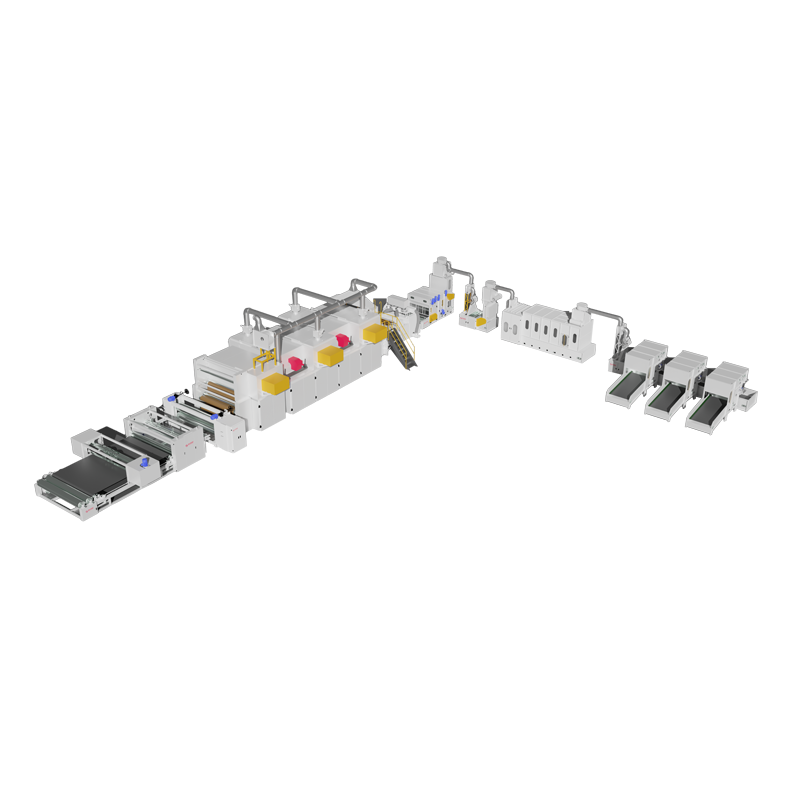
- 8 Key Equipment Components in a Complete Line
- 9 Automation and Control: What to Look for
- 10 Evaluating Total Cost of Ownership
- 11 Summary: Selecting the Right Nonwoven Production Line
What a Nonwoven Production Line Actually Does
A nonwoven production line is a fully integrated sequence of machinery that converts raw fibers or polymer pellets into finished nonwoven fabric—without weaving or knitting. The process bonds fibers through mechanical, thermal, or chemical methods, producing textiles used in hygiene products, medical supplies, automotive interiors, geotextiles, filtration, and acoustic panels. Modern automatic lines for textile production can run continuously at high speed, handling raw material feeding, web formation, bonding, and nonwoven converting (slitting, winding, cutting) all in one floor-to-floor flow.
The short answer for buyers: the right production line type depends entirely on your target product. Each technology—spunbond, needle punch, airlaid, thermal bonding, or SMS—delivers different fabric weight, strength, softness, and filtration performance. Choosing wrong means either overbuilding capacity or missing product specs entirely.
The Five Main Types and What They Produce
| Line Type | Key Process | Typical Weight Range | Common Applications |
|---|---|---|---|
| Spunbond | Polymer melt-spinning + thermal bonding | 10–200 g/m² | Hygiene, medical, agriculture, packaging |
| Needle Punch | Mechanical fiber entanglement by barbed needles | 100–1,200 g/m² | Carpets, geotextiles, automotive interiors, filtration |
| Airlaid | Fiber dispersed and deposited by airflow | 40–500 g/m² | Wipes, absorbent cores, table napkins, insulation |
| Thermal Bonding | Heat-activated binder or bi-component fibers | 20–400 g/m² | Wadding, soft filling, baby diapers, acoustics |
| SMS / Meltblown | Multi-layer spunbond-meltblown composite | 10–80 g/m² | Medical masks, protective clothing, filtration media |
Spunbond Lines: The Volume Workhorse
Spunbond nonwoven production lines are the most commercially widespread type worldwide. Polypropylene (PP) or polyester (PET/PLA) pellets are melted, extruded through spinnerets, drawn into continuous filaments, laid onto a moving belt, and bonded by heat calendering. A single-beam S line can achieve fabric widths from 1,600 mm to 5,400 mm, while SSS (three-beam) configurations increase output significantly, reaching production speeds above 400 m/min on premium equipment.
PP spunbond fabric is non-toxic, biodegradable in modified formulations, and widely used in packaging, agriculture covers, and medical gowns. The spunbond process is also the backbone of SMS lines, where a meltblown layer is sandwiched between two spunbond layers to add submicron filtration—critical for N95 masks and surgical drapes. These composite automatic lines for textile production represent a major segment of capital investment in the hygiene and medical sectors.
Needle Punch Lines: Heavy-Duty and Flexible
Needle punch production lines use thousands of barbed needles moving up and down at high frequency to mechanically interlock fibers, creating dense, strong fabric without any bonding agent. This makes them suitable for heavy fabrics up to 1,200 g/m²—well beyond the range of spunbond.
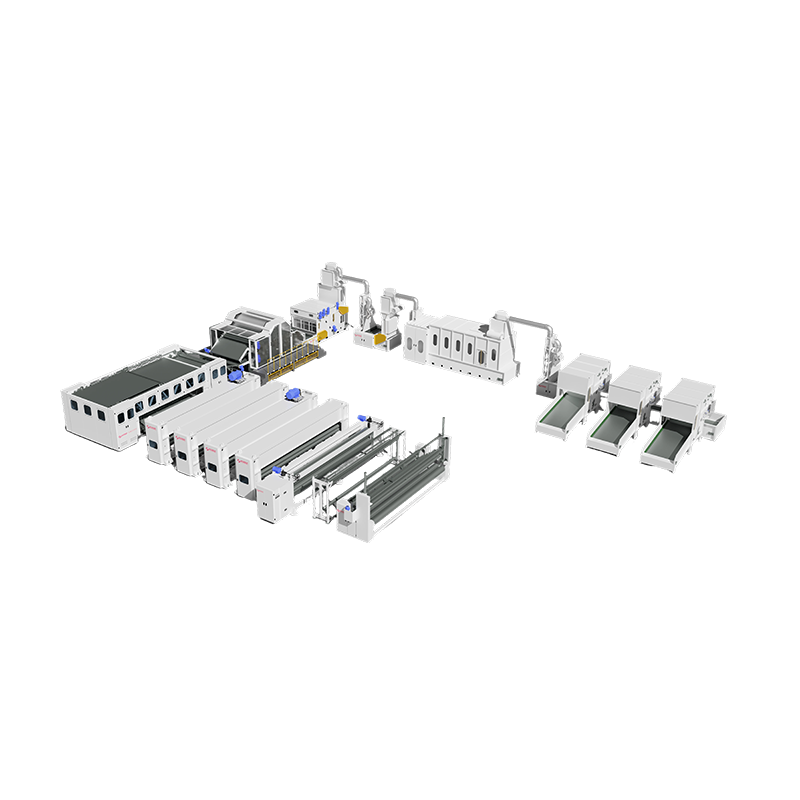
A typical needle punch line includes a bale opener, mixing chamber, vibrating feeder, carding machine, cross lapper, pre-needle loom, and main needle loom. The HONGE HYGZ-240, for example, operates at 1,280 strokes/min with PLC and Siemens inverter control, covers working widths from 2,000 mm to 8,800 mm, and achieves a production capacity of 500 kg/h. Raw materials include PP staple fiber, polyester fiber, recycled fiber blends, and natural fibers such as jute or wool.
End products range from automotive trunk liners and carpet backing to GCL (geosynthetic clay liner) and synthetic leather substrates. Post-needle finishing steps—calendering, ironing, or spray bonding—allow further surface treatment before nonwoven converting into rolls or cut panels.
Airlaid Technology: Precision Absorbency
Airlaid technology disperses individualized fibers (typically wood pulp, viscose, or polyester) in an airstream and deposits them uniformly onto a forming surface before bonding. The result is a soft, paper-like fabric with excellent absorbency and uniform mass distribution—properties that carded lines cannot match at low basis weights.
The air laid product market is growing steadily, driven by demand for premium wipes, flushable substrates, feminine hygiene cores, and food-service napkins. A 2.6 m working-width airlaid machine—such as the HONGE HYQL series—serves carpet waste fiber recycling, insulation batting, and specialty absorbent products. Compared to conventional wet-laid processes, airlaid lines use no water in web formation, reducing energy consumption and effluent management costs.
Key bonding options after airlaid web formation include latex chemical bonding, thermal bonding with bi-component fibers, and hydrogen bonding for pure cellulose webs. Each approach affects final softness, tensile strength, and dispersibility.
Thermal Bonding Lines: Soft Wadding and Acoustics
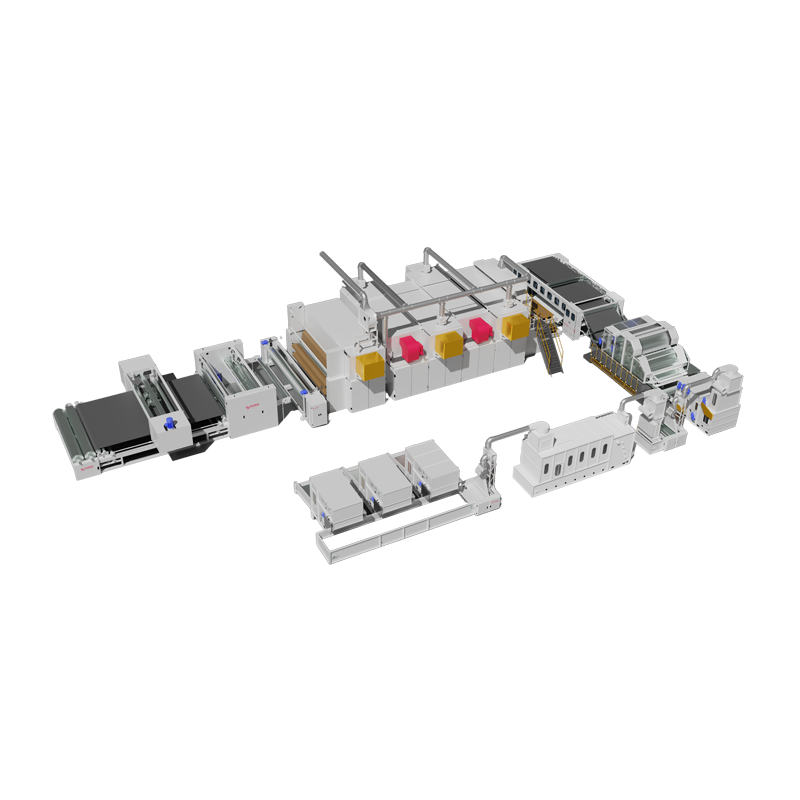
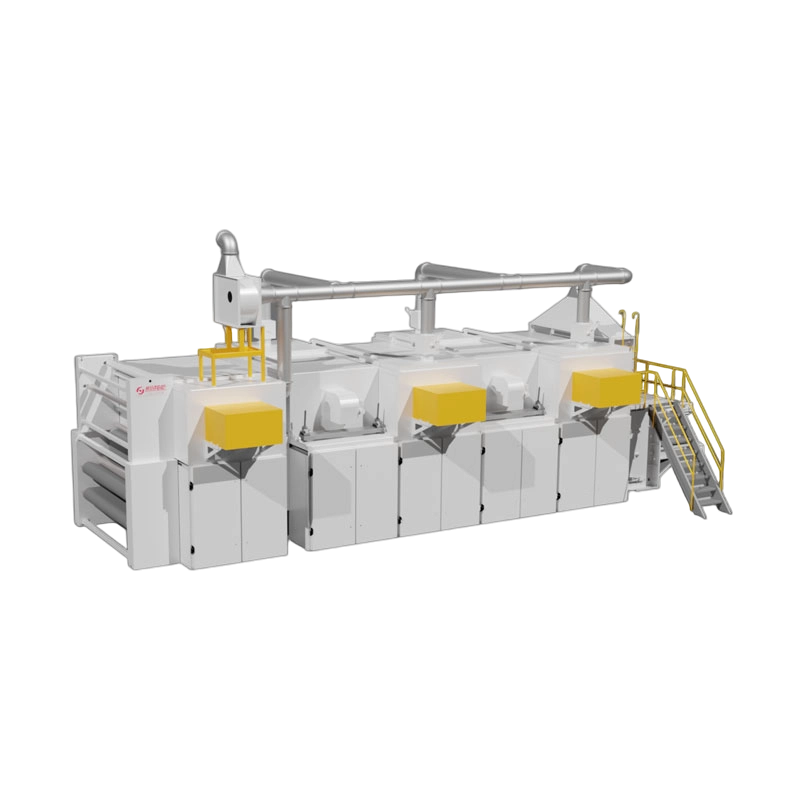
Thermal bonding lines pass a carded fiber web through an oven where low-melt bi-component fibers (typically PE/PP or PE/PET sheath-core) melt at their sheath and fuse surrounding fibers. The process produces soft, lofty, resilient wadding used in pillows, mattresses, sofa filling, and winter garment insulation. Hard-board versions—using higher binder ratios and compression—serve automotive door panels, headliners, and polyester acoustic panels (PET panels).
Thermal bonding avoids chemical adhesives entirely, which is a strong selling point for baby product and medical applications where residual chemicals are a concern. Line configurations include flat-bed ovens for soft wadding and rotary drum ovens for thinner, denser sheets. Working widths typically run from 2,000 mm to 4,000 mm, with output weight ranging from 20 to 400 g/m².
How Nonwoven Converting Fits Into the Production Flow
Nonwoven converting refers to the downstream processing steps that transform a roll of bonded fabric into a finished commercial product. This includes slitting wide rolls to customer-specified widths, winding into uniform rolls of set length, cutting to sheets or pre-forms, perforating, laminating, and embossing. For hygiene and medical applications, converting also encompasses folding, packaging, and sterilization.
On fully automatic lines for textile production, converting is integrated directly after bonding—eliminating intermediate handling and reducing roll damage. A winding-cutting machine on a needle punch line, for example, can produce 1,000 mm to 5,000 mm-wide commercial rolls or cut panels for carpet tiles and acoustic boards in a single pass. Yield loss during converting typically runs below 2% on well-tuned automatic systems, compared to 5–8% on older semi-manual lines.
Key Equipment Components in a Complete Line
Regardless of line type, a nonwoven production line is assembled from modular sub-systems. Understanding each component helps procurement teams evaluate total-line quotes rather than individual machine prices:
| Component | Function | Notes |
|---|---|---|
| Bale Opener / Fiber Opening Machine | Loosens compressed fiber bales into individual filaments | First step; fiber quality and opening evenness affect all downstream properties |
| Fiber Mixing Machine | Blends different fiber types or colors uniformly | Critical for recycled fiber lines and multi-component products |
| Vibrating Feeder | Meters fiber feed at a precise, consistent rate | Weight uniformity in the final fabric starts here |
| Carding Machine | Aligns and parallelizes fibers into a thin web | Roller speed ratio controls fiber orientation and web weight |
| Cross Lapper | Folds the carded web at angles to build up weight and improve cross-direction strength | Lapping angle and speed ratio are key parameters |
| Bonding Unit (Needle Loom / Oven / Calender) | Consolidates the web into fabric | Technology choice here defines the line type |
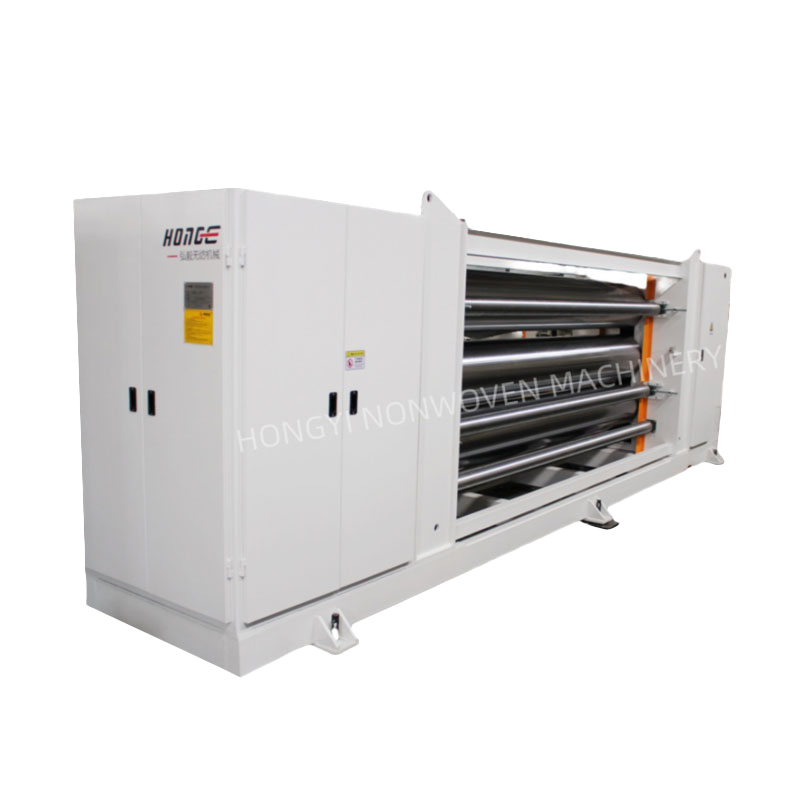
| Calender / Ironing Machine | Improves surface finish, thickness uniformity, and tensile strength | HONGE HYTG-320 is a 3-roller ironing machine for this stage |
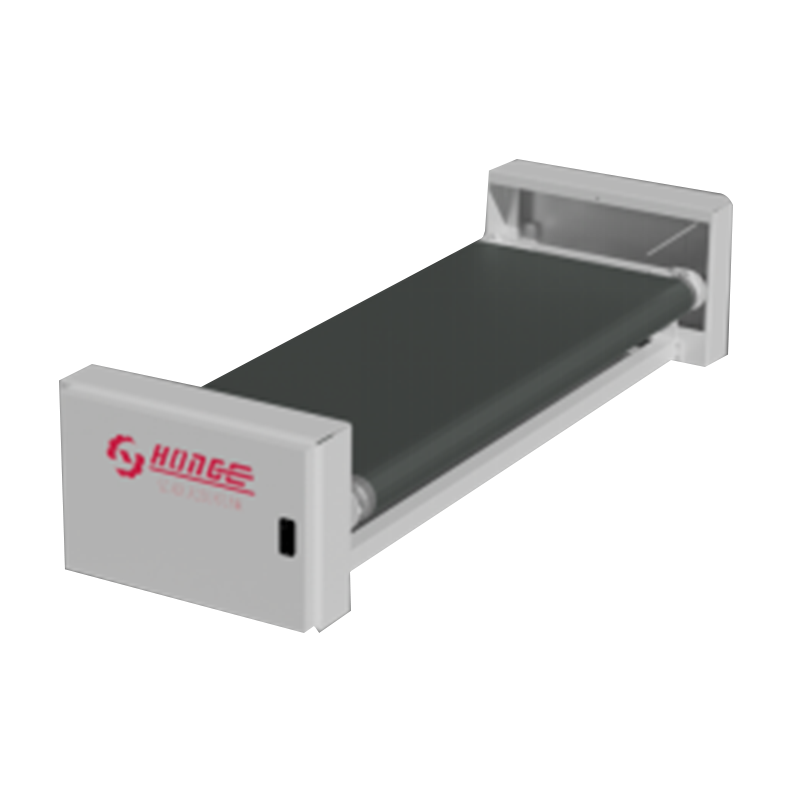
| Winding / Cutting Machine | Converts bonded fabric rolls into commercial roll or sheet formats | Final nonwoven converting step before shipment |
| Dust Removing Machine | Extracts loose fibers and particulates during processing | Essential for clean-room adjacent and medical applications |
Automation and Control: What to Look for
Modern nonwoven production lines run under PLC-based control systems with HMI touchscreens, allowing operators to set and monitor line speed, needle frequency, oven temperature, calender pressure, and roll tension from a single interface. Premium lines use Siemens or equivalent drives throughout—inverter-controlled motors on all major axes—ensuring stable fabric weight even when raw material bulk density varies between bales.
Automatic lines for textile production increasingly incorporate inline weight measurement (nuclear or microwave gauges), surface inspection cameras, and tension feedback systems. These features reduce operator intervention and allow the line to self-correct within set tolerances, typically keeping basis-weight variation below plus or minus 3 g/m² on well-configured systems. For high-speed spunbond and needle punch lines running 24-hour shifts, this level of automation is not a luxury—it is a prerequisite for consistent product quality and low waste rates.
Certifications to look for when sourcing equipment include CE (mandatory for EU-destined exports), ISO 9001, and product-specific compliance such as relevant OSHA guarding standards. HONGE equipment, for example, carries CE and ISO 9001 certification, with Siemens drives and PLC control as standard on the HYGZ-240 needle punch line.
Evaluating Total Cost of Ownership
When comparing production line proposals, capital expenditure is only one dimension. Operating cost factors—energy consumption per kilogram of output, maintenance cycle length, and spare parts availability—carry equal or greater weight over a 10–15 year service life. A line with readily available spare parts and local service engineers can deliver substantially lower total cost of ownership than an alternative with long lead times for critical components.
Warranty terms (12 months is the industry standard), engineer installation and commissioning support, and structured operator training programs are legitimate differentiators when evaluating suppliers. Post-installation support quality directly affects how quickly a new line reaches rated output and how reliably it sustains that output through routine maintenance cycles.
Summary: Selecting the Right Nonwoven Production Line
The decision framework is straightforward: start with the end product specification (weight, tensile, softness, filtration, width), match it to a bonding technology, then size the line for your output target. Airlaid technology serves the absorbent and wipe segments; needle punch covers heavy technical textiles and carpets; spunbond and SMS address hygiene, medical, and packaging markets; thermal bonding delivers soft wadding and acoustic panels.
In all cases, invest in complete-line thinking—opening, carding, cross-lapping, bonding, and nonwoven converting as an integrated system—rather than optimizing individual machines in isolation. Automation quality, drive brand, and after-sales support from the manufacturer determine whether a line delivers its rated output reliably over a 10–15 year service life.